Malawi’s journey towards becoming an industrialised upper-middle-income country by 2063 hinges on innovation, productivity and an often-overlooked cornerstone: intellectual property (IP).
At the heart of this transformation lies the recognition that without a robust emphasis on intellectual property rights, the nation’s aspirations may remain elusive.
Minister of Justice, Titus Mvalo, underscores the crucial role of IP systems in nurturing innovation and fostering creativity to propel this journey forward.
He says the intellectual property system can help facilitate innovation and creativity which can, in turn, propel the attainment of Malawi 2063 (MW2063).
“The protection of patents, trademarks, designs and copyright is designed to stimulate innovation and creativity as well as enhance business competitiveness in the commercialisation of goods and services,” Mvalo says.
- Advertisement -
Mvalo further points out that apart from stimulating innovation and creativity, the intellectual property system can also be used to build innovation capacity.
“We can exploit the intellectual property system to build our innovation capacity for economic competitiveness and wealth creation,” he says.
The minister then calls for a shift in perspective, moving beyond conventional wisdom to harness intellectual property as a lever for innovation, specifically in agriculture commercialisation, productivity, and industrialisation.
He highlights the importance of protecting creations through intellectual property registration and emphasizes the significance of safeguarding patents and trademarks from unauthorised use or misattribution.
- Advertisement -
- Advertisement -
“[President Lazarus Chakwera] has created an office of innovation and as Ministry of Justice, our role is to make sure that what has been created through intellectual property is protected,” Mvalo says.

National Planning Commission Director General, Thomas Munthali, echoes the critical link between IP, innovation and MW2063 objectives.
Munthali says intellectual property stimulates innovation and needs to be included to attain MW2063 goals.
“When innovators protect their work, they are encouraged to do more. Secondly, those innovations can be used as collateral, so, if you have an innovation protected by either a company or an individual, they can use that to get more resources to grow their businesses.
“That means there would be more wealth created and this would in turn move us into industrialisation,” he says.
Munthali also emphasises on the need for collaboration with both local and international partners.
“That is why we want to collaborate with the World Intellectual Property Organisation (Wipo) along with the Ministry of Justice to do awareness programmes and short-term courses with the Malawi University of Science and Technology on what it takes to patent,” he says.
Noting the fragmented nature of innovation efforts, Munthali underscores the necessity for coordinated approaches.
“We can begin to look at how we can make sure that our universities, including the government, have in place policies that drive us very quickly into an innovation world as a lot of countries that are graduating have put technology and innovation at the centre of their development agendas,” he says.
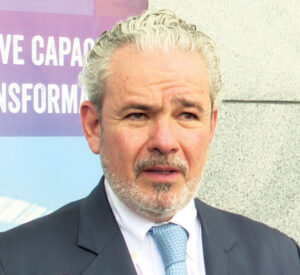
Wipo Assistant General Director, Marco Aleman, emphasises the deliberate nature of innovation.
Aleman says by taking intellectual property and innovation seriously, this country could undergo significant development.
“Innovation is at the centre of priorities both in private and public sectors and innovation cannot happen as an accident as it requires planning, careful coordination and conducive conditions.
“One of the conditions to achieve innovation is the intellectual property ecosystem which we need to make sure is in place and works well,” he says.
Aleman further says that Wipo has put in place strategies to help Malawi achieve its goals highlighted in MW2063.
The strategies include working with universities to make sure that they have in place intellectual property policies that allow researchers to innovate.
“We also discussed with the Ministry of Trade on how we can help businesses in Malawi to incorporate intellectual property as part of the businesses,” Aleman says.
He then calls on Malawi to shift to a knowledge-based economy.

African Regional Intellectual Property Organisation Director General, Bemanya Twebaze, notes that African creators’ works are undervalued and unprotected.
“There is a commonly held assumption in Africa that only educated people can protect an idea or use the IP system. As a result, although Africa is home to many talented creators, their works are primarily undervalued and unprotected,” Twebaze says.
In essence, the discourse on intellectual property in Malawi seamlessly aligns with the aspirations of MW2063.
The integration of intellectual property rights as a catalyst for innovation, enhanced competitiveness and economic growth emerges as a foundational pillar in steering Malawi towards its envisioned prosperous future.