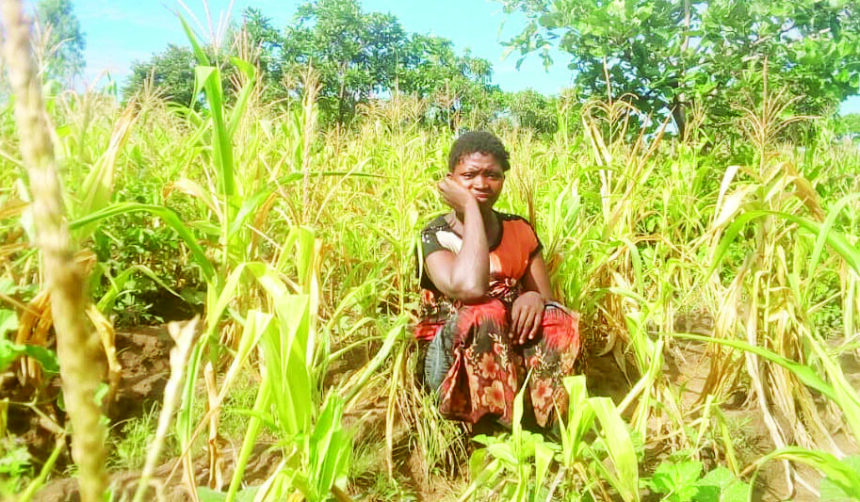
Edina Kachingwe of Michesi Village, Traditional Authority (TA) Kalembo, in Balaka holds back her tears as she assesses the damage in her maize garden.
All the hope of a better harvest she had in early January has vanished into thin air.
Four weeks of dry spell in late January and early February have taken life out of her maize crop.
Despite applying expensive fertiliser and investing heavily in labour, she is slowly accepting that her investments were in vain.
Edina and many Malawians in the Southern and Eastern Region have to pay the huge price of over-relying on rain-fed agriculture.
- Advertisement -
Down in the Lower Shire, biting hunger is forcing people into panic mode.
Fanny Muotha of Masanduko Village, TA Ngowe, in Chikwawa is lucky to be alive.
The mother of seven survived from the jaws of a crocodile, which attacked her when she went to the Shire River in the district to hunt for Nyika, which are roots of an aquatic plant scientifically known as Nymphaea Odorata which desperate households in the Lower Shire turn to to survive the stinging hunger.
The monster grabbed her by the shoulder and submerged her three times before she was rescued by a relative.
- Advertisement -
- Advertisement -
Recuperating at Queen Elizabeth Central Hospital in Blantyre, Muotha is lucky to tell her story.
Many others have not been that lucky.
Malawi has in recent years registered multiple episodes of hunger despite having plenty of one of the critical ingredients of agriculture production; fresh water.
In fact, if there is one thing that impoverished Malawi has taken for granted, then it is the availability of fresh water.
According to water expert Professor Zachary Kasomekera, globally, only three percent of the water is fresh water which can be used for irrigation and drinking.
Kasomekera adds that of the three percent fresh water, 87 percent is inaccessible. In other words, only 13 percent of the three percent of global fresh water is available.
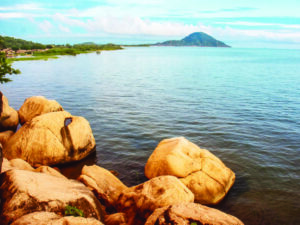
In fact Lake Malawi, one of the largest fresh water lakes in the world, covers about 24,000 square kilometres.
In total, Malawi has 407,862 hectares of irrigable land available, but only 36 percent or 148,850 hectares have been developed.
Making a presentation during the 2020 Economics Association of Malawi (Ecama) annual conference held under the theme ‘Going Beyond Macroeconomic Stabilisation-the Need for Building Resilience to External Shocks’, renowned economics Professor Ronald Mangani noted that it was puzzling to note that despite having massive bodies of fresh water, the country continues to face hunger and pray for rains every year.
“It is an insult to God to be praying for rain in Mangochi. Instead of praying for rain, perhaps let’s say God Almighty increase us in intelligence, make us wiser so that rather than simply seeing, we can also perceive; rather than simply hearing, we can also understand. Understand and perceive that what we also have in Lake Malawi is also water, chemical formula H2O, madzi! madzi! madzi!
“What falls down as rain is water, chemical formula H2O, madzi! madzi! madzi. We can use that water to irrigate our land. Over 400,000 to 600,000 hectares of land in Malawi are suitable for irrigation, but we are only irrigating 16 to 20 percent of it. Madzi!,” Mangani said.
He added that there are countries on earth which are not as blessed as Malawi but are doing better than this country.
According to Mangani, God does not change the condition of the people unless the people themselves change it.
“When we ask God to bring miracles to change our situation, we are being extremely ungrateful to the environment that is in front of our eyes,” Mangani said.
Currently, close to 80 percent of the population relies on rain-fed smallholder agriculture for their livelihoods.
Pillar number one of Malawi’s long-term economic development blueprint, the Malawi 2063, recognises that improved agricultural productivity and well-functioning structured agricultural markets can transform the sector to generate income, release agricultural labour and stimulate demand in other sectors.
President Lazarus Chakwera says Capital Hill is implementing irrigation projects based on the Irrigation Master Plan and Investment Framework.
He said government is also rehabilitating some existing smallholder irrigation schemes in order to restore the design capacities and improve their productivity.
According to Pump Aid Beyond Water, six months of no harvest can be harmful to the diet, health and livelihoods of farmers as well as the communities that rely on them.
“That contributes to a high rate of underdevelopment in Malawi’s children.
No wonder, the latest World Bank Malawi Country Economic Memorandum shows that fewer than seven percent of households in Malawi can generate sufficient income from farming to meet their basic needs.
According to the World Bank, Malawian agriculture has consistently been characterised by low and stagnant productivity.
Approximately 80 percent of farming households operate on the basis of just one rain-fed crop per year, leading to significant year-to-year variability in production.
This, the World Bank says, is further exacerbated by factors such as limited use of improved agricultural technologies, inputs, and practices; poor access to credit and markets; extremely small farmer landholdings compared to regional counterparts; and, increasingly, the impacts of climate change and variability.
In the 2024-25 national budget Finance Minister Simplex Chithyola Banda has allocated K161.28 billion to the Affordable Inputs Programme.
But without serious consideration of irrigation, this whole amount could go to total waste in the event of another rain failure next year.