By Pemphero Malimba & Daniel Zimba:
The percentage of female Cabinet representatives has fallen from 29 percent to 25 percent following a reshuffle made by President Peter Mutharika on Monday night.
In his initial post-September 16, 2025 General Elections Cabinet, Mutharika’s Cabinet had 24 members—comprising 17 males and seven females, representing 29 percent in female representation terms.
However, the new Cabinet has 28 members comprising 21 males and seven females (representing 25 percent).
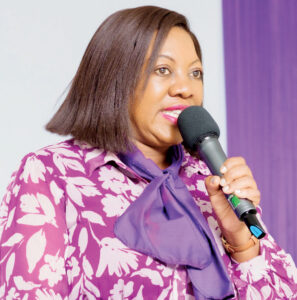
The females are First Vice President Jane Ansah; Agriculture Minister Roza Mbilizi; Gender, Children, Disability and Social Welfare Minister Mary Navicha; Health and Sanitation Minister Madalitso Baloyi; Energy and Mining Minister Jean Mathanga; Youth and Sports Minister Patricia Wiskes; and Gender, Children, Disability and Social Welfare Deputy Minister Martha Ngwira.
- Advertisement -
The development has disappointed Non-Governmental Organisations Gender Coordination Network Chairperson Maggie Kathewera Banda.
“It’s a very disappointing development. I have never been this sad like today. We, as a country, are retrogressing and that is unacceptable in a country where the law is clear on how public appointments are supposed to be handled,” she said.
She said Mutharika needed to take advantage of the additions to the Cabinet to appoint more women.
“Actually, the best scenario would have been to have more women than men added to the Cabinet,” Kathewera Banda.
- Advertisement -
- Advertisement -
She said the development reflected badly on the government’s stand on gender equality.
“Because it’s one thing to say you believe in gender equality and another thing to do it. As they say, actions speak louder than words,” she said.
Kathewera Banda said there was a need for the government to walk the talk on women empowerment by adhering to provisions of the Malawi Gender Equality Act.
“The Malawi Gender Equality Act says for public appointments made, there should not be more than 60 percent and not less than 40 percent of either [gender]; so, the Cabinet, as it stands today, has fallen short of the legal provisions of the Act,” she said.
Political and good governance analyst George Chaima said the continued trend of low female representation in leadership positions was against the spirit of the United Nations Sustainable Development Goals, which advocate for the increased number of women taking up leadership positions.
“We reject our own females to lead us and govern us. We also reject our own females to head senior positions. We only have a crop of a few female leaders. The trend will discourage more young women from participating in politics,” he said.
Chaima said putting more women into leadership positions would also culminate in more Malawian women taking up global positions.
Civil Society Education Coalition Executive Director Benedicto Kondowe queried the increase in the number of Cabinet ministers.
“The increase in the number of Cabinet ministers leaves a lot to be desired [and is] against the austerity measures which the DPP [Democratic Progressive Party] government has been championing. It signals that the President is not serious about implementing the measures, because [having] more ministers means more spending of public funds,” Kondowe said.
He then commended the President for maintaining “key ministries” of Agriculture, Finance, Foreign Affairs, Trade, and Homeland Security, saying that would help ensure continuity of important initiatives within those ministries.
On his part, Human Rights Consultative Committee Chairperson Robert Mkwezalamba said the reshuffle contradicted the government’s austerity measures, adding that the move could have come later, probably after six months.
“The reshuffle has come too early given that the President took time to constitute the Cabinet and one would expect the ministers to work for a long time. This makes it difficult to understand the factors behind the reshuffle, in terms of whether it [the decision] is based on failure to deliver on the ground,” Mkwezalamba said.
Government spokesperson Shadric Namalomba was yet to respond to our questions when contacted on the issue.
The reshuffle has seen four new male members being added to the Cabinet.
The four are Thoko Tembo as Agriculture, Irrigation and Water Development Deputy Minister; Chipiliro Mpinganjira as Natural Resources Deputy Minister; Edgar Tembo as Industrialisation, Business, Trade and Tourism Deputy Minister while Charles Chilambula is Health and Sanitation Deputy Minister.