




In an era where unemployment levels are soaring to greater heights, graduates of the Malawi University of Business and Applied Sciences (MUBAS) are demonstrating that university education can be more than a pathway to formal employment.
They are doing so by demonstrating that university education can be the foundation for building businesses, creating jobs and developing solutions to some of the country’s most pressing challenges. University officials say through its deliberate investment in entrepreneurship, innovation and business development, Mubas is nurturing a generation of graduates who are not only seeking opportunities but are also creating them for themselves and others.
Two inspiring stories stand out: Green Gold Enterprises Limited, a horticultural business established by seven Mubas graduates; and GreenLens, an artificial intelligence (AI)-powered environmental reporting platform that was developed by three Mubas graduates whose innovation has earned regional recognition.
From graduates to successful agricultural entrepreneurs
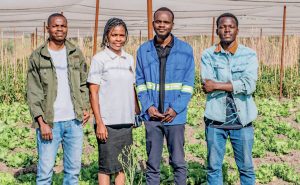
For Jomo Kayira and six fellow Mubas graduates, the challenge of unemployment became an opportunity to venture into business.
- Advertisement -
Rather than joining the growing number of graduates moving from one office to another in search of employment, the team identified an opportunity in horticulture, particularly the supply of locally grown vegetables to supermarkets.
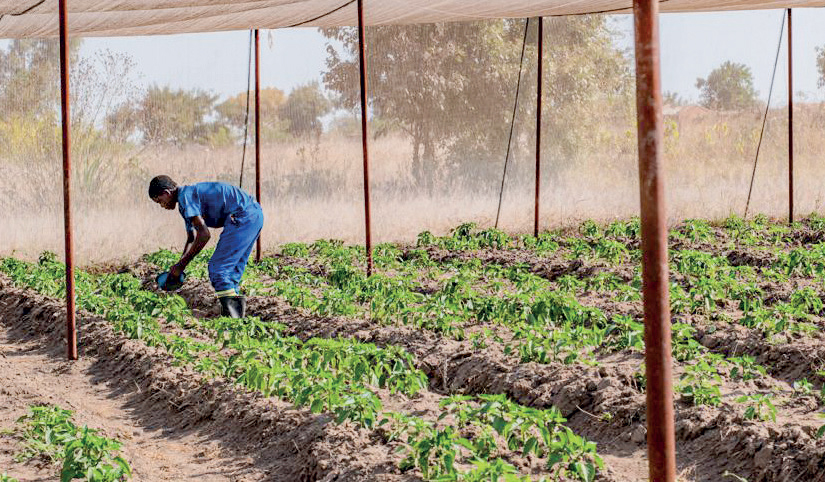
With start-up capital of a K66 million loan from FDH Bank through the Mubas-FDH Bank Graduate Business Start-Up Programme, the group established Green Gold Enterprises Limited. They acquired two hectares of land at M’bwatalika in Lilongwe, where they cultivate a variety of vegetables, including cabbage, tomatoes, spinach, lettuce, watermelons and broccoli.
Their produce is supplied to supermarkets across Lilongwe City.
According to Kayira, the business idea was inspired by the realisation that some of the vegetables that were available in supermarkets were imported, presenting an opportunity for local production while creating employment.
- Advertisement -

“When we were starting, none of us had experience in serious commercial farming. We took this as a challenge to prove that we, as young people, are capable of running serious businesses and contributing to the socio-economic development of the country,” Kayira explained.
Beyond providing employment for the seven founders, Green Gold Enterprises has created opportunities for members of the surrounding community, demonstrating the wider economic impact of graduate-led businesses.
The group now aspires to become a major supplier of fresh vegetables across the country, with ambitions of eventually penetrating international markets.
From national disaster to an award-winning innovation
Another remarkable example of Mubas graduate entrepreneurship is GreenLens, an AI-powered environmental monitoring and reporting platform developed by Prisca Kaliati, Charity Kampanje and Alice Mandalasi.
The idea traces its roots to March 2023, when Tropical Cyclone Freddy devastated communities across Southern Malawi, resulting in the loss of lives, displacement and widespread destruction.
At the time, the three innovators were Mubas students. They recognised a critical gap in disaster response: communities often relied on WhatsApp, Facebook and other social media platforms to report emergencies, but information could take hours to reach the relevant authorities.
The innovators also observed that environmental hazards such as illegal logging, polluted streams and indiscriminate waste disposal frequently went unreported, despite their potential to contribute to future disasters.
Determined to address these challenges, they developed GreenLens, a platform designed to improve environmental reporting, strengthen response coordination and support disaster prevention.
The platform allows communities to report environmental hazards through a web-based system or USSD, making it accessible even to people using basic mobile phones without internet connectivity. It also enables the authorities to prioritise reported incidents, coordinate responses and identify recurring environmental risks.
Unlike conventional reporting systems that focus primarily on resolving immediate incidents, GreenLens preserves reported information to help the authorities identify patterns and inform long-term environmental management and disaster prevention strategies.
Three years after the initial inspiration, the three innovators, now Mubas graduates, have taken their solution to the regional stage, securing second place out of 123 submissions at the UbuntuNet Alliance Women Hackathon 2026.
The achievement, which was announced during the 19th UbuntuNet-Connect Conference (UC2026) hosted by the Malawi Research and Education Network (Maren) in Lilongwe, is a milestone for the team, Mubas and Malawi.
Their journey demonstrates how innovation can emerge from lived experiences and how young people can transform national challenges into practical technological solutions.
Mubas: building a culture of entrepreneurship
University officials say behind these success stories is Mubas’ deliberate commitment to positioning entrepreneurship as an important part of university life, extending beyond classroom learning to practical business development, innovation and enterprise creation.
Through its Entrepreneurship Centre, the university encourages both students and staff to identify opportunities, develop business ideas and translate their knowledge and skills into viable enterprises.
The Mubas-FDH Bank Graduate Business Start-Up Programme is one of the initiatives that are supporting this vision. Established to promote entrepreneurship among students, particularly those in their final year of study, the programme provides an opportunity for student groups with outstanding business pitches to access loan capital from FDH Bank and transform their ideas into viable businesses.
The programme recognises that graduates should not only be prepared to enter the labour market but also be equipped to create employment opportunities and contribute to national economic development.

Mubas Entrepreneurship Centre Manager, Steven Kuchande, says the university is committed to cultivating an entrepreneurial mindset among its students and staff by encouraging them to look beyond conventional employment and explore opportunities to create value through their ideas, expertise and innovations.
He indicates that enterprises such as Green Gold demonstrate the potential of young graduates when they are supported to translate ideas into practical business ventures.
“This enterprise is a marvellous example of the potential that can be realised by young innovative minds across the country,” Kuchande explained, commending Kayira and his associates for their dedication to the business.
He further encouraged young people to embrace entrepreneurship as an alternative response to the shrinking formal employment market in Malawi.
The university’s entrepreneurship agenda also recognises the potential of its staff to contribute to enterprise development by turning professional expertise, research and innovative ideas into solutions with commercial and societal value.
This approach reinforces Mubas’ identity as an entrepreneurial university, where innovation is not confined to academic research but is encouraged to translate into tangible products, services, businesses and solutions.
Beyond graduation: creating impact
The journeys of Green Gold Enterprises and GreenLens illustrate two different but equally powerful dimensions of entrepreneurship.
While one is addressing market opportunities and creating livelihoods through commercial agriculture, the other is using AI to address environmental challenges and strengthen disaster preparedness.
Both demonstrate the capacity of Mubas graduates to identify gaps, develop solutions and create impact beyond the university environment.
More importantly, they reflect the University’s ambition to produce graduates who are not merely job seekers but job creators, innovators and contributors to Malawi’s socio-economic transformation.
As Mubas continues to strengthen its entrepreneurship and innovation ecosystem, stories such as these provide evidence of what can be achieved when academic knowledge meets opportunity, creativity and determination.
At Mubas, graduation is not necessarily the end of the journey. For some, it is the beginning of building enterprises, creating employment and transforming communities.