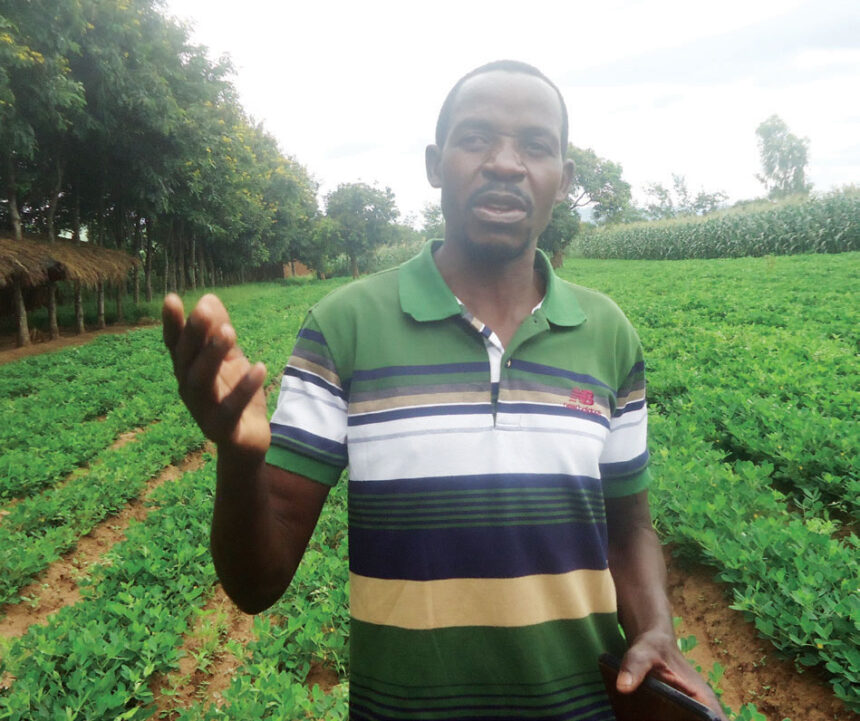
Charles Moyo from Jailosi Moyo Village, Inkosi Mtwalo, in Mzimba District wishes he had known about poly-potting technology long ago.
This is a farming innovation in which farmers transplant tobacco seedlings from the nursery to the field using plastic tubes.
“I wish I had known about the method long ago. I am saying so because, before the system was introduced to us, a lot of seedlings used to die when transferred from the nursery to the crop field. This is because the relocation process was disturbing root development.
“Every time we transferred tobacco seedlings from the nursery, we could anxiously wait to see which ones [seedlings] would survive because some roots could die during the process. It was a painful process because it was like watching a loved one die. And we lost a lot of money whenever the transplanted seedlings died. This is no longer the case and that is why I wish I had known about the system long ago,” says Moyo, 45.
The farmer, who has two vehicles bought using tobacco proceeds, embraced poly-potting four years ago and, all of a sudden, his six hectare field became a money maker.
- Advertisement -
“I am not surprised that I am now earning more money than before. This is because the survival rate of seedlings transplanted using poly-potting is between 99 percent and 100 percent. It is almost like a miracle,” the farmer, who is under Integrated Production System under Alliance One Tobacco Limited, indicates.
Last year, when heavy rains affected the crop in his six hectare field, he generated K8 million.
“This year, I am more than optimistic that I will generate more profits from burley and flue cured tobacco because the crop is doing well.
“Last year, when heavy rains affected output, I got 89 bales of burley tobacco and over 60 bales of flue cured tobacco.
- Advertisement -
- Advertisement -
“This year, I am hoping to produce more kilogrammes (kg) because my tobacco has done well when compared to last season. I am happy that the poly-potting method of transplanting seedlings has not disappointed me in the past four years. I also thank Alliance One Tobacco Limited leaf technicians for their expertise. I always know that I am not alone,” Moyo emphasises.
He is not the only one singing praises of poly-potting.

One of the Alliance One Tobacco contracted growers Donnex Kaunga Nyirenda, who comes from Tomasi Nyirenda Village in the same area, says his life has changed for the better since he embraced poly-potting farming technology.
“The survival rate of transplanted seedlings reaches 100 percent, which is something that was unheard of before.
“For your information, I started using the poly-potting transplanting method about three years ago. Me and fellow members of Chikosera Club are reaping the benefits of following leaf technicians’ advice because we are assured that almost all the seedlings we transplant will survive. This is because there is no root disturbance during the process as roots are not disturbed in any way. As such, when we transplant them, they continue the growing process, assuring us of quality leaf,” Nyirenda points out.
He adds that seedlings in plastic tubes do not require a lot of water and that they are easily relocated when the weather is adverse.
Nyirenda adds that he is always assured of earning “good income” from his three-hectare tobacco field.
“During the last growing season, for example, I managed to get 148 bales of burley and 60 bales of flue cured tobacco from the combined total production of contract and non-contract cultivation.
“I must hasten to say that since joining contract tobacco farming under Alliance One Tobacco in 2011, my family’s living standards have transformed both socially and economically as I have managed to buy two plots in Mzuzu City. I have also constructed a decent four-bedroom house and bought livestock such as cattle, goats and pigs.
“In addition to that, I bought a two-tonner vehicle in 2016,” he opens up.

Such sentiments have elated Ben Kawonga, Alliance One Tobacco Limited Corporate Affairs Manager, who says they always want farmers who are contracted to them to excel.
“That is why we introduced poly-potting technology to our tobacco growers. At first, there was some resistance but now they have appreciated the benefits of the technology, such that many more are expressing interest in following suit,” Kawonga says.
For an example, one just has to talk to Moyo.
“I cannot stop following the poly-potting method. Even if someone would promise me billions of Kwacha to stop using it, I would not, for a second, entertain the thought of abandoning the technology,” he says, resolve written all over his face.
This is happening when the second round of tobacco estimates published by the Tobacco Commission (TC) on Tuesday showed that tobacco production is expected to shrink to140 million kg this year.
This represents a four percent drop when compared to the 146 million kg projected during the first-round crop estimates last month.
It further illuminates a 17 percent increase in production from the 120 million kg sold during the 2022-23 marketing season.
“The latest report attributes the decrease in the projected production from 146 million to 140 million kilogrammes to prolonged dryspells in most parts of the country and poor establishment and performance of some dark fire cured tobacco in the Northern Region.
“The report of the first nation-wide survey attributed the projected improved production to increased hectorage due to good prices offered in 2023, increased number of growers, increased sponsorship and availability of inputs,” the statement reads.
TC Public Relations Officer Telephorus Chigwenembe said the commission is consolidating figures of the current demand for tobacco which will be announced soon.
“Our technical guys are still engaging some of the buying companies but we could be looking at the 170 million kg which was last year’s demand as well, but a concrete figure will be provided soon,” Chigwenembe said.
This means that at 140 million kg of tobacco production, the country is 17 percent shy of the crops demand.
It is an open secret that farmers that have embraced the poly-potting method have contributed to good outcomes this year.