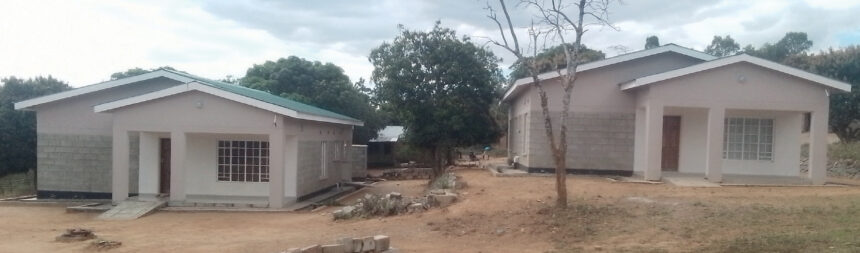
The environs of Mlemeka Local Education Authority (LEA) Primary School in Neno District are not necessarily filled with grand buildings. For learners, though, this is no reason to stay out of school as, to them, a typical day is rich in everyday moments.
“This is because we are one of the schools in Malawi that have access to satellite television (TV), which enables us to learn more about what is happening in Malawi and other countries, something that complements textbook experiences,” said standard two learner Patricio Zimba.
The school, which is located closer to Kambale Trading Centre, is in one of the 10,000 African villages that benefitted from a project which Malawi’s Ministry of Basic Education implemented in collaboration with StarSat and China Aid.
“We are happy that while other schools, including those in urban and peri-urban areas, do not have access to satellite TV, we, at Mlemeka LEA Primary School, are able to learn about things that are happening around the world, making us truly global citizens,” said another learner Lucy Msoka.
Learners, and community members such as mother of three Msatida Mtengo, say having access to satellite TV broadens their knowledge base.
- Advertisement -
“No wonder, learners here are hoping for a brighter future,” Mtengo pointed out.
For President Lazarus Chakwera, who spelt out some of the initiatives his administration has implemented in the Southern Region district when he presented his State of The Nation Address (Sona), titled ‘Taking Our Development Forward to Continue The Progress We Have Delivered’, on February 14 this year—infrastructure development is key to national development.
“We have constructed new schools,” Chakwera told Parliament.
In addition, blocks are being constructed at Ligowe Primary School, whose head teacher is Patrick Mtemang’ombe.
- Advertisement -
- Advertisement -
Teachers and learners are hoping that, once completed, the block will create more space for service delivery and knowledge acquisition.
The President said the idea was to ensure that school infrastructure was as satisfactory as the curricula.
Closer to Mlemeka LEA Primary School is a new market shelter, which has been erected at Kambale Market, which market users said had improved their trading experience.
For instance, Edson Sitope of Chimchembere Village, said they no longer fear rains and other adverse weather conditions.
‘In the past, it was difficult for traders to sell merchandise and buyers to buy products during the rainy season as business could be disrupted, thereby inconveniencing people. Now, following the construction of the shelter, traders and buyers go about their business unaffected by heavy rains, winds and the October sun.
“If anything, the only problem pertains to the rising cost of goods. It costs between K30,000 and K35,000 to travel from here [Kambale Market] to Blantyre City, where traders shop merchandise on wholesale price,” Sitope said.
For Jabulani Beckstone of Selemani Village, the market shelter has come at the right time.
“Following construction of the shelter some three years ago, market space has increased,” he explained.
In the Sona, Chakwera also said “we have constructed health posts”.
Indeed, we found one such health centre, located a stone throw from Kambale Market.
Aptly named Kambale Health Post, the facility, which is yet to be officially opened, has already started serving community members.
On the day we arrived, we found two women who had come to access services for their children.
One of the women, Faines Chingwalu of William Village, Traditional Authority (TA) Chekucheku, said they no longer cover long distances to access services at far-away health facilities.
“Now we just walk to the facility to access services,” she said.
Neno District Council Senior Maintenance Supervisor Kondwani Namagonya said construction works at Kambale Health Post started in 2022.
“That time, the nearest hospital to this place was Matandani Health Centre, which is located some 8 kilometres from here. Now people are accessing services even at night. Where necessary, the medical officer here works even at night, serving 11,000-plus people in this catchment area. The health post is also conveniently situated, closer to a health centre.
“Healthcare facilities are key to development, hence the health post has already addressed problems such as transport to Matandani Health Centre, where service seekers were initially accessing services. When it rained, people were finding it difficult to access services at the facility but that is a thing of the past,” Namagonya explained.
Solar-powered water has already been made available at the facility.
On her part, Neno District Council Assistant Environmental Health Officer Rose Mweso said the district had received four health posts, notably Gonthi, Felemu, Golden and Kambale.
Kambale is under Matandani, Felemu is under Chifunga Health Centre, Golden is under Neno Parish while Gonthi is under Ligowe.
“The health posts have enabled healthcare workers to promote sexual reproductive health services. The facilities have, and will also, reduce the distance patients cover to access services. It is our hope that cases of death will also be reduced as service seekers will easily be accessing healthcare services.
“Previously, health-seeking behaviour was a challenge because people had to factor in transport and distance when in need of healthcare services, a development which was resulting in others staying at home or getting to the hospital to seek services when diseases were at an advanced stage,” Mweso indicated.
Out of the four health centres that have been introduced to the district, two were completed while works on the remaining two are at an advanced stage, all in a bid to ease access to services.
Health posts are not the only infrastructure development activities that are taking place in Neno.
In the Sona, Chakwera cited other activities.
“And, in infrastructure development, we have constructed 10 security houses,” Chakwera said.
When we visited the houses, which are located closer to Neno Police Station, we found them standing, breaking the monotony of the flat land.
However, they are yet to be fully completed, prompting civil society organisations (CSOs) in the district to urge the government to ensure that the houses are completed.
“We wrote a letter to the government, and also engaged Neno District Council officials, on the need to complete construction works at the houses and ensure that law enforcers occupy them.
“We are glad to say that we got prompt feedback from the government, which has assured us that the houses will be ready for occupation three months from now [July]. We are happy that there is unity of purpose among community members, CSOs and council officials here. Because of council officials’ transparency when handling issues here, we are always on the same page,” Russel Msiska, who is the chairperson for Neno CSOs, explained.
According to Neno District Council Director of Public Works Pemphero Chikuse, there are various development projects being implemented in the district.
He cited four secondary schools, 10 police houses and health posts.
“Previously, we had 10 secondary schools. With the four new secondary schools, we now have 14 secondary [including community] schools.
“Previously, there was no single house for a police officer. Once the 10 houses are handed over, police officers will, for the first time in the district, occupy institutional houses,” Chikuse pointed out.
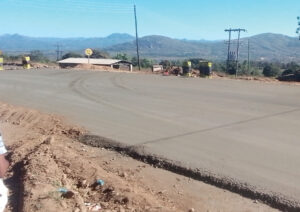
Another notable feature that is taking shape in Neno is a tarmac road, a development that has excited road users.
For instance, kabaza operator Felix Maunda said they have already started using the finished part of the road.
“The road is giving us hope. At first, it used to take us an hour or so to travel from Ligowe Trading Centre to Neno Boma; already, the time for travel has been reduced. We hope that once the tarred road is extended, cases of motorbike breakdowns will be reduced,” Maunda said.
Local builder Collins Seven, who stays in an area called Ndirande in Neno District, concurred with Maunda.
“Initially, it would take us an hour and minutes to travel from Ligowe to Neno Boma. Already, as we are using the finished part of the road, it is taking me 30 minutes to ride a motorbike from Ligowe Trading Centre to Neno Boma,” he said.
Contractors, namely CR20, have already put tar on some parts of the road.
CR 20 Civil Engineer (Technical), Vincent Phiri, said they were ready to cover 8 kilometres (km) of the road by August 9 this year, further expressing hope that they would cover 15 more km from August 9 to December this year, barring disruptions by rains.
“We are hopeful that, come the wet season, we will have put a roadbed on the section we have been allocated. We are starting from +119 [to] +460 and then [from] +99 [to] + 640 [that is, 20 kilometres].
“Using our unmatched expertise, we are sure that, by December, we shall have covered the 15 kilometres. We have set up an asphalt plant here, at Ngwenya, meaning that we are making tar right here. We are sourcing and breaking rocks right here. The project is scheduled to end in January 2026, according to the calendar, and we are happy that we are working very well with the government to ensure that the work is done,” Phiri explained.
Typically, the work involves putting layers, ensuring that there is a road bed, top formation, selected layer, which forms part of the subbase; and surfacing with asphalt, among other things.
Who can blame Neno drivers for speeding when travelling on the tarred part?
In the Sona, the President also indicated that progress was being made in the disbursement of National Economic Empowerment Fund (Neef) loans.
“We have disbursed K149 million in Neef cash loans for business startups,” Chakwera told Parliament.
Benedict Daniel Masauli, who is a member of Kuwala Men’s Club under Chandamale Cooperative, said he bought fertiliser using the K1.5 million loan he received from the institution.
“I harvested enough maize, some of which I sold to generate income. I believe that, had my crops not been affected by the prolonged dry spell, I would have harvested even more than I have done,” said Masauli, who is one of the 10 members of the club.
Esther Khonje of Galeta Village, TA Chekucheku, also received a loan from Neef.
“I actually received K673,000 from Neef and used the money to buy four bags of fertiliser.
“I urge Malawians not to exclusively focus on rain-fed agriculture; irrigation is the solution to the problem of food insecurity in the country,” Khonje said.
One of the youths who have received loans, Innocent Maseko from Donda Village, TA Chekucheku, indicated that his living standards had improved since receiving the loan.
“I got a loan of K1.5 million and used it for buying a motorcycle, which enabled me to generate enough money and use it for constructing a house. It is good to give youths loans as they [loans] enable them to stand on their own,” said the Zotheka Youth Club member.
Neef Senior Assistant Officer at Neno Boma Neef office, Davie Mnyai, said they were working well with service seekers.
“So far, we have disbursed K700 million in overall loans. Much of the loans have been given to those who are engaged in farming and, in terms of Neno North, the loan repayment rate is at 67 percent.
“We are providing loans to business startups as well as those who want to venture into rainfed farming and irrigation. We are making good progress,” he pointed out.
In terms of agriculture, some residents are singing praises of the Agricultural Commercialisation (Agcom) Project, a government flagship programme for transforming smallholder agriculture from mostly subsistence to commercial.
Chakwera hinted at this in the Sona.
“And, in economic development, we have invested K200.7 million in farm equipment through Agcom 2,” he indicated.
Under the initiative, project implementers link together producer organisations, service providers (including research and extension) and off-takers in a value chain, in a concept known as a Productive Alliance.
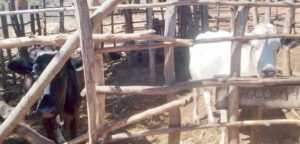
For instance, at Lisungwi Dairy Cooperative, chairperson Andrew Banda is ensuring that the 386 farmers [135 men, 149 women and 102 youths] are following agriculture workers’ guidance.
“Agcom’s support has enabled us to identify an off taker for our products, which we produce in bulk and sell at prices agreed between members and buyers.
“We have set up committees— including those of procurement, marketing, disaster management, animal feeding and other committees—to ensure that we meet standards when discharging our duty and rearing animals,” Banda pointed out.
Maxwell Phiri provides extension services to the farmers, some of whom now cook using gas produced from cow dung.
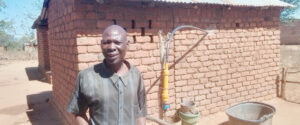
One of the farmers, Charles Tebulo from Kasamba 2 Village, said he no longer uses firewood for cooking.
“I use biogas, which is produced from cow dung, a development that has enabled me to avoid depleting natural resources such as indigenous trees,” he said.
According to Upe Museko, Mwanza District Council Director of Agriculture Services, the district has four extension planning areas (EPAs), namely Mlindi, Chiwale, Neno and Mkulumadzi. EPAs are under agriculture extension development officers.
“Neno is renowned for maize, rice, Irish potatoes, tomato [rain-fed and irrigation], soybeans, wheat, tangerines paw paws, egg plants, among other crops. People also rear animals such as cattle, goats, sheep, chickens, ducks, turkeys, guinea foul. As at now, we have 87 schemes that are active. The government is actively helping in rehabilitating schemes that were damaged by cyclones.
“We have schemes such as Ulande, which covers 75 hectares in TA Dambe’s area; Ulande Scheme, which the government rehabilitated in 2024 after it was affected by Tropical Cyclone Freddy [in March 2023]; Senjerani Irrigation Scheme, where construction started in 2023 and 12 hectares are being cultivated on right now; Mtengula Irrigation Scheme under Group Village Headman Mtengula, TA Symon, which has the potential of enabling farmers to cultivate on 150 hectares, among others,” Museko indicated.
He said Mtengula was constructed, with the government’s support, in 2024.
In the Sona, the President said “we have rehabilitated irrigation schemes benefitting 1,200 farming households”.
And, according to Museko, farmers have already started cultivating crops.
Museko further said, in terms of animal rearing, Agcom has come in handy.
“For instance, farmers under Lisungwi Dairy Cooperative received a grant from Agcom 2, such that farmers now have 230 dairy animals. Through Agcom, a modern toilet, genset house, among other facilities, were made available to the farmers,” the director said.
Other cooperatives in the district include Nayode, Tigawe Luso, Umodzi Women’s Business Group, Mfundazi Cooperative, Ulande, among others, while irrigation schemes include Mwangizi, Chifide, among others.
As at now, as crops such as maize that was cultivated using irrigation systems grow piercingly green, farmers, now hopeful on prospects of having a good post-rainy season harvest, no longer look at the skies with some wan emptiness.
After all, hope is in the air.