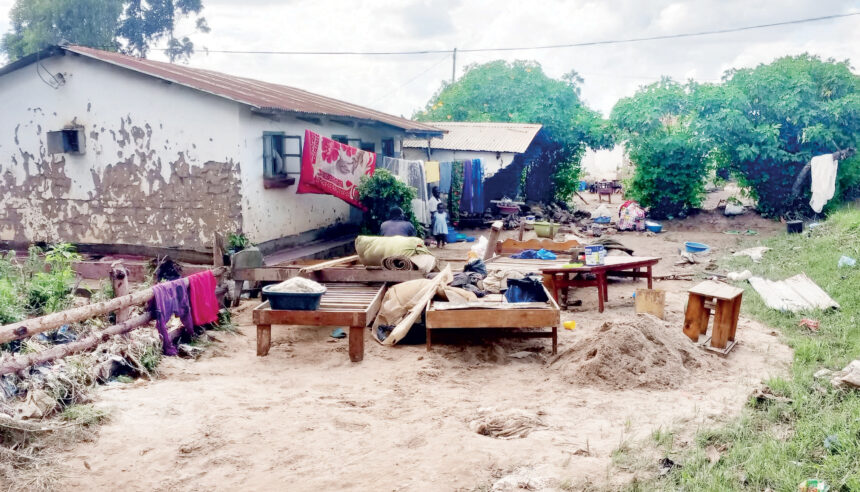
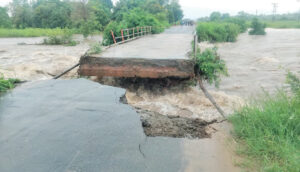
Cliff Mapepa, a resident of Nthundu Village in Mangochi District, remains resolute as rising waters from the Shire River threaten to submerge his house for the third consecutive year.
“We have nowhere to go. This is our home and everything we have. We cannot even rent elsewhere because we have no money. We will wait for our fate here,” he says with unwilful defiance.
Across Malawi, voices like Mapepa’s echo in villages and towns, from low-lying lakeshore settlements to flatlands, as heavy rains flood homes, block roads and devastate crops.
In Kasungu, more than 2,700 families have seen houses destroyed or damaged, bridges washed away and crops ruined, leaving children out of school and communities cut off from markets and health services.
“Some families have lost everything, including their source of income. Relief efforts are delayed because key roads are gone,” an official from the district council said recently.
- Advertisement -
Rivers have also burst their banks in Nkhotakota and Salima, severing the M5 Lakeshore Road and stranding hundreds of travellers.
Long lines of trucks and buses marked his vital artery, leaving food and relief items unable to reach displacement camps where hundreds of flood victims live.
“With the road cut off, everything is at a standstill,” Bright Kambewa, chairperson of Malawi Red Cross Society in Nkhotakota, said after days of incessant rainfall.
In Chitipa District, heavy rains accompanied by strong winds have destroyed dozens of hectares of crops, damaged at least 60 houses and badly affected school infrastructure.
- Advertisement -
- Advertisement -
One Kamilamphande Village resident, Mercy Chione, described her plight: “I am sleeping in a wet place because the temporary shelter we have managed to construct is failing to withstand heavy downpour.”
These disasters are part of a recurring pattern that stretches back years.
In late 2025 alone, lightning strikes from powerful storms killed at least 14 people and damaged more than 8,000 homes across multiple districts.
“Families who went to sleep expecting rain woke up to horror,” Department of Disaster Management Affairs commissioner Wilson Moleni said, as communities buried children and siblings with no warning or chance to flee.
Malawi has also faced the aftershocks of global weather extremes.
Tropical Storm Jude, which struck in March 2025, affected more than 20,000 people and displaced nearly 4,900 across Southern and Central region districts.
It cut off communities, damaged homes and flooded fields, compounding vulnerabilities from prior cyclones and intense rainy seasons.
Health facilities have been hit hard too.
After Cyclone Chido made landfall in late 2024, damage to health centres halted services for days as roofs blew off and sanitation infrastructure was flooded, increasing the risk of infectious diseases such as cholera.
“Everything changed from that time,” George Jammuh, officer in-charge at Mganja Health Centre in Dedza District, said following the cyclone.
Under Malawi’s Disaster Management Act, the government is required to relocate people from disaster-prone areas and provide alternative housing or safe sites.
Yet these provisions are rarely enforced, leaving people like Mapepa in high-risk zones.
Communities pray for safety while rains return year after year, highlighting both human vulnerability and governance failures.
Senior Chief Mapila of Mangochi has repeatedly urged residents to move to safer areas, but many say they have nowhere else to go.
“Some have taken the advice while others are still there because they claim to have no place to go,” he says, describing swollen waters creeping into residential areas.
Official relocation programmes have not materialised at scale. Families continue to build makeshift shelters on the same flood-prone land, trapped by poverty, poor planning and government inaction.
These tragedies show how disaster risk, weak infrastructure and governance failures intersect.

Chairperson of the Construction Sector Transparency Initiative, Samuel Bitoni, maintains that Malawi has the technical capacity to build better infrastructure.
“We have qualified engineers, experienced contractors and clear design standards. The real problem lies in how projects are planned, procured, supervised and maintained,” Bitoni explains.
Poor planning, weak supervision and inadequate maintenance are compounded by corruption and cost-cutting, he adds.
According to Bitoni, Bridges often fail not due to design flaws but because embankments collapse and inspections are neglected.
“Rain does not destroy good infrastructure; it exposes bad decisions,” Bitoni says.
He adds that corruption manifests subtly through inflated contract amendments, manipulated procurement, substandard materials and political interference.
“Infrastructure built without integrity cannot withstand natural forces, particularly heavy rains,” he warns.
The consequences appear to be visible across Malawi.
Bridges on Mpasadzi, Nkhamenya and Milenje routes in Kasungu have washed away, cutting off entire communities. Relief supplies struggle to reach isolated areas, leaving families without basic necessities.
Urban areas are not exempt. In Mzuzu, poor drainage and clogged systems have displaced more than 230 households and damaged public infrastructure, including schools.
Mzuzu City Council spokesperson McDonald Gondwe warns that more houses could collapse.
“The good thing is most affected families are being accommodated by neighbours, so we have not established any camp,” he says, illustrating how community solidarity often substitutes for formal government response.
Environmental experts say human activity has amplified natural hazards. They say widespread deforestation, riverbank cultivation and draining of wetlands have reduced the soil’s ability to absorb rainfall.
“These changes alter natural water flows, increase runoff and reduce the soil’s ability to absorb rainfall,” Eda Munthali, a lecturer in environmental science at Lilongwe University of Agriculture and Natural Resources, says.
She reckons that roads that once withstood seasonal rains now collapse and farmland that once yielded harvests is inundated.
Local knowledge is crucial, Munthali argues. Residents know which areas flood first and which slopes are unstable.
“Yet land-use decisions frequently ignore this knowledge, increasing damage,” she says and adds that without integrating community insights into planning and enforcing regulations, disaster risks will continue to rise.
Across districts from Nsanje to Chitipa, the human toll is mounting.
At least 18,267 households and more than 82,000 people have been affected this season, with at least 20 deaths from disaster-related accidents.
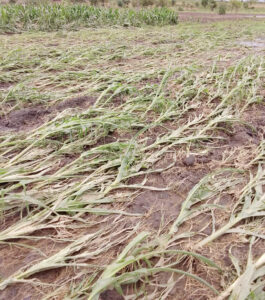
In Karonga, flooding of the North Rukuru River displaced 473 households in just a few days, destroying property and sweeping away possessions.
“So far no life has been lost but one woman has been injured as the house walls fell on her,” a local official said.
Malawi has faced even greater catastrophes. Tropical Cyclone Freddy in 2023 killed at least 1,200 people, displaced more than 600,000 and required hundreds of camps to house the displaced after widespread flooding and infrastructure collapse.
Bitoni and Munthali call for stronger governance frameworks that prioritise prevention, enforce accountability and integrate environmental stewardship into every stage of planning.
“Accountability frameworks should focus not only on punishment but on awareness, learning, correction and prevention,” Munthali says.
She bemoans the fact that infrastructure continues to be built or repaired in high-risk environments without addressing conditions that make failure inevitable.
Munthali concludes that environmental protection must be embedded in planning so natural systems that once mitigated flood risks are restored and conserved.
“Only when environmental stewardship, community responsibility, institutional support and clear accountability are fully connected, will Malawi break the cycle of recurring disaster losses,” she warns.
In the meantime, the rainy season continues and warnings of further disasters stretch across the country.
Families like Mapepa’s in Mangochi, residents in Kasungu, Nkhotakota and Mzuzu and countless others face stark choices: stay and risk floodwaters or abandon homes with nowhere to go.