By Imam Wali:
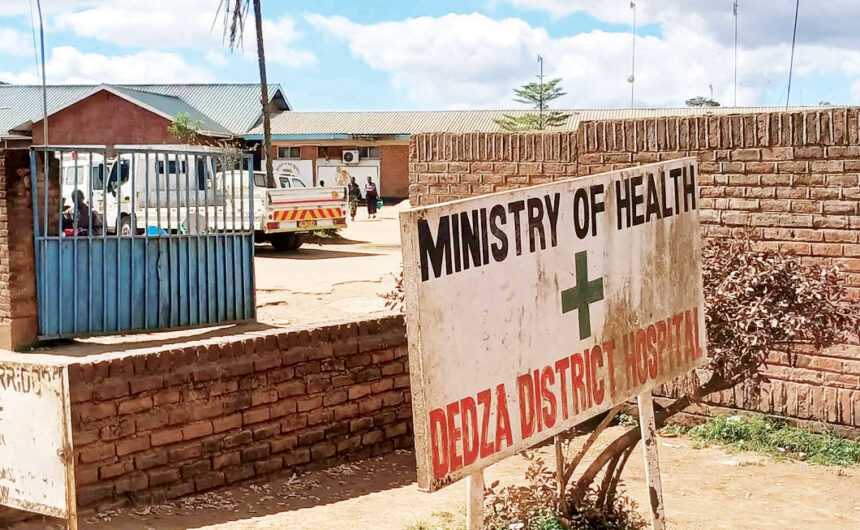
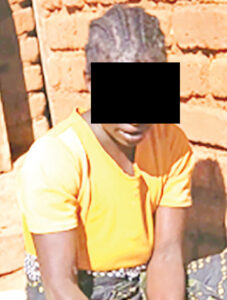
Silvia Lembani, not her real name, from Katsekaminga, under Senior Chief Kamenyagwaza in Dedza District, clutched her medical passport, the only proof her cough was real. Sputum positive. Tuberculosis (TB) confirmed. Start treatment immediately.
By every public health protocol, her journey toward recovery was supposed to begin that very day.
Instead, she returned home empty-handed. The hospital had completely run out of RHZE—the critical four-drug combination used to cure newly diagnosed TB patients.
She was left to sit at home, helplessly watching her lungs fail.
- Advertisement -
“I tested positive and was told to start treatment immediately. But the nurse said the facility had run out of medication for new patients. I was told to go home and just keep checking,” Silvia says.
She left the facility with nothing but basic painkillers.
The National TB Programme guidelines are unambiguous: initiate treatment within 24 hours of diagnosis. Delay spreads the airborne disease and it kills.
Dedza District Hospital knows this.
- Advertisement -
- Advertisement -
On the day Silvia walked in, the medical system worked perfectly until it reached the pharmacy shelf. History taken. Samples tested. Diagnosis delivered. Then, total silence.
For Silvia, the hospital’s delay bled into every part of her life.
“It severely compromised my wellbeing. I was given medication that only manages symptoms while my condition worsened day by day. Family members were also afraid that I would infect them, and others in the village completely avoided me. I had to stop doing piecework. As such, I am struggling to even feed myself,” she says.
This was not a drug shortage issue. This was a fuel shortage issue, according to the facility’ inside sources.
Silvia is not the exception. She is the pattern.
From Nsanje to Chitipa districts, patients tell the same story: diagnosed, delayed, dismissed.
In the same district, a young child diagnosed with TB was similarly sent home untreated.
According to the parents, the hospital offered nothing but superficial symptom relief.
“I went with my child, who was diagnosed TB-positive.
“Unfortunately, on that day, we were told that the facility did not have any medication and, as such, the child could not start first-line treatment. We were just put on a waiting list because the drugs were out of stock,” says a concerned parent.
The World Health Organisation (WHO) estimates that one untreated TB patient infects between 10 and 15 people per year.
Despite this catastrophic transmission risk, the hospital failed to provide data on the exact number of patients turned away, meaning dozens of potentially contagious infections were sent back into rural villages, entirely unmonitored.
Frontline staff at the facility confirmed the crisis on condition of anonymity.
“We were only admitting those in critical condition so that we could monitor them. Others were sent back home to wait for the next consignment, which took weeks to arrive. We could only advise them to keep coming back for check-ups,” a nurse revealed.
Malawi recorded 13,421 TB cases in 2025, according to the Ministry of Health.
Even under normal circumstances, 7 percent of patients die before completing their regimen.
Public health statistics further show that delaying treatment by just two months surges a patient’s mortality risk by 50 percent.
These recurrent stock-outs directly violate WHO protocols, derail Sustainable Development Goal (SDG) 3.3 to end TB by 2030, and gut the health ambitions anchored in the Malawi 2063 vision.
The system is built to break.
TB drugs sit in Lilongwe at Central Medical Stores. If district ambulances have no diesel, drugs do not move. If fuel runs out in week six of the quarter, hospitals must wait. That broken logistics chain failed Silvia. It failed at least 10 other patients we documented. It is not a drug stock-out issue; it is a fuel stockout issue.

This recurring shortage exposes Malawi’s fragile reliance on just-in-time delivery with zero buffer stock. The drugs exist in the country. The fuel to deliver them does not.
Responding to our questionnaire on Saturday, Mwayi Liabunya, the public relations officer for Dedza District Hospital, acknowledged that the facility faced logistical hurdles between month-end of May and early June but maintained that the issue has since been resolved.
“There was a period of about one week when drugs ran low due to a logistical challenge; specifically, there was no diesel available to transport and collect the medication. Because of this, patients were given a two-week package of drugs instead of the standard one-month supply.
“The issue was sorted out quickly and the programme is now running smoothly. It was not a total stockout [issue]; rather, the TB team realised the available stock would not last if everyone received a full month’s supply [and], so, they rationed it . Every patient was advised to return for their remaining doses and they were assisted accordingly,” Liabunya stated.
However, our independent verification through the patients we interviewed showed totally different findings from Liabunya’s narrative. We found that they were given painkillers not TB drugs.
Commenting on the crisis, public health expert Sandra Mapemba warned that drug stockouts carry dangerous long-term consequences.
“Stockouts for TB drugs have serious implications for both the patients and their caregivers, who risk becoming infected and passing it on to the wider public. You risk a full-blown epidemic in the long term. It is tragic because TB is entirely curable when caught early and treated properly,” Mapemba noted.
To avert cases of future stockouts, Mapemba advises immediate logistics redistribution.
“The first step is to audit which facilities nationwide have excess stock that is going unused, and real locate those [stocks] to starving facilities. At the central level, these medications must be procured immediately if they are not available at the Central Medical Stores Trust (CMST).
“If they are available at CMST, the Ministry of Health needs to review district drug budgets and support them financially. Sometimes the drugs are not stocked out nationally but individual districts simply cannot afford to purchase them from CMST,” she explained.
Dr. Elizabeth Malewezi, another health expert, expressed grave concern over the system’s failures.
“It is unfortunate and should not happen. Such circumstances allow tuberculosis infections to multiply and increase the community reservoir, driving up future TB rates. The severity of long-term complications depends entirely on how long patients go without drugs, and consequently, how many people they infect in the meantime,” Dr. Malewezi said.
Ultimately, Dedza’s current fix is merely a temporary band-aid on a systemic wound. The core fragility remains unchanged: Malawi has no fuel buffer for health deliveries. When district vehicles run dry, patients pay the price.
Health governance experts insist that the Ministry of Health must establish a Ring-Fenced Fuel and Transport Fund for essential medicines. Funded by local revenue, this would allow CMST to bypass diesel shortages and deliver emergency drugs the moment a local facility sounds the alarm.
Until Malawi starts funding its own delivery, vulnerable citizens like Silvia will continue to be sent home to spread TB — not by missing drugs, but by missing fuel.