






At Simbi Primary School in Dowa West, learning once depended less on timetables and more on the weather.
A few years ago, strong winds and heavy rains damaged classroom blocks, leaving roofs torn off and walls exposed.
With no usable classrooms, lessons moved outdoors.
Learners and teachers continued under trees and in open spaces.
Some days were uncomfortably hot while rain would stop lessons without warning. Even when the weather held, concentration was difficult to maintain.
- Advertisement -
Teachers often paused, repeated explanations or moved learners in search of quieter or shaded spots. Over time, disruption became routine.

Fifteen-year-old Standard 7 learner Tadala Kefasi still remembers those days clearly.
“There is a football field nearby and it is in almost constant use. Even during lessons, noise and movement would spill into our learning space, breaking our attention,” Tadala says.
She describes how difficult it was to prepare for lessons in such an environment, especially as examinations approached.
- Advertisement -
- Advertisement -
Books would be covered in dust during dry spells and quickly packed away when rain clouds gathered.
Today, her outlook has changed.
“I am ready for my Primary School Leaving Certificate of Education examinations next year.
I believe I will make it to secondary school,” Tadala says.
A classroom comes back to life The turning point came after Alliance One Tobacco Limited rehabilitated the damaged school blocks under its corporate social responsibility (CSR) programme.
The company rebuilt classrooms with new roofing and repaired walls, allowing learners to return indoors.
Deputy head teacher Gideon Mwale says the change was immediate once classes resumed inside.
“Lessons now proceed without interruption from weather or external noise and this allows teachers and learners to engage more effectively,” Mwale says.
He adds that teachers can now complete lessons within scheduled periods, improving learner performance and attendance.
Alliance One also installed a maize mill at the school to support a feeding programme. The mill processes maize into flour used in meals for learners.
Income generated has reduced pressure on parents who previously contributed food during shortages.
“We also use part of the income to purchase basic learning materials such as chalk and cleaning supplies,” Mwale says.
The feeding programme has also improved attendance, with more learners coming regularly because of meals provided at school.
A bakery established through the same initiative produces bread sold locally, creating small income opportunities for community members.
“With support from Alliance One, we have also planted trees around the school to strengthen it against strong winds,” Mwale adds.
Tadala says the changes are visible in daily learning.
“The environment is calmer now. It is easier to concentrate,” she says.
Teachers also note improved discipline since learners returned indoors, with fewer interruptions during lessons.
Community impact beyond education Alliance One Malawi Corporate Affairs Manager Fran Malila says the initiative forms part of a broader CSR programme covering education, water and sanitation, health and community development.
Malila says in education, the company supports construction and rehabilitation of school blocks and sanitation facilities, provides desks and learning materials and contributes to feeding programmes in partnership with customers.
“We also support afterschool initiatives such as play centres and chess programmes to keep learners engaged outside class hours,” she says.
In water, sanitation and hygiene, support includes borehole drilling, rehabilitation of wells and provision of water filters.
Small-scale irrigation has also been introduced in some areas to support both household use and crop production.
“Health interventions include renovation of rural clinics to improve access to basic services. We also support Village Savings and Loans programmes that allow households to access small loans and start income-generating activities,” Malila says.
A broader pattern beyond the classroom The challenges seen in education reflect wider pressures in rural livelihoods, where timing and access to resources remain critical.
In Kasungu’s Traditional Authority Mphomwa, 32-year-old farmer Anjelo Chirwa has been growing tobacco under contract with Alliance One Tobacco Limited since 2017.
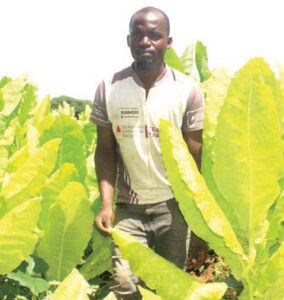
Chirwa says the arrangement has provided stability in an unpredictable sector.
“With the support I get, including protective equipment, extension services and inputs, I am now finishing building a modern house in my rural home,” he says.
He adds that rising input costs would make independent farming difficult.
“There is a guaranteed market and that makes planning easier,” he says.
Extension officers also guide contracted farmers on spacing, drying and grading techniques, improving quality and yields.
Chirwa says this has strengthened consistency in his production.
Despite progress, he points to climate variability as a major challenge.
“Rainfall patterns have become less predictable and this affects our planting schedules. Delays in inputs also disrupt production cycles, especially when rains begin earlier or later than expected,” he says.
The farmer adds that timing remains crucial to successful farming.
At Simbi Primary School, the experiences of learners and farmers reflect shared pressures shaped by weather, timing and access to resources.
Education and agriculture both depend on systems that function reliably and reach communities when needed.
Meanwhile, Tadala focuses on completing her primary education and progressing to secondary school while Chirwa works towards long-term stability for his household through farming.