


By Benson Linje:
When I stood before students, parents and teachers at Madisi Secondary School as guest of honour during the 2025 Form Four graduation ceremony, my message to candidates was simple and direct” work extra hard.
Education, I reminded them, remains the surest pathway to independence, opportunity and service.
Months later, the results speak powerfully for themselves.
Madisi Secondary School has since sent 155 students to universities and colleges across Malawi, a remarkable outcome that reflects not only student ambition but also something deeper and more enduring: leadership, culture and consistency.
- Advertisement -
At the centre of this transformation stands Abel Neba, a teacher extraordinaire whose record of steady, results driven leadership has made his name synonymous with institutional renewal across Malawi’s public secondary education system.
What stands out most about Madisi is not statistics, impressive as they are. It is culture.
During my visit, there was visible unity between teachers and parents, a shared sense of responsibility for learners and a calm confidence that signaled a school well led and well grounded. These qualities are not accidental; they are cultivated over time.
Neba’s leadership philosophy is rooted in systems, accountability and example. He is widely known for leading from the front—continuing to teach even as a head teacher—while actively engaging parents, school committees and local leaders. The result has been schools that operate not in isolation but as shared community projects with a collective vision.
- Advertisement -
- Advertisement -
As he has often put it: “I lead by example. Even as head teacher, I still teach, motivate my staff, inspire learners, embrace innovation and, above all, trust in God.”
Neba began his teaching career at Dowa Secondary School, where he quickly earned a reputation for discipline and clarity of purpose. His ability to combine firm standards with mentorship did not go unnoticed.
Less than a decade into government service, and at the age of 34, he was appointed head teacher at Mvera Community Day Secondary School (CDSS).
At Mvera, he inherited significant challenges. Over the following years, the school underwent a dramatic turnaround. Academic performance rose sharply, discipline improved and infrastructure—including the introduction of tap water and the development of sports facilities— was strengthened.
The school emerged as one of the best performing CDSSs in its education division.
His transfer to Mponela CDSS in 2021 followed a now familiar pattern: early stabilization followed by sustained improvement.
Within a year, the school ranked among the top performers in the division and later earned recognition as the best performing CDSS.

Academic gains were matched by improved infrastructure, reclaimed school land and a visibly enhanced learning environment.
These consistent results culminated in national recognition, with Neba being named Best Overall Headteacher in Malawi in 2024—an honour that reflected years of disciplined, sustained impact rather than a single standout year.
He has also received recognition at district and divisional levels and was awarded a master’s degree scholarship at Unicaf University, further strengthening his leadership and administrative capacity.
Yet what ultimately distinguishes his career is not the awards themselves but what follows him from school to school: stronger systems, improved results and institutions that function better after he arrives.
When Neba was posted to Madisi Secondary School later in 2024, he encountered a school with promise — but also serious financial strain. Outstanding debts exceeded K200 million.
Within roughly a year, those obligations had been cleared.
That financial recovery became the foundation for deeper reform.
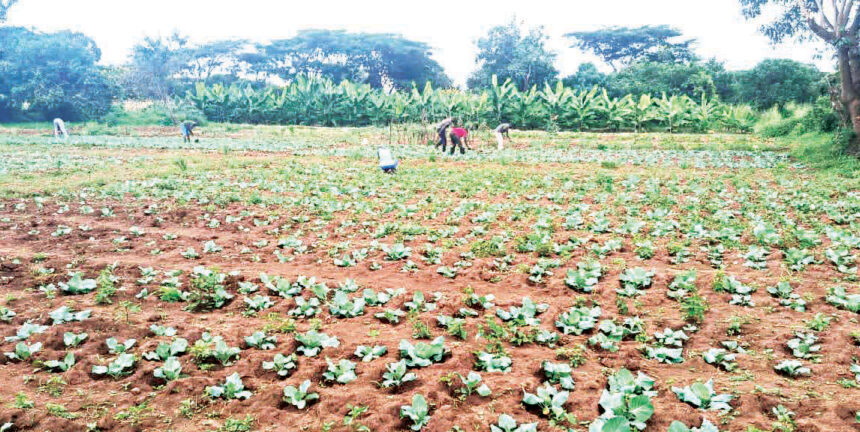
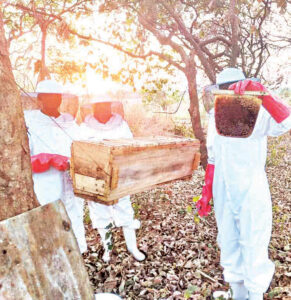
Madisi has since introduced income generating agricultural projects, including fruit and vegetable gardens, beekeeping, poultry and piggery initiatives, alongside an 11 acre farm that produces maize and rice.
Strengthened through partnerships with private sector actors such as Opulence Malawi, these projects are designed to support long term sustainability while enhancing the learning environment.
Academically, progress has been equally striking. Malawi School Certificate of Education pass rates have risen beyond 90 percent while public university and college selections have surged to 155 students, up significantly from previous years.
For Neba, success is neither accidental nor mysterious; it is the product of discipline, teamwork and faith. This approach has helped transform excellence from an aspiration into a habit, embedded within school culture rather than dependent on individual effort alone.
His vision for Madisi is clear: to normalize high performance, strengthen sustainability initiatives and leave behind not just improved results but a replicable model of effective school leadership.
Looking back at that graduation podium, it is deeply reassuring to see that the call for hard work was matched by leadership that made success possible.
Madisi’s achievements today are not a conclusion but a signpost.
The school is clearly destined for greater things—and Malawi’s education system is better for leaders such as Neba, who choose to build institutions and not merely manage them.