




By Ousman Kaliati:
For years, the road to education for many children in Sub-Traditional Authority Kamzimbe in Salima District has been painfully literal.
Every school day begins before sunrise. Armed with worn-out exercise books, learners set out on dusty or muddy paths, sometimes trekking for up to two hours to reach the nearest community day secondary schools (CDSSs).
Journeys can stretch between 10 and 15 kilometres each way. By the time they reach class, learners are exhausted.
Among those who know the burden of distance all too well is 13-year-old Mphatso Goli.
- Advertisement -
Her daily routine involves waking before dawn and walking several kilometres to reach one of the nearest secondary schools.
“The journey is very difficult. We have to leave home early to reach school before classes start,” Mphatso says.
Sometimes she walks with friends, but the distance often leaves them drained before lessons begin.
“When we reach school, we are already exhausted. It is difficult to concentrate because we have used most of our energy on the walk,” she recounts.
- Advertisement -
- Advertisement -
The rainy season makes matters worse.
“The roads become muddy and streams sometimes flood. There are days when we arrive late or even miss classes because the journey is too difficult,” Mphatso says.
The long distances also raise safety concerns, especially for girls.
“Sometimes we have to pass through isolated areas. Our parents are always worried about our safety,” she adds.
For 14-year-old Fred Chombe, the journey to school is equally demanding.
“I wake up very early so that I can prepare and start walking before sunrise. The journey can sometimes take two hours. You arrive at school already tired,” Fred explains.
The return journey is just as exhausting, and by the time he arrives home, he is too tired to study.
Fred believes that having a school closer to home will transform learning once Katawa Community Day Secondary School opens.
“Then we will arrive at school with energy. Instead of worrying about how far we have to walk, we can focus on learning. When primary school children see a secondary school close to their homes, they will be encouraged to work hard so they can continue their education,” he says.
According to Unicef, girls in rural areas complete primary education at a slightly higher rate than boys but face higher dropout rates in secondary education due to factors such as child marriage and teenage pregnancy.
The situation worsens at the secondary level. Only 12 percent of children of lower secondary school age attend school, with completion rates as low as three percent for children from the poorest households.
“Rural schools also suffer from poor infrastructure and limited resources. Many lack adequate classrooms, desks, textbooks, electricity and sanitation facilities,” the UN agency says.
For parents, long distances have often meant painful sacrifices.
Rebecca Msiska knows this reality well. Her daughter once enrolled in secondary school but eventually dropped out because the journey was too long.
“The school was very far from our home. She had to wake up early and walk a long distance every day. Eventually the daily struggle became unbearable,” Msiska says.
She adds that many families have faced similar challenges.
“We want our children to learn but the distance discourages many of them,” she says.
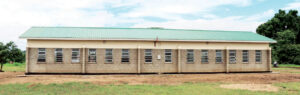
The situation is set to improve with the expected opening of Katawa Community Day Secondary School.
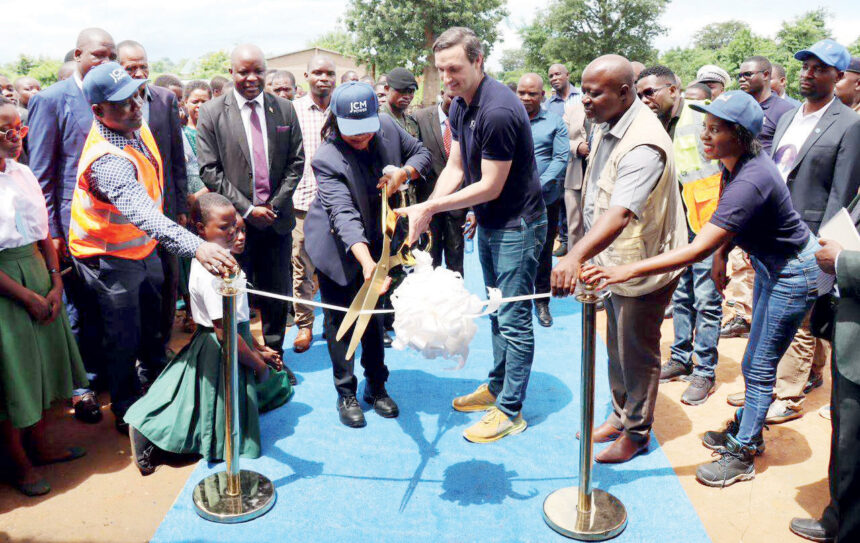
The construction of the school was made possible through collaboration between the government and JCM Power, which invested about $213,220 (K370 billion) in the project.
Standing near the completed classrooms, Mphatso envisions a different future.
“This school will really change our lives. Once it opens, we will spend less time walking and more time studying. Some girls stopped going to school because the distance was too much. Now they will have a chance to continue their education,” she says with a smile.
Fred shares her optimism.
“When the school opens, we will have enough time to study and prepare for our future. It will bring hope to many learners in this community,” he says.
For parents like Msiska, it offers a second chance.
“I believe my daughter will go back to school,” she says.
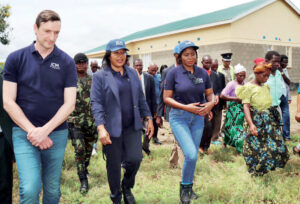
Minister of Energy and Mining, Jean Mathanga, commended the company for its commitment to uplifting communities through initiatives that promote education, clean water and gender equality.
Speaking during the official inauguration of the school in Salima District, Mathanga said the company’s investment demonstrates dedication to Malawi’s development.
“Schools like this one are the backbone of our development, empowering our youth and driving growth. It is a testament to JCM Power’s foresight that they have prioritised education as a key focus for their corporate social responsibility efforts,” she said.
Mathanga urged learners to make the most of the opportunity once the school opens.
“I encourage students to take advantage of this chance to learn, grow and thrive. Education is the key to unlocking your potential and contributing to national development,” the minister said.
JCM Power’s Chief Executive Officer Jon Bahen said the project was inspired by the challenges learners currently face in accessing education.

“We recognised that children in this area were walking long distances to attend school. This is just the beginning of our efforts to support the community and we will continue to address its needs as part of our corporate social responsibility initiatives,” Bahen said.
The independent power producer operates the 60-megawatt Salima Solar Power Plant, one of the country’s major renewable energy facilities.
Education authorities say the new school will significantly reduce the distance students need to travel once it opens.
Salima acting Director of Education, Youth and Sports Often Gadabu said many learners were dropping out because of limited access to nearby secondary schools.
“Students currently walk between 10 and 15 kilometres to reach schools such as Kaphirimtiwa and Mkwero CDSSs. This distance contributes to absenteeism and causes some learners to drop out,” Gadabu said.
He added that the new school will improve access and give learners a better chance to complete their studies.
Gadabu appealed for additional support to improve the facilities.
“We would appreciate it if government could provide infrastructure such as an office and a borehole to ensure learners have access to clean water,” he said.
Sub-Traditional Authority Kamzimbe is confident that the school marks the fulfilment of a long-held dream.
“Our children have suffered for many years because there was no secondary school nearby. Some learners currently walk very long distances every day while others drop out. We have waited for this development for a long time,” the chief said.
He reiterated that education is essential for the development of both the community and the nation and expressed optimism that the children of his area will contribute to its development now that they have a secondary school nearby.
“If we want to see development in our area and in Malawi, we must invest in education. I also appeal to parents to ensure their children make good use of the opportunity once the school opens,” he said.
While celebrating the milestone, the traditional leader also appealed for continued support.
“We hope partners and government will continue supporting us with teachers’ houses, electricity and other facilities that will help this school serve our children better,” he said.
Katawa CDSS will initially enrol students in Forms One and Two before expanding to include all secondary classes.
Mphatso and Fred hope to be among the first to step into the new school’s classrooms as both are in Form One.