


By Dyson Mthawanji:
Patson Banda, who comes from Kwindanguwo Village, Traditional Authority Mkukula in Dowa District, did not have things easy, a problem he blames on failure to read and write.
“I was a laughing stock among my friends just because I couldn’t read, write and calculate,” says Banda of a past he wants to burry and forget.
So bad was the situation that he used to struggle to write his name when filling social protection forms in his village.
He always admired people who could read, write and calculate.
- Advertisement -
Banda was hopeless and frozen in shame.
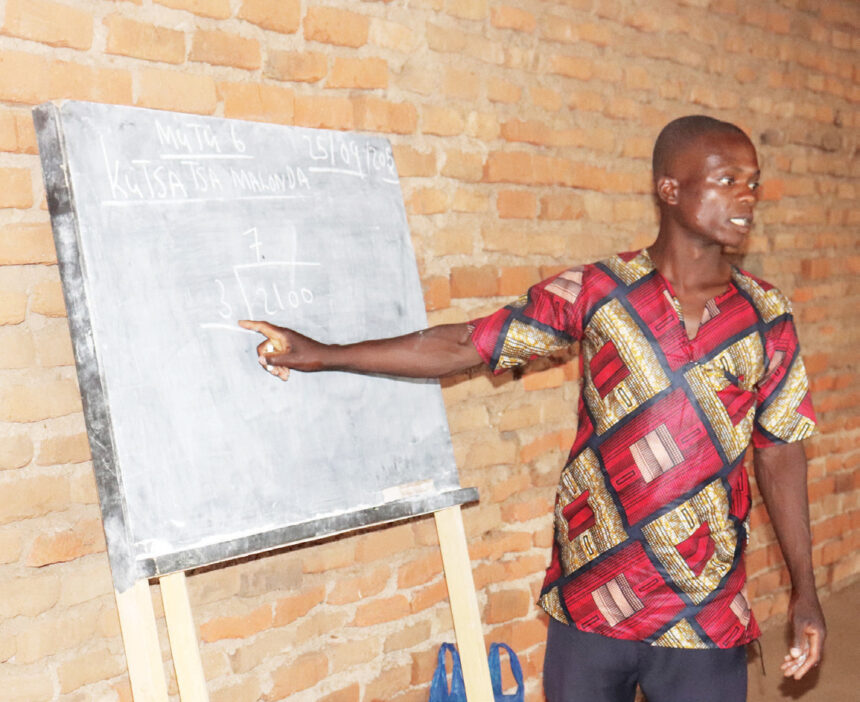
The good news is that he now reads, writes and calculates, courtesy of the Integrated Adult Education (IAE) project which DVV International—in collaboration with the Ministry of Gender, Community Development and Social Welfare (MoGCDSW)—is implementing in Dowa, Ntchisi, Ntcheu and Mchinji districts.
The project is being implemented using funds from Germany’s Federal Ministry for Economic Cooperation and Development.
“I have a small-scale business in my community. Now I am able to do calculations. I know whether I’m making profit, loss or breaking even. I’m also able to assist my children with literacy and numeracy skills,” Banda explains.
- Advertisement -
- Advertisement -
Banda joined IAE classes in March this year, when the project was introduced to the Central Region district.
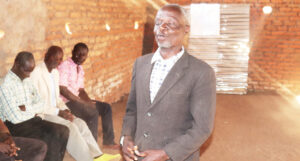
Group Village Headman Kwindanguwo describes IAE as a stepping stone for the people of Dowa District, saying only people who can read and write can understand the nitty-gritties of area development projects.
Kwindanguwo indicates that learners of IAE classes are working hard to acquire literacy and numeracy skills because they have realised that being illiterate is the enemy of development.
“We really understand that there is nobody else who will develop this area other than ourselves. That is why we are taking the IAE project seriously because we are the ones who will be happy when we are literate.
“DVV International is not giving us fish; it is teaching us how to fish. That is really good. The literacy and numeracy skills acquired from these classes will help us do our small-scale businesses and participate in rural development projects effectively,” he says.
His words echo what Barack Obama, the 44th President of the United States of America, once said, to the effect that “Change will not come if we wait for some other person or some other time. We are the ones we have been waiting for. We are the change that we seek”.
Kwindanguwo adds: “We have a lot of illiterate people in Dowa District. Therefore, the IAE project has come at the right time. The project has already started bearing fruit as many participants can read and write.”
He adds that participants are benefitting from the project as they are acquiring skills in modern farming methods, environment management and health, among others.
In Mchinji District, their IAE counterparts share skills in the production of organic fertiliser called ‘Mbeya’.
Kwindanguwo says it is the hope of Dowa IAE learners that they will acquire Mbeya production skills in the wake of rising prices of inorganic fertiliser.
The IAE project is all about blending literacy with life skills to create a well-rounded, practical learning experience for adults. It is not just about teaching people how to read, write and calculate.
The project ensures the continuation of adult education in Malawi, which dates back to decades ago.
The country’s concerted efforts to fight illiteracy stretch back to the colonial period. The first classes were launched by the British government in cooperation with the United Nations Educational, Scientific and Cultural Organisation at Mponela in Dowa District in 1947.
In most cases, churches and government officials partnered to reduce illiteracy levels through the Ukani Literacy programme.
However, the major initiative in the country’s overall strategy to combat illiteracy was undertaken between 1981 and 1986. During that period, a Functional Adult Literacy Programme was launched on pilot basis and, in that programme, literacy was perceived as a method of providing illiterate adults and youths aged 15 and above with learning opportunities, which they missed out on during their childhood.
The idea was that it would enable them to access information on health, nutrition and agriculture and, thus, improve their standards of living.
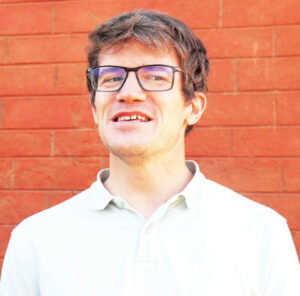
DVV International Regional Director for Southern Africa, Dr. Johann Heilmann, points out that the project is changing people’s lives in Malawi.
“I’m happy that people are able to make daily calculations and also calculations for longer periods, courtesy of the IAE project. They are also gaining knowledge on how to save and spend money wisely.
“In Malawi, money is scarce; therefore, people need to have skills on wise spending,” Heilmann explains.
Heilmann thanks Dowa traditional leaders for supporting IAE by providing space for classes.
MoGCDSW Chief Community Development Officer Samuel Ziba encourages participants to work hard as there is “no sweet outcome without sweat”.
He explains that the Malawi Government’s policies can easily be implemented if people at the grassroots are able to read, write and calculate.
DVV International started the IAE programme in 2022 following the success of a similar project in Mozambique, where the organisation also operates.
According to the Malawi Integrated Household Survey of 2020, the illiteracy rate in Malawi is estimated at 24.5 percent, with 17 percent for men and 31.2 percent for women.
The case is more pronounced for rural women. The rate is 35.2 percent compared to 19.4 percent for rural men.
The situation is markedly better in urban areas, where the illiteracy rate stands at 5.6 percent for men and 10.8 percent for women.
As Malawi charts its ambitious path towards achieving the Malawi 2063 vision goal of a prosperous, self-reliant and industrialised upper-middle-income nation, it is imperative to ensure that the majority of people are literate so that they effectively participate in the development agenda.