By Temwani Mgunda:
While many of us have encountered the unpleasant effects of consuming unsafe food that lead to illness, what often goes unnoticed are the hidden elements present in our food that pose significant health hazards in the long term.
This sad realisation was shared recently at a food safety meeting in Lilongwe, where findings of a study on the role of mycotoxins and bacteria in human under-nutrition were disseminated.
The study—conducted in Salima and Dedza districts— was carried out by the GIZ Malawi Food and Nutrition Security Programme (FNSP) in collaboration with Lilongwe University of Agriculture and Natural Resources (Luanar) and other partners.
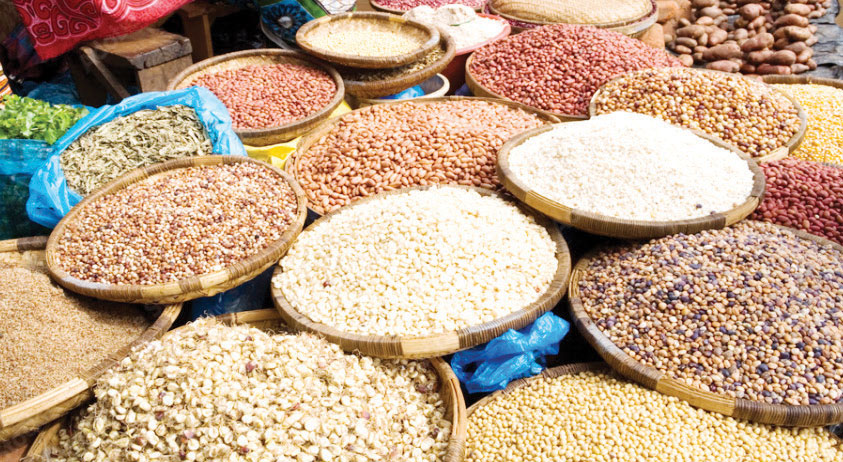
One of the major issues highlighted during the meeting is that consuming unsafe food relates specifically to mycotoxins, which are detrimental substances produced by moulds thriving on certain food items such as grains or groundnuts.
- Advertisement -

A recent study conducted by Limbikani Matumba, a lecturer in the Faculty of Life Sciences and Natural Resources at Luanar, indicates that groundnuts are not the primary culprit when it comes to exposure to harmful mycotoxins, contrary to some prevailing beliefs. The research underscores that maize, a dietary staple in Malawi, is also significantly affected by mould.
Given the integral role maize plays in the daily diet of most Malawians, particularly in the form of nsima, which cannot be missed for any proper meal, the study highlights that it is maize consumption that poses a substantial risk, potentially causing many Malawians to surpass recommended thresholds for mycotoxin exposure.
“Contrary to common belief, maize consumption poses a higher risk of mycotoxin exposure in Malawi compared to groundnuts,” Matumba noted, adding that there is low awareness in the country on the issue of mycotoxins together with other issues like bacterial contamination and their health impacts.
He said the study done in Dedza and Salima not only brings attention to the existing food safety knowledge gaps, but that it also serves as a caution to transform the way food safety is perceived and practised in Malawi.
- Advertisement -
- Advertisement -
“Avoiding mouldy or contaminated foods at all times is crucial to prevent mycotoxin exposure. We can also reduce mycotoxins in grains by, among others, reducing toxigenic fungal population in growing plants and rapidly reduce moisture content of grains,” the professor of food safety advised.
Some studies have established that esophageal cancer is also one of the health risks associated with prolonged exposure to mycotoxins and their presence in foods like maize and groundnuts might explain Malawi’s high rates of this type of cancer. The country had the highest overall rate of esophageal cancer in 2020 followed by Mongolia, according to research findings.
‘Do no harm’
One of the objectives of the GIZ FNSP is to ensure children in rural areas of Dedza and Salima receive the right foods for them to grow healthy and develop their full potential. Among the foods advocated by FNSP for this goal is groundnuts which, unfortunately, may contain high levels of mycotoxins.
According to GIZ FNSP Team Leader, Martina Kress, following the principle of “do no harm”, the project—with support from the German Development Cooperation—initiated the study to look into aspects of food safety at household level.
Kress said the formative study conducted in Dedza and Salima identified a significant lack of knowledge regarding food safety in communities in the two districts.
“Compounding the issue, mycotoxins are also suspected to play a role in the occurrence of stunting, a condition where children’s growth falls behind their chronological age. Some of the mycotoxins found, for example fumonisin and aflatoxin, are known to contribute to stunting,” she said.
In view of this revelation, FNSP and its partners have been diligently addressing the critical gaps in food safety knowledge with targeted interventions such as promoting diversified diets.
“To reduce the dangers associated with exposure to harmful elements in our food, an effective approach involves adopting a diverse diet. Instead of consuming identical meals consistently, it’s advisable to eat one type of food today, a different one tomorrow, and another the following day,” Kress explained.
She said dietary diversification significantly decreases the chances of encountering harmful substances while simultaneously enhancing the probability of obtaining essential nutrients.
“Put simply, embracing dietary diversity is consistently beneficial for one’s health,” Kress said.
Localising WHOs’ five keys to safer food
The World Health Organisation (WHO) prescribes five ways of promoting food safety at all times. Known as the ‘WHO Five Keys to Safer Food’, they include keeping clean one’s hands, cooking tools and cooking space; separating raw and cooked food in terms of storage and the tools used to cut them; cooking thoroughly especially meat, poultry and seafood; keeping food at safe temperatures; and using safe water and raw materials when preparing food.
To address this, FNSP localised and expanded the application of the ‘WHO Five Keys to Safer Food’ by incorporating mycotoxin prevention and control. The programme also developed a mini-recipe book for legume/ cereal complementary feeding based on the success of a three-month trial, which demonstrated the viability of germinated and non-germinated roasted cowpeas, soybeans, and common beans as alternatives to groundnuts.
“We also created briefs covering essential topics, including effective handwashing, promotion of pulses/legumes in complementary feeding, and hand sorting as a strategy for managing mycotoxins in grains,” explained Kress, adding that they also trained staff in the FNSP intervention districts, serving as a pilot platform for testing and evaluating the food safety manual.