





 It is acceptable for a columnist to retract previous statements if they later realise they were premature or misguided.
A few weeks ago, I mentioned on this page that I would no longer comment on the UTM Party’s internal conflicts.
Prior to the tragic death of its leader, Saulos Chilima, in a plane crash on June 10, the party seemed to be at peace.
However, the reality was quite different.
Several members who had been excluded from government were discontented. Some, including the now-activist Bon Kalindo, expressed their frustration openly.
- Advertisement -
They had anticipated, much like their counterparts in governing Malawi Congress Party (MCP), that they would have opportunities to misuse public funds.
Even within MCP, some members feel disconnected from the current administration and have voiced their discontent with the situation.
Dissatisfaction among UTM officials has been apparent for some time.
For example, the party’s secretary general, Patricia Kaliati, has been at odds with the government ever since her removal from the Cabinet.
- Advertisement -
- Advertisement -
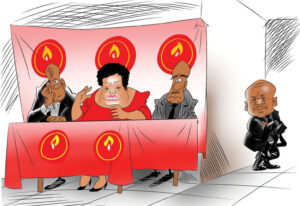
Following Chilima’s death, Kaliati and her associates were quick to declare their discontent by announcing their withdrawal from the Tonse Alliance.
It is unclear where this decision originated. According to the party’s constitution, Vice President Michael Usi should have been leading the party and making crucial decisions.
However, seeing that Usi seemed to be aligning more with MCP, Kaliati and others decided to exit the alliance, apparently after receiving legal advice that the move was not illegal.
Now, they are grappling with the realisation that the process was not as straightforward as they had believed.
Usi remains the party’s leader and has yet to comment on leaving the alliance. One might wonder who Kaliati and her associates have left with.
This situation might benefit MCP, which would prefer a stable UTM aligned with it or a disorganised UTM partnering with another political party.
Meanwhile, UTM finds itself in a precarious position, with Usi asserting that he leads the party and that key decisions should be made by him or under his authority.
Supporters of UTM, who often indulge in a false sense of significance, are now confused about their next steps.
When Democratic Progressive Party (DPP) member Dalitso Kabambe announced his departure from the party and implicitly expressed interest in UTM’s presidency, UTM members eagerly supported him.
They had accepted that, given their dislike for Usi, there was no suitable successor for Chilima within the party, making an outsider seem preferable.
As usual, their excitement was premature and they soon began considering other potential leaders.
MCP, clearly interested in UTM’s affairs, is watching closely.
The governing party might even encourage Usi to consolidate control over UTM and possibly support him in gaining delegate support at the convention.
UTM officials and members who oppose Usi might need to strategise for the possibility that he could win at the party’s convention and become its official leader.
Perhaps this would justify their departure from the alliance, albeit without the party’s name.
In his current role, Usi has limited responsibilities other than visiting offices and markets without a clear agenda.
His office has funds and he travels frequently because his role at Capital Hill lacks substantial duties.
Perhaps it is time to reconsider our laws so that the vice president has defined responsibilities, rather than merely shadowing the president and visiting hospitals and council offices to check attendance.
I digressed.
Despite his unpopularity with Kaliati and her associates, Usi is increasing his influence and remains a contender at the party’s convention. Delegates can be unpredictable.
Those opposed to Usi becoming the party’s leader should consider these factors carefully. Politics can indeed be very ruthless.