 Malawi is not short of things to talk about. The problem is that one of the voices that should be speaking loudest is strangely quiet.
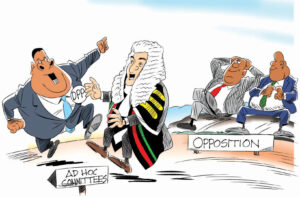
The opposition has had little to say about the growing concerns surrounding public institutions, even as Speaker of Parliament Sameer Suleman has directed Parliament to investigate allegations and complaints involving corruption, abuse of power, inefficiency and favouritism.
That silence is difficult to understand.
The opposition does not have to always agree with the Speaker. It does not have to endorse every investigation Parliament undertakes.
But surely these are precisely the issues an opposition should be examining, questioning and bringing to the attention of the public.
- Advertisement -
Instead, the debate is increasingly being presented as a battle between Suleman and the Executive.
Parliament has an oversight responsibility and exercising that responsibility is not, by itself, an attack on government.
There are institutions specifically mandated to investigate corruption and other forms of wrongdoing.
That does not remove Parliament’s responsibility to scrutinise government and public institutions.
- Advertisement -
- Advertisement -
Parliament has conducted inquiries before, made recommendations and left it to the responsible authorities to act on them.
The proper question is therefore not whether Parliament should exercise oversight, but whether it is doing so properly, fairly and within the law.
That is where the opposition should be making itself heard.
Opposition parties are not electoral machines that become active only when an election approaches. Their most important responsibility begins when they lose power.
They are expected to scrutinise government, challenge poor decisions, expose failures and give citizens a voice.
Malawi has more than enough issues requiring such a voice.
Persistent electricity blackouts continue to disrupt households and businesses. Water supplies remain unreliable. Allegations of corruption continue to raise questions about the management of public resources.
Citizens have legitimate concerns about the performance of public institutions.
These are not minor political issues that can be ignored until the next campaign.
The opposition should be demanding explanations from government where explanations are necessary and offering alternatives where problems have been identified.
Of course, there may be reasons for the opposition’s caution. Some of its prominent figures are facing court cases and are out on bail.
They may understandably be wary of saying or doing anything that could complicate their legal circumstances.
But an opposition party cannot allow the legal difficulties of some of its leading figures to become the political silence of the whole organisation.
There are MPs, spokespersons and party structures that can continue to engage on matters of public interest while respecting the independence of the courts.
There is nothing wrong with choosing one’s battles. A responsible opposition should not criticise government simply for the sake of being seen to oppose it.
It should support good policies when they deserve support, challenge bad decisions when necessary and propose credible alternatives.
The governing party should not fear such an opposition. In fact, effective opposition strengthens government.
It forces those in power to explain their decisions, correct mistakes and remain conscious of their responsibility to the public.
The concern, therefore, is not that there is no political debate in Malawi. There is.
The concern is that the opposition is not participating in that debate with the energy and consistency that its role demands.
This becomes even more worrying when civil society, which traditionally provides another layer of public scrutiny, is itself fragmented.
If the opposition is quiet and civil society is divided, who will consistently press government for answers?
Who will question the management of public resources? Who will demand explanations when basic services fail? Who will remind those in power that public office is a responsibility rather than a privilege?
Opposition MPs do not cease to represent citizens when Parliament is not sitting. They have many legitimate avenues through which to keep government accountable.
What they need is the political will to use them.
Democracy is not simply about who governs. It is also about who holds government to account.
That is why the current debate about parliamentary investigations should not become a personality contest between Speaker Suleman and the Executive.
The bigger issue is whether the institutions of democracy are doing what they are supposed to do.
Parliament must scrutinise. Government must answer. The opposition must challenge. Civil society must watch. And citizens must remain engaged.
The opposition should be the voice of the people.
The people are speaking through their daily struggles, their complaints and their demands for better governance.
The question is whether the opposition is listening. And, more importantly, whether it is prepared to speak.
Vox populi.