By Cathy Maulidi:
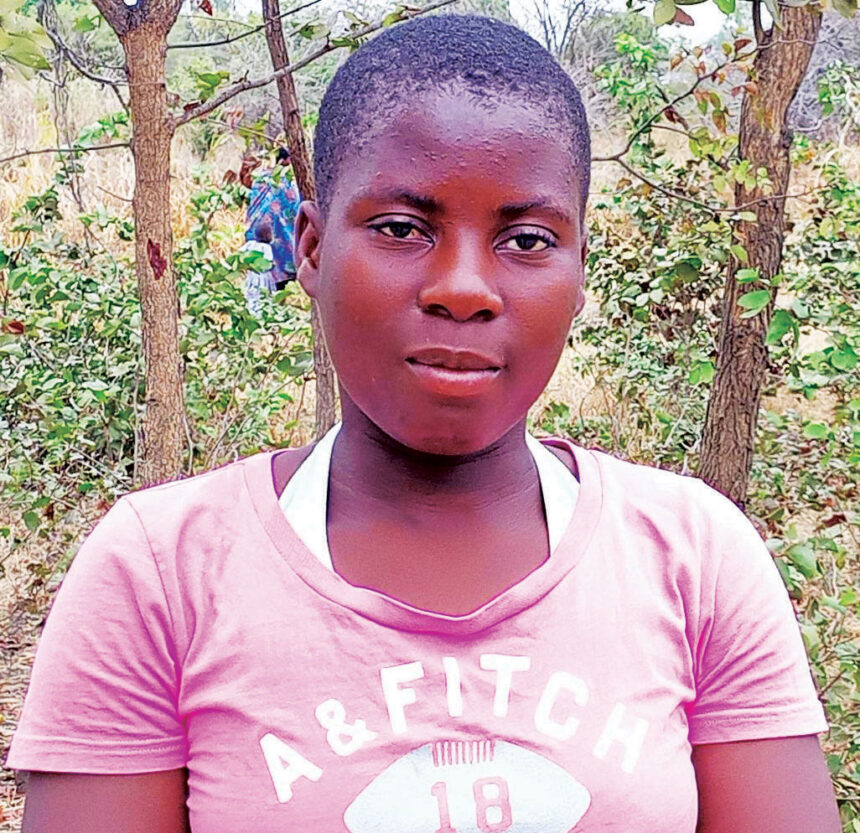
It is 6am on a Wednesday and 23-year-old Eliza Nanveya from Njamba
Village, Traditional Authority Liwonde, in Machinga District has just woken up to a sunny day— a hectic day it seems, as everyone is busy doing household chores.
Unbothered that she over-slept by village standards, Eliza, with toothbrush in hand, goes behind her grass-thatched bathroom to clean her teeth. Moments later, she walks back into her house where she takes Pre-exposure prophylaxis (PrEP), which has become her daily routine.
Nanveya, married and with a two-year-old child, says she has been using the drug to protect herself from contracting HIV.
- Advertisement -
Her desire, she says, is to live long and see her child grow into an adult. She is taking
PrEp not because her husband is HIV positive; no, she just does not want to take chances.
“I have been taking PrEp since January this year. These days, a lot happens in marriage. I may be faithful but how about my husband? He may be going out with other women outside our marriage. So, I take PrEp to protect myself from any danger that would come my way,” Nanveya said.
She said, through PrEp, she has maintained her HIV-negative status since last year.
- Advertisement -
- Advertisement -
In fact, she says, with PrEp, she has peace of mind, knowing that she is well covered.
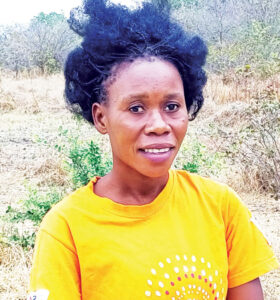
At the time of this interview, Nanveya had also convinced neighbour Ethel Andrea, who we met at Mbonechela Health Centre in Machinga, to embrace PrEp for the first time.
“After hearing the testimony of my friend, I decided to also try PrEp and protect myself from HIV infection. Men can use a condom but us, women, don’t have a tool for protecting ourselves from contracting HIV, such that I feel that PrEp is the solution now,” Andrea said.
The World Health Organisation approved the usage of a dapirivine ring, which is used by women to reduce HIV risk, in 2021.
However, Malawi is yet to introduce the ring to the market despite other countries, notably South Africa
and Zimbabwe, doing the same.
HIV diagnostic assistant at Mbonechela Health Centre, William Jali, said PrEp can act as an HIV prevention tool for women who, currently, have no other way of protecting themselves.
“In the past, we used to talk about three HIV prevention tools which were abstinence (not having sex), never sharing needles and using condoms the right way but, now, things have changed. You can’t tell someone to abstain from sex now as they will have sex anyway.
“So, to address this challenge, we need to bring in new solutions,” Jali said.
According to Jali, PrEp does not only protect sex workers who are at higher risk of contracting HIV, but can also protect those who may be in abusive families.
“Anyone can be a victim in marriage – man or woman – the point I’m trying to make is, PrEp can protect the partner who is at risk of contracting HIV in marriage. So, one is advised to continue taking PrEp when they feel they are at risk,” he added.
According to Jali, Mbonechela Health Centre was recording 45 new HIV infections every year but, now, the number has dropped to 13 since the introduction of PrEp at the centre.
According to Centres for Disease Control and Prevention, PrEp reduces the risk of getting HIV through sex by about 99 percent and from injection drug use by at least 74 percent.
Mbonechela Health Centre is providing PrEp through the Expanding Malawi HIV/Aids Prevention with Local Organisations Working for an Effective Epidemic Response (Empower) in a five-year project implemented through Determined, Resilient, Empowered, Aids-free, Mentored, and Safe (Dreams)
programming for adolescent girls and young women (AGYW) in Zomba, Phalombe and Machinga districts.
Christian Health Association of Malawi (Cham) is a local implementing partner of the project.
The project, which aims at reducing the HIV risk among partners, started in March 2020 with support from the United States Agency for International Development (USaid) and Family Health International (FHI 360).
The project also aims to empower adolescent girls and young women to reduce HIV risk through youth-friendly reproductive healthcare.
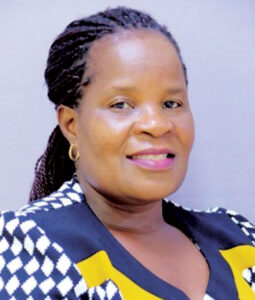
Technical lead for the project at Cham, Ruth Kundecha, said, through the project, young women and girls have adopted use of PrEp as a tool for HIV prevention.
“Through the project, girls and young women are put in clubs where they are trained in how to protect themselves from contracting HIV.
“There is huge acceptance of PrEp in the communities. Girls and young women are coming forth to demand services. We haven’t seen girls quitting PrEp because they want to protect themselves from
contracting HIV and that’s a positive change,” Kundecha said.
By using PrEp, the partners want to have sex without a condom.
This is, however, also problematic in that chances of girls getting unwanted pregnancies are high. To address this, Kundecha said the project is also offering family planning methods.
“The project is also providing contraceptives to prevent young women from getting unwanted pregnancies,” she said.
Dream facilitator in Machinga District, Loveness Kanyoza, said she uses a standardised curriculum to teach girls how they can protect themselves from HIV.
“The girls you met at the hospital accessing PrEp are a product of Dreams clubs. They are taught how they can protect themselves from contracting HIV and unwanted pregnancies,” Kanyoza said.
A study by the United States-based National Centre for Biotechnology Information found that, biologically, women are more vulnerable than men to infections because of the greater mucus area exposed to HIV during penile penetration.
“Women under age 17 years are at even greater risk because they have an underdeveloped cervix and low vaginal mucus production,” the report said.
Lawrence Mpende, an outreach nurse for the Empower project at Nayuchi Health Centre in Machinga, said while girls from ages of 15 to 24 are receiving PrEp.
“Young girls from 10 to 14 years are provided with HIV testing and health talks while the age bracket of between 15 and 24 is allowed to receive PrEp,” Mpende said.
Head of Policy Support and Development at National Aids Commission (Nac), Andrina Mwansambo, said there is a need not to leave anyone behind if the battle to end HIV and Aids is to be won.
“Malawi is committed to the 2021 HIV and Aids Political Declaration by the United Nations General Assembly, which seeks to end inequalities and get on track to end Aids as a public health threat by the year 2030.
“Adolescent girls and young women (AGYW) in our region are three times more likely to be infected with HIV than boys and men of the same age. The HIV incidence among AGYW in Malawi is higher than the rest of the females. We need comprehensive sexual education and integration of sexual reproductive health, gender-based violence and HIV to achieve our set targets,” Mwansambo said.