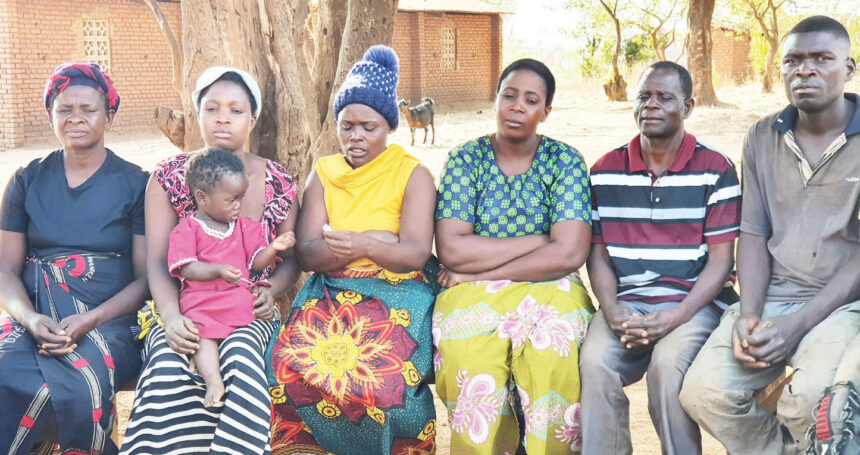
Malawi’s attempt to reduce its overreliance on tobacco is failing to bear the desired fruits as the crop diversification agenda is crippled by numerous challenges, THOMAS KACHERE has found.
Tobacco remains Malawi’s biggest forex earner on the list of export crops. Its contribution has, however, been declining in recent years due to factors such as the anti-smoking lobbies.
A crop diversification programme has been around for some time now.
But farmers insist their only hope remains the ‘green gold’. Those that have tried to diversify say they have been left frustrated.

Lilongwe-based tobacco farmer Elison Nsonya says he does not see any crop that can replace tobacco because he sells the crop in dollars at a structured market, which is not the case with other crops.
- Advertisement -
“In the 2022-23 season, I grew soya beans and managed to harvest 14 50-kilogramme bags, but I was disappointed with the cheap price on the market.
“I sold some of the produce within my village. I am keeping the remaining stock. I will never grow soya beans again,” Nsonya says.
Still, he finds it exploitative that farmers receive inputs in form of loans from tobacco companies and get “overburdened” at the end.
Farmer Fred Suman, who is determined to diversify crop production, by moving away from tobacco, says he has become poorer.
- Advertisement -
- Advertisement -
He sees himself returning to tobacco production full throttle if the other crops, such as groundnuts and soya beans, continue struggling to get good markets.
Samson Kestele from Mchinji argues that some companies attach conditions to loans which they offer them, which they cannot understand.
“Any farmer who wants to get a loan for tobacco production is forced to get a loan for groundnuts, sunflower and soya beans.
“Companies set the buying price for us but fail to buy the produce afterwards. We are still forced to repay the loans with huge interests even when we take our produce to markets where prices are very low,” Kestele says.
We came across several other farmers who attempted to diversify crop production. They received support in terms of inputs and were promised markets and better prices, which never came.
The majority of these farmers, who were forced to grow other crops, are just keeping the produce in their homes, but are forced to repay the loans they obtained to produce the crops.
The development could be sending a bad message about the crop diversification agenda.
“I have not benefited anything from growing other crops such as soya beans, groundnuts and maize.
“The tobacco company we are contracted to forced us to grow the other crops but did not buy the produce. We ended up selling it to vendors,” farmer Norah Kaphagawanani said.
There are schools of thought that argue that crop diversification in Malawi is indirectly controlled by tobacco companies.
Studies have shown that the companies are pushing for diversification due to uncertainties in the tobacco industry.
They have also found that the tobacco companies are doing it for public image and corporate social responsibility.
According to the studies, since the tobacco companies have been accused of influencing smallholder farmers to grow tobacco only at the expense of food crops, they are now forcing farmers to follow the principles of crop diversification to grow legumes and maize, aiming to protect themselves from global pressure.
They do not offer a market for other crops, which suggests that these are not important to them despite farmers paying for them.
Maynard Nyirenda, Executive Director of Sustainable Development Initiative, an independent think tank working to shape and inform international policy on sustainable development governance, says it is clear that not much has been done on the diversification issue.
“We can see for ourselves that government is still depending on tobacco for foreign exchange, yet it is clear that tobacco is not able to generate enough forex.
“The farmers are able to produce alternative crops but all what they need is to have readily available markets that are stable, predictable and profitable,” Nyirenda says.
He adds that his organisation wants to see the gradual departure from tobacco being earnest.
“We want government to start institutialising markets for other crops like legumes. We have seen tobacco volumes going down, but that does not mean farmers are diversifying,” Nyirenda says.
We did not manage to get a comment from Agriculture Transformation Initiative, the institution championing the diversification agenda.
But, the general feeling among some farmers is that diversification “thing” is just lip-service by politicians and government officials.
Experts and policymakers accept that Malawi needs economic restructuring by realigning policies to other crops for failing to contribute to the solution of agricultural challenges and the economy.
Recently, the Malawi Government became a party to the World Health Organisation Framework Convention on Tobacco Control, joining 182 countries, thereby agreeing with Article 17 of the framework.
The article discourages tobacco production, while promoting economically viable alternatives for tobacco workers, growers and individual sellers.
This appears to resonate with what President Lazarus Chakwera said in his State of the Nation Address of September 4, 2020, that crop diversification is the only way to wean the country off overreliance on tobacco.
But why should tobacco companies be the ones involved in the diversification agenda?