By Patience Lunda:
Despite the widely acknowledged importance of Early Childhood Development (ECD) education, the reality for many rural families is that it remains beyond reach.
For Tryness Nkhambule, though, her challenge comes in the form of the long distance she has to travel as she escorts her five-year-old son, Vitumbiko Kumwenda, to Kalaza Community Based Child Care Centre (CBCC).
The centre is five kilometres (kg) from their house.
Every day, she is supposed to pass through Zenda River, whose water levels increase when it rains.
- Advertisement -
However, on February 23 this year, tragedy struck as Nkhambule, carrying her son on her back, slipped and fell into the river.
Strong currents nearly swept the son away.

Luckily, bystanders saved the boy, who, by that time, had already consumed a lot of water.
Nkhambule still harbours deep-seated fears to send her child to the ECD centre every time it rains
- Advertisement -
- Advertisement -
“He would have died if those people were not there to help us as he was drowning and it really scares me every time I think about crossing the river when it rains because it brings back the disturbing memories but I still go ahead because I have to help him meet his education goals,” Kumwenda said.
Her son is not the only one to have had a near-death experience at a river; another ECD service seeker met a similar fate, a stark reminder for parents who brave the waters daily with their children.
Take, for instance, Mirriam Mkandawire of Humbi Village.
She covers five km to escort her four-year-old daughter Nia Nyangulu to Kalaza CBCC every school day.
The journey leaves Nia exhausted by the time she reaches school.
Like Nkhambule, Mkandawire also contends with Vongo River, which ‘fumes’ in the rainy season, leaving Nkhambule and her daughter stranded.
Despite facing these challenges, Nia demonstrates the impact of ECD education, proficiently reciting her alphabet and other lessons learned at school.
Mkandawire’s daily sacrifice underscores the vital role parents play in ensuring their children’s access to education.
“My child is young and cannot travel alone because of the distance and the river and I have to do this every day.
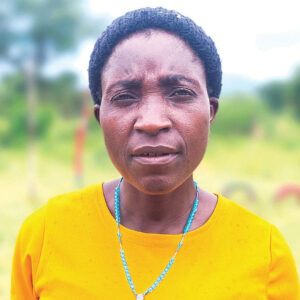
on her own
“However, every time I am occupied or sick, she does not go to the ECD centre because she cannot do so alone. This means she misses out on lessons,” Mkandawire said.
Yet the challenges extend beyond mere access.
Lilani Ng’ona, a mentor responsible for overseeing Kalaza, Kamwe, Rukuru and Kazomba CBCC, also covers over five km to access the centres.
Ng’ona added that failure by the government to enroll more caregivers to start receiving honoraria is negatively affecting the delivery of quality ECD services as people lack motivation.
“The quality of ECD education is compromised in rural areas because of the challenges that are encountered by both learners and caregivers. These challenges range from lack of food to long distances covered to access centres. If these challenges can be addressed, then we can produce best outcomes,” he said.
Efforts to mitigate these challenges are ongoing, with the Kalaza CBCC management committee mobilising resources to support caregivers.
And, yet, the burden falls heavily on the community, with many people unable to contribute resources due to financial constraints— as indicated by Evelyn Nyasulu, the vice chairperson for the committee.
Group Village Headman Visonga Mbungi of the area said it is high time the government paid more attention on ECD education as it does with other sectors.
Mbungi added that ECD education is crucial if children in rural areas are to grow into better citizens, thereby fulfilling the human capital development pillar in the Malawi 2063 blueprint.
“Mentors and caregivers are doing a huge job and they shouldn’t just be left out. We want the government to start paying them— the way it does with other teachers as this would help in promoting ECD education,” he said.

Commenting on the matter, Livingstonia Synod ECD Department Executive Director, Reverend Edward Kamthunzi, said the country is not advancing, in terms of the provision of ECD services, citing the access rate— which has been hovering at between 42 and 48 percent when it was supposed to be at 70 percent as of 2022.
Kamthunzi stressed the need for increased funding and attention from the government to address challenges that are hindering ECD access and quality.
“The challenge of access to ECD centres is huge and, as things stand, many children are not able to attain ECD education and the challenges that caregivers are facing are making most of them to stop the service and, in turn, this negatively affects children. This is why we need to pay more attention to ECD to change the status quo,” he said.
Currently, there are 49,630 caregivers in 13, 295 CBCCs in the country and, out of these caregivers, 28,937 are trained, representing 37 percent of the trained caregivers.
Minister of Gender, Community Development, and Social Welfare, Jean Sendeza, highlighted the government’s commitment to improving ECD education.
However, she acknowledged that the current honorarium for caregivers is insufficient, affecting their dedication and retention.
Sendeza said only 3,000 out of 32,000 registered CBCCs’ caregivers in the country get honorarium, which is also insufficient to sustain their valuable contributions.
However, the journey to comprehensive solutions for ECD education remains ongoing, highlighting the urgent need for concerted efforts to ensure every child has the opportunity to thrive.