
Maybe, all over the world, parliament buildings and parliamentarians share characteristics: Imposing buildings that bulge at the slightest touch of nature as well as tough-talking lawmakers whose voices are sometimes prone to losing weight.
Take, for instance, parliament buildings on other continents as well as on the continent of Africa, where countries such as Malawi have suffered one mishap or more.
Heavy rains once exposed problems with the design and finish of the European Parliament’s Brussels building at a time it was considered new. This happened in Brussels, Belgium, way back in 2007.
In June that year, people moved into the first two extensions of the buildings, which cost €326.2 million, safe in the belief that they were home and dry.
A month later, heavy rains exposed them to one stark reality: Nobody can stop nature.
- Advertisement -
Of course, that was evident when, according to Politico, roofs started leaking. Not just that; there were damaged carpets and swollen paint along the main concourse and some offices.
How about the United Kingdom? In May 2023, there was a warning that Britain’s Parliament building, which is also a Unesco World Heritage Site, was crumbling and leaky.
DW reported that in a report, the House of Commons Public Accounts Committee said the seat of British democracy was “leaking, dropping masonry and at constant risk of fire”, such that “there is a real and rising risk that a catastrophic event will destroy” the building before long-delayed restoration work is done.”
Two month later, in July 2023, something happened to another building there. The Independent indicated that a “deluge” of water threatened to soak members of Parliament (MPs) in Parliament’s Portcullis House as the building’s glass roof dramatically cracked open.
- Advertisement -
- Advertisement -
The vast majority of the block’s central atrium was sealed off as water pooled beneath the broken pane, with people ushered away from the cordoned area”.
The building is part of the parliamentary estate and houses MPs’ offices, with a courtyard featuring a restaurant, a canteen and a coffee shop, the publication added.
In Thailand, its then new multi-billion United States dollar parliament building suffered a setback, too.
That is way back in September 2022.
According to Thai PBS World, rain water leaked through the roof of the parliament building onto the ground floor…requiring workers to bring buckets and wheelbarrows to catch the drips”.
The development riled some lawmakers, notably former Democrat MP Watchara Petthong, who lamented the situation on Facebook.
In January 2019, the situation replicated itself in Malta, where Speaker Anġlu Farrugia bemoaned water damage to the parliament building.
The Times of Malta reported, while quoting Farrugia, thus: “Valletta’s iconic parliament building is leaking during bad weather, raising concerns of structural and equipment damage…. This is a problem that started three years ago, and has been getting worse year-on-year, something really needs to be done as this has become an extraordinary situation,” he said.
This also happened in Jamaica.
In January 2020, the Jamaica Gleaner reported that “Less than 72 hours after the grand reopening of the multimillion-dollar refurbished parliament building, heavy rains have exposed some flaws in the facility”.
In Malawi, the roof of the Parliament Building in Lilongwe leaked in the wake of heavy rains, too.
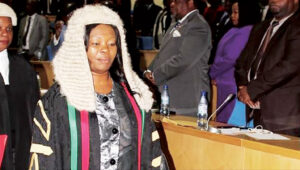
This happened in 2022, to the bewilderment of the citizenry, including Speaker of the National Assembly Catherine Gotani Hara.
I can go on and on but the point is that, globally, parliament buildings are not immune to the natural forces.
However, despite that they sometimes face problems with structures that house parliaments, at least voices of MPs in other countries seem to carry more weight in the eyes of members of the Executive than voices of lawmakers back home.
A case in point is Malawi’s parliamentary committees whose chairpersons, deputy chairpersons or other representatives have, every now and then, issued directive after directive, order after order, often to no avail—with no corresponding action from the Executive.
In an ideal democracy, the three branches of the government— namely the Executive, Legislature and Judiciary—have to respect the doctrine of the separation of powers while working in unison.
Back to the basics
According to the Legal Information Institute at Cornell Law School, the “separation of powers is a doctrine of constitutional law under which the three branches of government (executive, legislative and judicial) are kept separate. This is also known as the system of checks and balances, because each branch is given certain powers so as to check and balance the other branches.
“Each branch has separate powers, and generally each branch is not allowed to exercise the powers of the other branches. The legislative branch exercises congressional power, the executive branch exercises executive power, and the judicial branch exercises judicial review.”
To this, the National Conference of State Legislatures adds that the term “trias politica”, or “separation of powers”, was coined by Charles- Louis de Secondat, baron de La Brède et de Montesquieu, who was an 18th century French social and political philosopher.
“His publication, Spirit of the Laws, is considered one of the great works in the history of political theory and jurisprudence, and it inspired the Declaration of the Rights of Man and the Constitution of the United States. Under his model, the political authority of the State is divided into legislative, executive and judicial powers. He asserted that, to most effectively promote liberty, these three powers must be separate and acting independently.
“Separation of powers, therefore, refers to the division of government responsibilities into distinct branches to limit any one branch from exercising the core functions of another. The intent is to prevent the concentration of power and provide for checks and balances.”
However, in the case of Malawi, there are occasional overlaps, especially when members of one branch of the government, say the Legislature, ‘order’ the Executive branch of the government to do something.
In the Malawi case, representatives of government ministries, departments and agencies appear in Parliament–that is, before members of parliamentary committees—to respond to issues that arise every now and then.
The issues include how funds were utilised and, in cases where the Auditor General has made some queries in his or her annual reports or reports covering a given period, parliamentary committee members summon those responsible and demand answers.
When the need arises, they issue directives, often to the disdain of those in the Executive branch of the government.
This sometimes culminates in a situation where some of the directives or orders made by Parliament are not acted upon by the Executive branch of the government, rendering otherwise honourable MPs’ voices weightless.
Elsewhere, only parliament buildings leak but the voices of MPs retain their authority, prompting those in the Executive branch of the government to do the needful whenever lawmakers issue directives.
Not just that, lawmakers even mete out punishment on errant members of the Executive.
In Malawi, this is not always the case as cases are common of people who were appointed by State presidents refusing, point blank, to appear before members of parliamentary committees.