By Macdonald Thom:
It is a rugged earth road, snaking through villages and farmlands, cutting across rivers with small bridges aiding progression in a 17-kilometre journey.
By the time the destination is reached, it is a distant memory that part of the journey was along a tarmac road from Mponela Trading Centre on the Mponela-Ntchisi Road in Dowa.
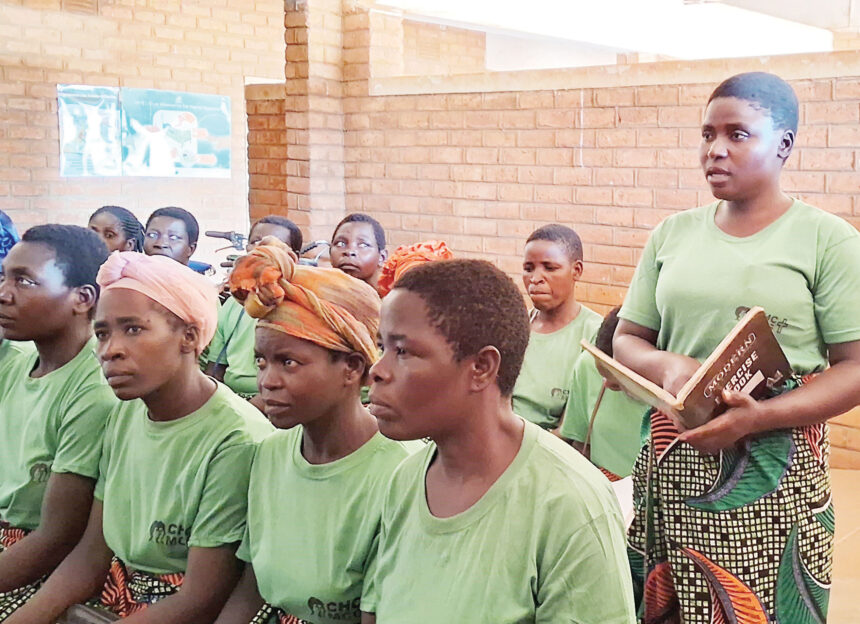
The destination, Chinkhwiri, is a bustling remote location. At Chinkhwiri Health Centre, women, all wearing green T-shirts, are gathered.
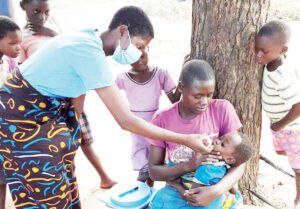
These have become a beacon for promoting the vaccination of children in the area.
- Advertisement -
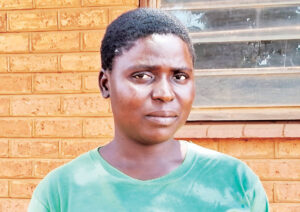
Effrida Gwani has been a resident of Chinkhwiri since she was young.
She has occasionally travelled to some places, but for her, Chinkhwiri has been what she can describe as her true home. She declares her intention to serve it so that the best can emerge from this area.
Throughout her time in the area, Gwani has witnessed both the good and the bad, particularly concerning childcare.
She states that the formation of Chinkhwiri Mother Care Group (MCG) in 2021 marked the beginning of a new era for her community.
- Advertisement -
- Advertisement -
“Before the establishment of the group, it was not easy for Health Surveillance Assistants (HSAs) to reach out to all the children in our area. They were only providing vaccinations to those attending under-five clinics,” she recalls.
Chinkhwiri MCG has become a strong force in promoting vaccination in this remote area of Dowa.
Among other activities, it has played an important role in tracing defaulters, conducting sensitisation and advocacy meetings and registering pregnancies and newly born babies.
Gwani, who has now become the group’s chairperson, explains that they have been doing all they can to achieve the ultimate goal of promoting children’s health.
“We are meeting with chiefs and other members of the community to advocate for improvements in our area.
“For example, we are encouraging them to build houses for HSAs and shelters for conducting under-five clinics, so that children receive the right healthcare at the right time,” she says.
This is possible if the HSA resides in the area in which he or she is working.
The effort, not surprisingly, has yielded results that every health worker can smile about.
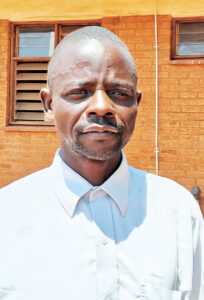
As Sinoya Wikinala, an HSA stationed at Chikhobwe catchment area, elaborates, there has been an improvement in vaccination uptake in areas around Chinkhwiri Health Centre.
“Before the group was established, vaccination coverage for children was below 80 percent. In most cases, we were in the region of 50 percent to 60 percent. But since we started working with mother care groups, coverage has now exceeded 80 percent,” Wikinala explains.
His catchment area has 1,160 people, out of whom 118 are children under the age of five.
The Malawi Health Equity Network (Mhen) formed the MCG under the five-year Health Systems and Immunisation Strengthening project, supported by Gavi, the Vaccine Alliance.
Apart from Dowa, the project is also being implemented in hard-to-reach areas of Blantyre, Lilongwe, Mchinji, Ntchisi, Kasungu, Mzimba South, Mzimba North, Chitipa and urban slums.
Today, as the 30-member group reflects on where they started, they pat themselves on the back.
“We have built houses in Mpotola Village, where an HSA has already moved in. We have constructed another house in Mafosha, which currently needs windows and doors.
“At Chatewa, advocacy has led to the construction of a shelter being used as an under-five clinic,” Gwani reveals.
It may sound like an easy task, but in reality, it has not been a smooth journey. The MCG acknowledges the support they are receiving from their traditional leaders.
“Our traditional leaders are assisting us in our efforts. They now understand the importance of having HSAs residing within their areas,” Gwani says.
Village Head Chinkhwiri recounts that since the formation of the MCG, there has been enhanced awareness about vaccination in the area, to the extent that infant deaths have decreased.
“In the past, many infants died. But with the many vaccination messages, things have changed for the better. People now understand the importance of vaccination,” the traditional leader says.
He supports the MCG to ensure that all people in his area recognise the significance of immunisation.
“I take a leading role in sensitising people about scheduled vaccination campaigns in the area. For those who do not take this seriously, we follow up with them and send special messages,” he adds.
Maxwell Kapiseni, a cold-chain technician at Dowa District Health Office, underscores the significant role women are playing in enhancing the uptake of vaccinations in the district.
Kapiseni explains that before the formation of the groups, uptake of the Pentavalent Vaccine 3, for instance, was around 75 percent, but now it is at 82 percent.
“That represents a significant rise in vaccination coverage. We attribute this to the fact that community members are receiving information from fellow community members. They utilise the messages and make decisions to have their children vaccinated,” he explains.
The Pentavalent Vaccine provides protection against diphtheria, tetanus, pertussis, haemophilus influenzae type B and hepatitis B—five potential killers.
Mhen Regional Chairperson for the Centre, Gift Mwale, says the MCGs have been able to achieve what they have so far due to capacity-building sessions they have been attending.
“We are providing training to ensure that MCGs understand issues related to immunisation and vaccines. We encourage them to engage with their leaders and the general community to take the lead on immunisation and vaccine matters,” Mwale says.
United Nations Sustainable Development Goal Number 3 promotes healthy lives and well-being for all at all ages.
The second target of this goal aims to end preventable deaths of newborns and children under five years of age, with all countries striving to reduce neonatal mortality to at least 12 per 1,000 live births and under-five mortality to at least 25 per 1,000 live births by 2030.
Efforts by Chinkhwiri MCG have the potential to significantly contribute to the achievement of SDG 3 in Malawi.