By Pemphero Malimba:
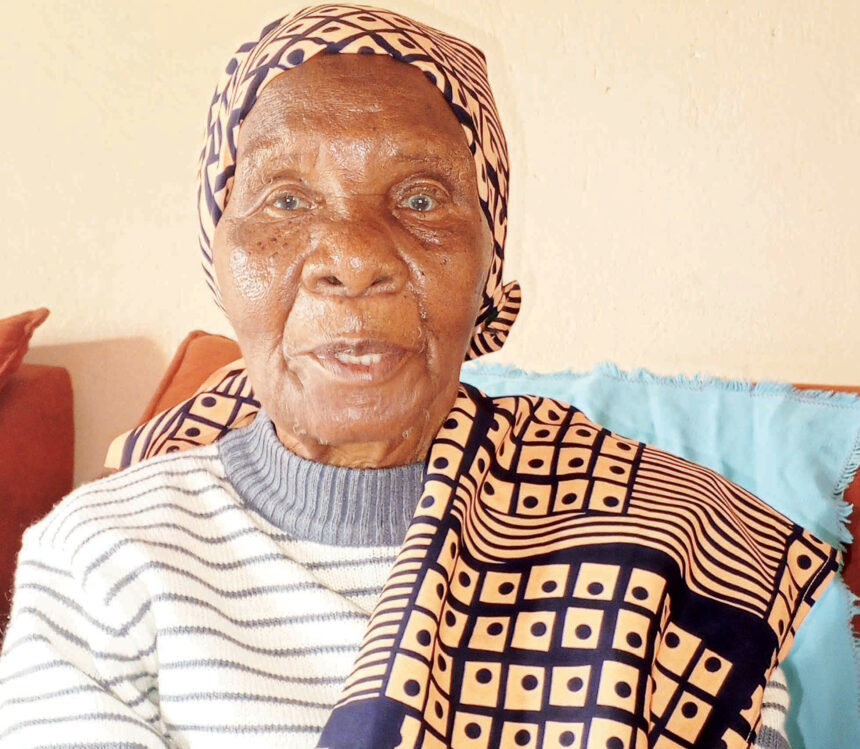
While many women lose hope after the death of their husbands, one woman has shown that all is not lost in such circumstances.
Ninety-four-year-old Alice Kavwenje, from Kwendakwina Village in Traditional Authority (TA) Chilooko, Ntchisi District, managed to raise and educate her children single-handedly through farming.
Kavwenje became a widow in 1982, after the death of her husband, Jonathan.
Left with the responsibility of caring for their eleven children, she relied on farming as her primary source of income.
- Advertisement -
“I grew maize, groundnuts and soya beans, which I sold at the nearest Admarc market. I used the proceeds to pay school fees for my children,” Kavwenje explains.
At the time of her husband’s death, many of her children were attending secondary school, where education required fees to be paid.
“I realised that if I sent my children to school, they would one day become employed and financially independent. So, I made sure they remained in school and completed their education,” she says.
Although farming provided some financial support, there were still challenges.
- Advertisement -
- Advertisement -
“Sometimes it was difficult to raise enough for school fees. Occasionally, my brother would help pay the fees, as it was becoming increasingly difficult to find funds.
“Raising girls on my own was also challenging. I am grateful to their grandmother, who also encouraged them to focus on their studies,” she adds.
Kavwenje ensured her children, who were studying at schools such as Dedza Secondary School, Stella Maris Secondary School, Likuni Girls and Lilongwe Girls Secondary School, received the best education possible.
Some even went on to attend the Malawi Polytechnic, now the Malawi University of Business and Applied Sciences, and nursing colleges.
Among her children are five accountants, two engineers, two teachers and a nurse.
“I feel proud to see my children educated and financially independent. Now, my children support me financially, providing for my daily needs and helping with farming,” the nonagenarian says.
Kavwenje believes that women have a critical role to play in their children’s education.
She insists that women “must stand firm”.
“They need to ensure their children are attending school and doing well in their studies. Children should not be idling at home while their peers are at school. Education is key to standing on your own,” she says.
Kavwenje is eager to inspire other children and women across the country.
“I am ready to share my experiences. Women need to understand the importance of education for their children and children need to recognise that education is vital for their future,” she says.
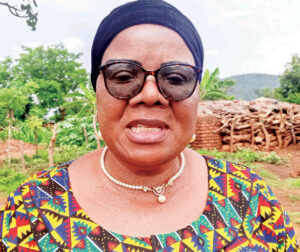
One of her daughters, Esther Kavwenje Nyirenda, who now works at Kamuzu Central Hospital in Lilongwe, recalls feeling hopeless after hearing about her father’s death.
“I was in Form 4 at Stella Maris Secondary School. I thought that would be the end of my education. Fortunately, my mother managed to continue paying for my education and that of my siblings until we achieved our goals,” Nyirenda recalls.
After completing secondary school, Nyirenda pursued nursing and midwifery studies in Phalombe District.
Her educational journey continued as she studied at the Malawi College of Health Sciences, specialising in eye care.
“I feel so proud and honoured by my mother. She is my hero. Everything she has done for us is something extraordinary. I feel blessed to be educated and I wish her a long life,” Nyirenda says.
She credits her success to the strong encouragement from her mother.
“She instilled in us the belief that we could achieve anything with education and that motivated us to push forward,” Nyirenda recounts.
Group Village Head Kwendakwina acknowledges the challenges faced by women in the village who are raising children alone.
“For instance, there are about five women-led households in this village, where the women are raising children alone after the death of their husbands or due to divorce.
“The living standards of these women are very bad. They face difficulties in farming and providing food, which is concerning,” the local leader says.
However, the inspiring story of Kavwenje has become a source of encouragement for women in the village.
Despite the many challenges she faced, she never wavered in her determination to ensure her children received an education.
“Agogo’s story is inspiring many women here. As a local leader, I encourage others not to lose hope. They must work hard to ensure their children stay in school and complete their education,” Kwendawika says.
She adds that local leaders have made efforts to promote girls’ education.
The village head further states that people in her area encourage one another during village development committee meetings to use mother groups to visit villages and identify young girls who are not attending school or those who have children at a young age.
“We urge them to return to school because we know that educating a girl benefits the entire community and the country as a whole,” she explains.
Twenty-three-year-old Esther Chunga is another example of a young woman facing difficulties while raising her siblings.
Chunga cares for her six siblings after their mother moved to Kasungu District to work on a farm following the death of their father in 2023.
She often has to wait for her sisters and brothers, who are in primary and secondary school, to finish their schoolwork before they find piecework to earn money for food.
“We do agricultural labour and sand mining. Life is hard, especially when it comes to paying school fees for my two siblings at Mbomba and Malomo Community Day Secondary Schools.
“So far, no one has been able to support their education and they have not been selected for the Constituency Development Fund’s bursary scheme,” Chunga explains.
In Malawi, there are over 1.4 million female-headed households of the total of 3.98 households nationwide, according to the National Statistical Office.
Kavwenje’s story has inspired many, including the Women Judges Association of Malawi (Wojam).
The association has recognised the 94-year-old as a role model for girls’ education under its N’zotheka (It’s Possible) Programme.
Wojam plans to document her story in various formats, including books to be used by children and women.

“Wojam is concerned about the increasing negativity towards the elderly. Therefore, it has decided to give special recognition to Mama Kavwenje, as a way of appreciating what she has achieved in her life.
“Many single mothers give up on educating their children, especially their daughters, due to financial constraints,” Justice Ivy Kamanga, a trustee of Wojam and a judge in the Supreme Court of Appeal, says.
Kamanga describes Kavwenje as a truly special woman.
She states that, typically, when a single mother heads a household, the children are often sent to do chores so that they can bring food into the house.
“But Kavwenje did not do that; she ensured she was the one who provided for her eleven children. Her first-born son took over the responsibility and supported his sister to continue her education, who now holds a master’s degree and is a senior civil servant,” the judge says.
According to Kamanga, Kavwenje’s story is one that should inspire many women and girls across the country.
“We want to remind children that although they may face challenges, they should look to this woman who was both mother and father to her children and whose story is one that we hope many women will emulate,” she sums up.