By Isaac Salima & Jarson Malowa:
Malawians are feeling the pinch of unstable commodity prices on the market, The Daily Times has established.
The Daily Times crew has been monitoring market trends for 11 weeks now, when prices of goods and services have been rocketing on daily basis.
Analysis say the problem can be resolved by ensuring stable flow of foreign exchange, which they claim cannot be addressed within a short time.
Cross-border Traders Association of Malawi President Steven Yohane said forex shortage was the root of all challenges Malawians were experiencing.
- Advertisement -
“We are not producing more, in terms of export products.
“We, as traders, are at the receiving end as we can no longer find forex in authorised dealer banks. The forex is found on the black market, where it is being sold at higher prices,” he said.
On the black market in Zomba Monday, black market dealers were trading the United States Dollar at K3,500.
In Blantyre, other black market operators were peddling it at K3,600.
- Advertisement -
- Advertisement -
For the past three months, consumers have been subjected to an increase in basic commodities such as maize flour, relish, cooking oil and bread.
For instance, a two-litre bottle of cooking oil, which was selling around K10,000 in October last year, is now fetching K13,000.
Last week, some shops adjusted upwards prices of bread, with some types of bread being sold at a minimum of K2,500 or K3,000 from K1,800.
According to recent data from the Centre for Social Concern, which tracks the cost of living, the cost of basic needs items in Malawi is around K520,000 for a family of six people.
Emily Mussa from Chilomoni Township in Blantyre said that life was becoming unbearable for low income earners in the country.
“I receive K120,000 per month but if I break it down for you, you will feel sorry for me. Look at a bag of maize! Transport fares have gone up. I need money for lunch at work and also for my family. I have not included rent and school fees,” Mussa said.
In Zomba, Matawale-based Byson McPherson Chirwa, 34, said he had just lost a job last month, ostensibly because the security company he was working for has lost a contract.
“The company I was working for [name withheld] just lost a contract because the company that hired our services just terminated the contract due to poor turnover. They were not selling enough plastic materials and decided to part ways with our company.
‘The fact that they are willing to compromise on security means things are getting hard for some business operators,” said the father of four.
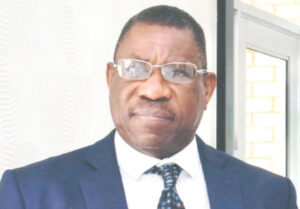
Consumers Association of Malawi Executive Director John Kapito said consumers should brace for tough times ahead.
“The Kwacha’s [value] is affected because there is not enough forex in the country. It has been depreciating on a daily basis. I do not know what needs to be done at the moment. If we can start producing and exporting goods, maybe we can start seeing improvements and stabilisation of the Kwacha.
“It is hard to say when we should expect this to come to an end as we will continue experiencing an increase in price of commodities and we must be ready for that,” Kapito said.
Kapito and Yohane also blamed the Ministry of Trade for lacking proper mechanisms for controlling price increases on the market.
But ministry spokesperson Patrick Botha said officials had been on the ground, carrying out inspections.
“You have seen the Minister [of Trade] addressing the country for a few days. And you have also seen a massive crackdown on companies and shops [that are] arbitrarily overcharging essential commodities or hoarding essential commodities over the past week and [you have also seen] the ministry issuing a statement on the same.
“Actually, the ministry has committed to continue price monitoring and market surveillance exercises until sanity is restored on the market, with some shops closed and remaining closed until they put their house in order and honour the resultant penalties. Inspection teams are still on the ground as we speak,” Botha said.

However, economist Marvin Banda said the country was facing repercussions of lack of investment in industrialisation.
“Remedying this problem is not something that will happen overnight, even in a year. It is a problem of productivity. Even if you check our GDP [gross domestic product], it is averaging less than 1.7 percent per annum. If we are to escape these challenges, we need to produce more. We need to diversify our exports base,” he said.
Former Finance minister Joseph Mwanamvekha said prices of goods would keep on rising unless the government addressed the issue of forex scarcity.
“Prices of goods are going up on a daily basis because the exchange rate on the black market is expensive. So, all these problems border on the issue of foreign exchange.
“If we have to address the issue of forex shortage, we have to address the issue of inflation, shortage of food, fuel and many other things. As a solution, the government has to find ways of addressing the problem because it is its responsibility,” he said.
Currently, the Kwacha is being exchanged at around K3,500 in black markets against the official rate of K1,751 in authorised dealer banks and forex bureaux.
Currently, the inflation rate is at 27 percent.
An annual economic report by Bridgepath Capital Limited indicated that the Kwacha experienced 3.1 percent depreciation in 2024.
Recently, President Lazarus Chakwera appointed Macdonald Mafuta Mwale as Reserve Bank of Malawi governor, replacing Wilson Banda.