information
By Vincent Khonje:
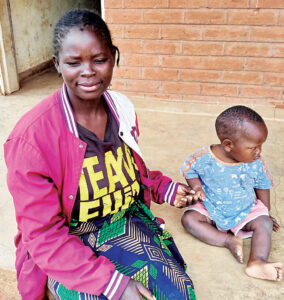
Trinity Maloni, 24, a mother of one from Nyongani Village in Traditional Authority (TA) Mavwere in Mchinji District, has seen the benefits of immunisation manifest in her family.
Her eight-month-old son is healthy and happy, having avoided most preventable diseases.
“I am lucky that I got all the information about vaccines well before I got pregnant and up to now, after giving birth, I have made sure the relevant vaccines have been given to my son,” Maloni says.
Thanks to a mother care group (MCG), Maloni received encouragement and information on the vaccinations necessary for women, children and adolescent girls.
- Advertisement -
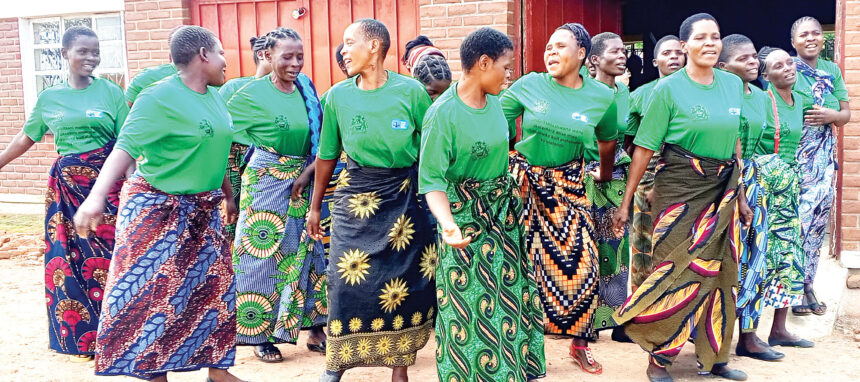
In Mchinji, MCGs are turning the tide in areas traditionally underserved by health services.
The purpose of these groups is to educate, mobilise and ensure that every child under the age of five and every eligible woman is vaccinated.
Mzama area in TA Mduwa is one of the hardest to reach, with the nearest hospital at Mikundi located 30 kilometres away. Other health facilities are in Lilongwe.
Chairperson of Mzama MCG, Sophilet Bakayawo, reflects on the journey they have taken since 2022, helping transform attitudes among women who were once reluctant to take their children for vaccination.
- Advertisement -
- Advertisement -
“Before the formation of the MCGs, we had problems with children getting sick from illnesses that could easily be prevented.
“We had little knowledge of what vaccines could do. Being so far from a health facility made things worse, and we would lose innocent children,” Bakayawo recounts.
The formation of the MCG in Mzama changed everything, helping many children avoid diseases that were once common in the area.
Equipped with essential information about vaccines, Mzama MCG has worked tirelessly to advance the immunisation agenda.
“We live far from health facilities, but that does not mean our children should die from preventable diseases.
“We go door to door and speak to families, especially fellow women, about why vaccines matter. We also reach out to duty bearers to support this agenda,” Bakayawo adds.
Their efforts have increased demand for vaccines at under-five clinics, the nearest health contact points in these remote communities.
In Matutu, TA Dambe, in the same district, another MCG called Matutu-Msasi is gaining recognition for its effectiveness.
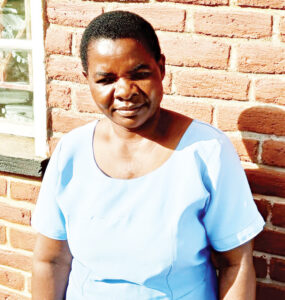
Health Surveillance Assistant for Matutu, Rhoda Chikudzulire, says the group’s efforts have improved vaccination rates in the area, with many women changing their views.
“Before the MCG came in, turnout for vaccines was low. People believed myths that vaccines would make their children sick or infertile. But these women have helped change the narrative,” Chikudzulire states.
Through awareness and advocacy, the MCG realised that the community lacked proper knowledge and took the initiative to engage directly.
They involved chiefs and the wider community, initially facing resistance.
However, the group remained committed to its mission of protecting children from preventable diseases.
Violet Kawere, Secretary of Matutu MCG, says their goal is to ensure that every woman knows which vaccines children and mothers must receive.
“We faced resistance at first, but we kept engaging people whenever we had the chance—at church gatherings, markets and women’s groups. Today, even men proudly take their children for vaccination,” Kawere narrates.
The MCGs have not only created demand for vaccines in the areas where they operate but have also advocated for the construction of under-five clinics to ease vaccine access, given the distances to health centres and hospitals.
The clinics in Mzama and Matutu are equipped with solar-powered refrigerators, enabling proper vaccine storage.
Vaccines administered include BCG, pentavalent, rotavirus, measles-rubella, malaria and the HPV vaccine for girls aged nine to 14.
Vitamin A supplements are also provided.
Cold Chain Officer at Mchinji District Health Office, Johan Chirwa, acknowledges the MCGs’ role in raising community awareness about immunisation.
“The impact is tangible and coverage has improved in hard-to-reach zones because these women are ensuring no child is left behind,” Chirwa says.
The formation of MCGs was facilitated by the Centre for Research and Development Initiative, with support from the Malawi Health Equity Network, under the Health Systems and Immunisation Strengthening Project, funded by the Global Alliance for Vaccines and Immunisation.
Each MCG consists of 31 members, including a traditional leader, and Mchinji District has 34 such groups.
Expanded Programme on Immunisation Coordinator for Mchinji, Davis Sambikeni, reports that the district has 83 percent routine vaccine coverage as of 2024.
“We are making progress compared to two or three years ago, when we struggled to meet 80 percent coverage for most antigens. Back then, we were at 78 percent or below,” Sambikeni says.
However, despite this progress, challenges remain, particularly with uptake of the Malaria vaccine and the second dose of the Measles- Rubella vaccine.—Mana