It had been a long day coming.
When the Southern African Development Community (Sadc) Protocol on Culture, Information and Sport was signed on August 14, 2001, when it was felt that there was a need to re-enforce the central role played by culture and sport in the integration and cooperation of member States of Sadc, no one could have thought that it would take up to 24 years for theatre players in some countries to collaborate and mesmerise theatre lovers with a mature production.
This year, some of the general principles of the protocol—namely developing and promoting activities premised on culture information sharing; pooling of resources, be it expertise or infrastructure, among member states; enhancing regional identity in diversity; and promoting citizens’ participation in the areas of culture, information and sport, among others—seem to have been realised.
In the first section of the protocol, specific areas of cooperation that are incorporated include capacity-building and research, resource mobilisation, language policy formulation, preservation of cultural heritage, and arts and culture festivals, among others.
The second section of the protocol deals with information, in terms of availability, infrastructure, freedom of media and code of ethics, with the third section covering issues such as regional tournaments, talent development, the development of centres of excellence and national policies in the area of sport.
- Advertisement -
While there has been relative progress, in terms of sports development—Confederation of Southern African Football Associations tournaments being one case in point—cooperation in the theatre space has been almost non-existent.
At least until this year.
Moving at different paces
In terms of arts and culture development in general, and theatre development in particular, countries such as Zimbabwe and Zambia have been racing ahead of Malawi.
- Advertisement -
- Advertisement -
For instance, as far back as 1985, the National Arts Council of Zimbabwe, a statutory body, was established by an Act of Parliament. Its mandate is to foster, develop and promote the arts in Zimbabwe.

In terms of Zambia, the National Arts Council of Zambia (Nac), a quasi-government agency, was established in 1994 and began operating in 1996. Its mandate is to develop, regulate and promote all forms of arts in Zambia.
As for Malawi, it is only as recently as September 2024 that the Parliament passed Bill Number 21, National Arts and Heritage, which seeks to promote the creative and heritage industry in the Sadc member state.
The President later assented to the bill, which was drafted in 2015. One of the envisaged products of the bill is the establishment of a National Arts and Heritage Council.
This means, in terms of establishing arts and heritage councils, the three countries— which were once part of the Federation of Nyasaland and Rhodesia, also known as the Central African Federation, which existed between 1953 and 1963— can be said to now be at par, although Malawi is yet to establish the associated structures.
According to African Leadership Magazine, “Zambia’s cultural history is a patchwork of traditions, dialects, and practices that mirror the country’s more than 70 ethnic groups. The country’s cultural richness is expressed in its music, dance, art, and folklore, all of which add to Zambian culture’s colourful tapestry”.
Zambians have stood tall in Africa’s theatre sphere. For instance, in The Shining Star Awards, Zambian talent, including King Nachi, were awarded for their massive contributions to the arts.
Individuals such as Mike Tembo, Andreya Masiye of ‘The Lands of Kazembe’ fame, among others, are known in Southern Africa for their role in shaping Zambia theatre.
In Zimbabwe, players such as Zimbabwe Theatre Academy Trust have become key to the professionalisation of theatre as part of efforts premised on developing a sustainable artistic ecosystem.
According to the Zimbabwe Advocate, “amid challenges, Zimbabwe Theatre Academy’s innovative approach revitalises the theatre scene…”.
Indeed, the academy, spearheaded by celebrated Zimbabwean theatre professional Lloyd Nyikadzino, has made strides since its inception in October 2017, when it started with a cohort of 10 students at Reps Theatre in Belgravia, Harare, to become a dominant competitor in National Arts Merit Awards (Namas).
In the 2024 Namas, which the National Arts Council of Zimbabwe presents, the Zimbabwe Theatre Academy was nominated for Outstanding Theatre Director (Lloyd Nyikadzino), Outstanding Theatre Actress (Nosizo Gumede for her role as Runyararo in ‘I Am/Was Marah’) and Outstanding Theatrical Production (‘I Am/Was Marah’ by Teddy Mangawa).
The academy has generally been lauded for innovation that is embedded in its approach towards theatre education and production, which focus on capacitating the next generation of creatives and giving them a chance to express themselves in their unique voices.
In Malawi, it is largely felt that the industry was at its height when there were groups such as Professional Theatre Company, Wakhumbata Ensemble Theatre, Mkumbira Arts Theatre, Force Theatre, Alabama Theatre, Chancellor College Travelling Theatre, Paulendo Drama Group, United Artists Drama Group, Henry Henderson Institute Drama Group, Upile Drama Group, among others.
The famous actors then were Du Chisiza Jr, Gertrude Kamkwatira, Sunduzwayo and Dingiswayo Madise, Eliah Kamphinda Banda, Henry Ntalika, Twaya Sanudi, among others.
In those days, Association for Teaching of English in Malawi (Atem) competitions played a key role in rejuvenating theatre.
Southern Region Drama Association, whose first chairperson was Lali Lubani Jnr, with Charles Layman Kachitsa as secretary, also played a key role in promoting theatre after it was established in 2001.
There was also the Tiwaonere National Drama Trophy, introduced by drama enthusiast Steven Mcheka—who also owned Tiwaonere Drama Group—as one of the initiatives that promoted local theatre.
Another key player has been the National Theatre Association of Malawi [Ntam], which was established in 1988 as Drama Association of Malawi. It then changed its name to Ntam to reflect other elements that go with drama such as dances and singing.
Ntam was formed to protect the interests of its members. Among other things, it mediates and resolves issues involving performers, drama and choreographic groups on both individual and collective level.
At regional level, the name Southern African Theatre Initiative (Sati) comes to mind.
The regional arts organisation— which was established to improve, develop and raise the status of arts practitioners in Southern Africa by facilitating the exchange and sharing of ideas through capacity building programmes as one way of contributing towards “sustainable human development in the sector by way of interventions that are aimed at skills-sharing and transfer, networking and lobbying for the advancement and industrialisation of the creative sector in the 21st Century”— started on a positive note.
In fact, Sati evolved into an arts’ resource and information centre for theatre practitioners and arts practitioners, to the effect that most players depended on Sati for information acquisition, workshops, seminars, conferences, festivals and cultural exchange programmes in Southern Africa.
The organisation also managed to bring together theatre associations, including Ntam. The signs were so encouraging that Malawians, most notably former Ntam president and now Solomonic Peacocks Director McArthur Matukuta, became board members.
However, all those positives ended up being swallowed up by inactivity.
Could this be linked to the death of Ngugi wa Mirii? Mirii, a playwright, filmmaker, artist and culture worker, died in Harare on May 2, 2008 and his funeral, held on May 7 at the
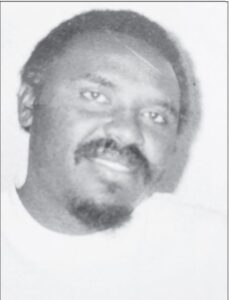
Roman Catholic Cathedral in Fourth Street, Harare, was punctuated with eulogies that touted his contribution to arts and culture in Africa, in a career that spanned 30 years.
Mirii— who was born at Limuru, Kenya, in 1952—worked with Professor Ngugi wa Thiong’o as a co-coordinating director of Kamirithu Community Education and Cultural Centre. He moved to Zimbabwe in 1982 and was founder of the Zimbabwe International African Dance Ensemble and International Community Theatre College, apart from being
chairperson for the Zimbabwe Independent Film Makers’ Trust, and the Zimbabwe Writers Book Machine.
Among other organisations, he founded the Zimbabwe Association of Community Theatre, Visions of Africa, and Sati, successor to the Southern Africa Performing Arts Network.
According to Matukuta, the idea to establish Sati was a good one, adding that its programmes had the potential revolutionise theatre in countries such as Malawi, and contribute towards sustainable development.
Malawi, Zambia and Zimbabwe theatre reawakening
Whatever different paths Zimbabwe, Zambia and Malawi theatre players have taken over the years, there seems to be a moment of renewal.
This is because theatre players in the three countries have started working together, in line with the Sadc Protocol’s general principle of enhancing regional identity in diversity.

Chiphinga—File photo
It all started as an idea by Ntam, when Maxwell Chiphinga was its president.
“Last year [2022], we came up an idea of hosting an international theatre festival. A number of countries showed interest in participating in the festival. We needed K66 million to adequately finance the event and, unfortunately, we were not able to raise the funds. Maybe because the time was not enough. We have decided to approach the idea with patience and we are still pursuing it little by little. Maybe next year [2024], we may go back to the idea,” he told The Nation.
He said the positive thing was that people still loved theatre.
“We still have a lot of people out there who love theatre and we want to get this constituency back,” Chiphinga, who also served as National Arts and Heritage Bill Taskforce chairperson, further told The Nation.
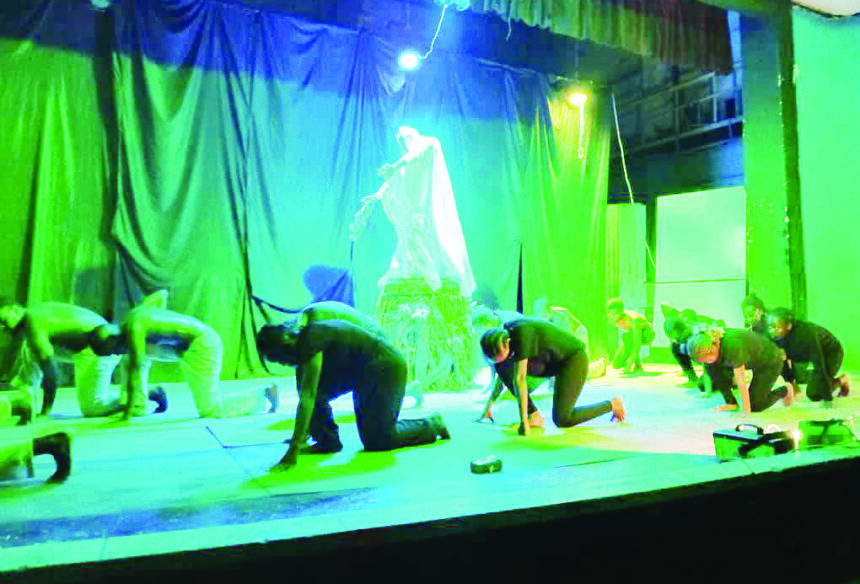
On November 23 this year, actors from Malawi, Zambia and Zimbabwe premiered a play titled Imaginary Harvest at the third edition of the University of Malawi (Unima) Theatre Festival at The Great Hall in Zomba City, Malawi.
The play was written by Chiphinga, better known as Max DC, and co-directed by Solomonic Peacocks Director Matukuta. Felix Milowa developed the concept of the play, which reawakens memories of the Federation of Rhodesia and Nyasaland.
Under the federation, present-day Zambia was known as Northern Rhodesia, present-day Zimbabwe was known as Southern Rhodesia while present-day Malawi was known as Nyasaland.
Set in 1960 in Northern Rhodesia, the play, which has a combination of drama and traditional dances, has a cast of 20. It is part of a project titled ‘Fostering Regional Social Ties through Theatre’.
The project, which is being implemented using funds from the Copyright Society of Malawi (Cosoma) through the Copyright Fund, saw actors from the three countries working on their own through associations before linking up later.
Chiphinga, who is part of the cast, said they were happy to premiere the play at the Unima Theatre Festival.
Members of the cast from Malawi included Chiphinga, Louis Masamba, Charles Mphoka, Mildred Murindiwa , Regina Kaiya, Immanuel Mawenda , Owen Kalemba and Mphundu Mjumira.
Zimbabwe is represented by Bhelembuhle J Sibande and Joel Ziilala, with Hamalala Hamalala, John Kazembe and Dyness Lungu representing Zambia.
“It was a great performance and we are looking forward to more performances in Zambia and Zimbabwe,” an elated Chiphinga said.
Another performance was scheduled for Zimbabwe, with the Zambia performance coming up later.
Mjumira lauded regional cohesion that is at play in the play.
“We are bonding very well and promoting the sharing of ideas,” Mjumira explained.
According to Ntam Project Officer Samuel Kapinga, the initiative is the product of collaboration among Ntam and national arts and theatre associations from Zambia and Zimbabwe.
He said the initiative is part of efforts to grow theatre in the three countries and promote regional cohesion, which, he said, Sadc Heads of State and Government promote.
As players in the theatre industries of Zambia, Zimbabwe and Malawi enhance collaboration by illuminating the untold stories of the three countries’ shared pre‑independence history, who knows, maybe these Africans can help shape the vision for a shared future of Sadc, too.