The World Bank has expressed concern over the high foreign exchange premium, currently seen at above 50 percent.
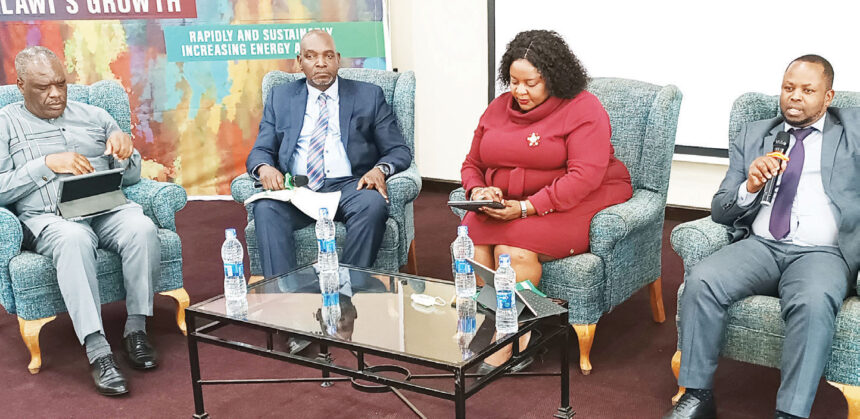
World Bank Malawi acting Country Manager Efrem Chilima made the observation in Lilongwe Wednesday when the bank launched the 17th Edition of the Malawi Economic Monitor (Mem), titled ‘Powering Malawi’s Growth: Rapidly and Sustainably Increasing Energy Access’.
Chilima was quick to note that the government has started the implementation of foreign exchange auctions to boost foreign exchange reserves and address the misalignment of the exchange rate.
“However, the premium is still above 50 percent and it is unclear what the government’s plan is to address this situation,” Chilima said.
The concern by the World Bank comes as the spread between the official and parallel market dollar rates has significantly widened over the past couple of weeks.
- Advertisement -
While the dollar is trading at an official price of K1,064 in authorised dealer banks, the same greenback is attracting prices as high as K1,800 on the black market.
The Mem says amidst a thriving parallel market the official exchange rate is increasingly only used for a limited number of transactions.
According to the Bretton Woods institution, while officially a managed float regime, the Reserve Bank of Malawi (RBM) has attempted to enforce a peg to the US$.
“In recent years, we have seen worsening debt vulnerabilities resulting in ongoing external debt restructuring negotiations with creditors, as well as a weakened fiscal environment and severe foreign exchange shortages driven by persistent current account deficits,” Prasad said.
- Advertisement -
- Advertisement -
National Planning Commission (NPC) Director General Thomas Munthali lauded forex auctions by RBM as a tool for realigning the currency are promising.
Munthali was, however, quick to point out that there remain some tough questions that Malawi needs to answer around whether it needs to let the currency go.
“Not devaluing, but letting it completely go, and then finding its place overtime. It might be hard in the first months or year but when it settles off, hopefully we can be singing a different story,” Munthali said.
Associate Professor of Economics Winford Masanjala said structural transformation cannot happen overnight, saying, this year, Malawi just needs to rely on trade financing and some forex that will come from donor projects.
He underscored the need for an incentive scheme that would incentivise the private sector to do the needful.
“We are not doing the needful. We are not incentivising the private sector enough and on the forex market, we are not giving the right signals,” Masanjala said.