Commentators Sunday remembered the country’s former president Bingu wa Mutharika with calls for the country to take a legal route that compels policymakers to be implementing recommendations made by commissions of inquiry.
The Office of the President and Cabinet (OPC) has urged the country’s media sector to strengthen its watchdog role.
OPC spokesperson Focus Maganga said this had the potential to promote transparency and accountability in public service delivery.
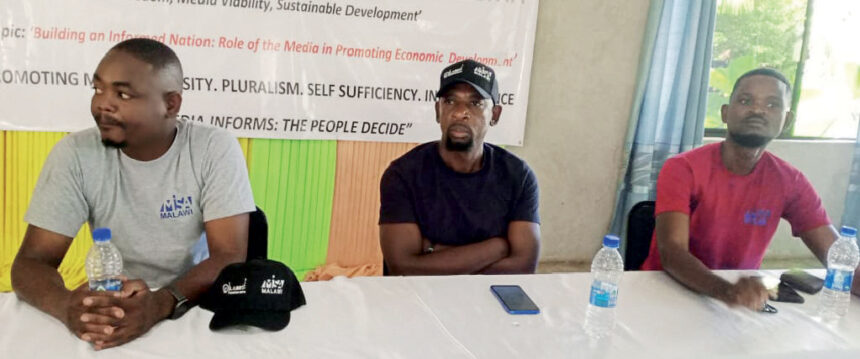
Maganga said this during a panel discussion held in Salima District Sunday.
The event was held as part of celebrations marking World Press Freedom Day (WPFD).
- Advertisement -
“We understand the job that you do in holding the government to account. For us, accountability is very important because, in the first place, it brings us confidence that the people have in their government. So, we would want the media to continue to do that and the President [Peter Mutharika] and the government support that,” he said.
Maganga said Mutharika was committed to ensuring that journalists were operating in a conducive environment.
“The President wants to make an unwavering commitment that he is there to support press freedom; he is there to make sure that there is that environment. Just a few years ago, there were some media houses that were closed down because of the issue of licensing fees and you might have seen also that that has been revised and now the radio and TV stations that were closed were given another opportunity to renew their licences because the President wants to make sure that there is an environment where the media thrives and today was just to remind our colleagues that we, as government, are there to support you,” he said.
Media Institute of Southern Africa (Misa)- Malawi Chairperson Golden Matonga said journalists in the country continued facing political violence.
- Advertisement -
- Advertisement -
Matonga cited recent events such as political party conventions and the September 16, 2025 Presidential, Parliamentary and Local Government Elections.
“Isaac Salima of Times Television was filming a riot [arising out] of a labour dispute and police came and arrested him all these incidents have an effect on how journalists operate in the country and that makes them become vulnerable,” he said.
He also called on the government to operationalise the Access to Information law.
“Most journalists haven’t yet used access to information [laws]. The law exists but the journalists haven’t challenged themselves to have the understanding of how to use [the] Access to Information [law]. As such, we need to ensure that these gaps [are addressed],” Matonga said.
Meanwhile, in a press statement, Human Rights Defenders Coalition (HRDC) Chairperson Michael Kaiyatsa and HRDC National Coordinator Kelvin Chirwa said time had come for Malawi to end violence against journalists.
HRDC said Malawi had known periods when journalists faced harassment, threats, arrests and attempts to silence critical reporting.
“We must never return to such practices. No journalist should fear violence, unlawful arrest, surveillance, political retaliation or economic punishment for doing their job lawfully and professionally. Press freedom must be defended not only in law but in practice. Any intimidation of journalists is an attack on the public’s right to know,” the statement reads.
WPFD is commemorated on May 3.
This year, the day was commemorated under the theme ‘Shaping a Future at Peace: Promoting Press Freedom for Human Rights, Development and Security’, which was locally narrowed down to ‘Press Freedom, Media Viability and Economic Development’.