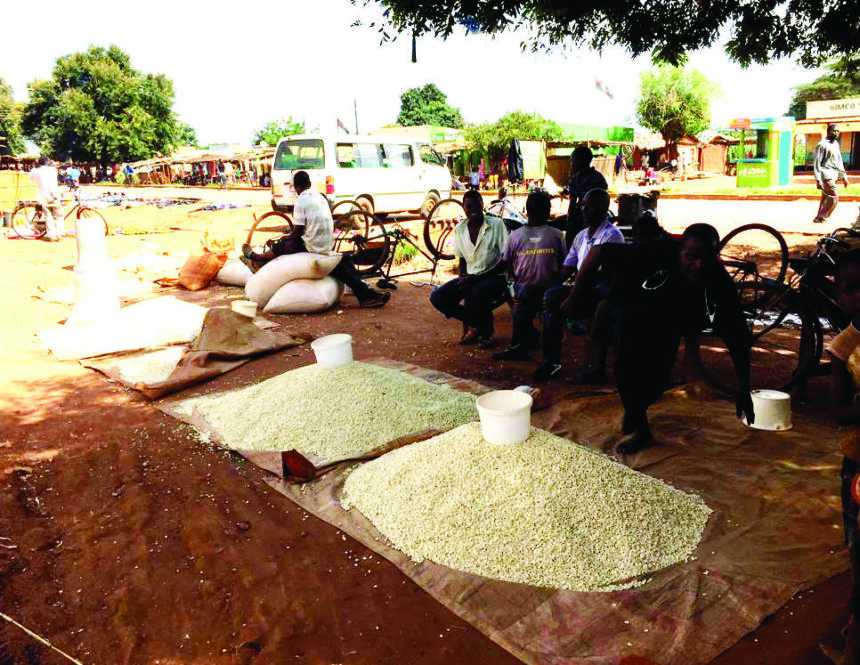
Rising global food prices triggered by conflict in the Middle East could push more Malawians and others in vulnerable economies into hunger, the World Bank has warned.
The latest World Bank Commodity Markets Outlook shows that as many as 45 million additional people worldwide could be subjected to acute food insecurity this year if disruptions to energy and commodity markets persist.
While global food prices are projected to rise only modestly, the World Bank highlights that the real threat lies in surging input costs, particularly fuel and fertilizers, which are already beginning to ripple through food systems.
Maize prices are forecast to increase to $211 per metric tonne (MT) in 2026 from $203/MT in 2025, representing a 3.8 percent rise, while other food crops such as soybeans are projected to climb by 6.4 percent to $444/MT from $414/MT.
Malawi is already facing severe food insecurity, with an estimated 4 million people (about 22 percent of the population) experiencing food shortages between October 2025 and March 2026, according to Famine Early Warning Systems Network (Fews net).
- Advertisement -
The World Bank report further highlights that fertilizer prices are expected to increase sharply this year, with global prices projected to rise by over 30 percent.
At the same time, energy prices, which are critical for transport and production, are forecast to jump by 24 percent, with overall commodity prices expected to rise about 25 percent above earlier January projections.
These rising costs are likely to squeeze farmers’ margins, particularly smallholder farmers who dominate Malawi’s agricultural sector.
Unlike previous global food crises, the current shock is not primarily driven by shortages of staple foods such as maize, which has seen a stable supply on the local market. Instead, it is being driven by a combination of high fuel prices, expensive fertilizers, and declining household purchasing power
- Advertisement -
- Advertisement -
Economics Association of Malawi President Bertha Bangara Chikadza said the war in the Middle East was already having spillover effects that will continue to negatively impact prices in the country.
She noted that the external shocks could undermine economic growth which is projected at 3.8 percent this year, as rising energy prices increase production costs and slow economic activity.
“These projected surges in energy and commodity prices are generally expected to increase the cost of living,” Chikadza said.
She urged the government to cushion the economy from the negative effects of the crisis by, among others, reviewing fuel levies to help stabilise energy prices.
Maize production in Malawi is projected at 3.69 million MT in the current 2025/26 season, according to first-round crop estimates, an increase from 2.96 million MT recorded last season.
However, the bank warns that rising input costs could still undermine productivity and food access, despite the expected increase in output.