By Pemphero Malimba:
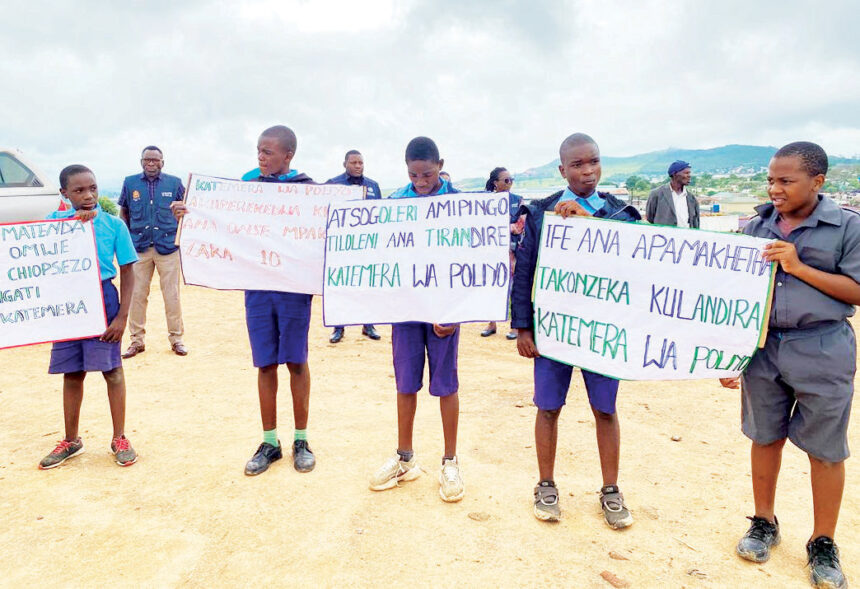
The Ministry of Health and Sanitation (MoHS) says it has achieved over 100 percent coverage in the second-round polio vaccination campaign.
The campaign targeted children under the age of 10 and was conducted in all the districts of the country between April 27 and 30 this year.
Through the campaign, the ministry targeted to vaccinate at least 6.2 million children.
In a written response Wednesday, MoHS Deputy Director of Community and Preventive Health Services Mike Chisema said the ministry managed to surpass the targeted population by vaccinating 6.6 million children through the campaign.
- Advertisement -
“[We have achieved] over 106 percent coverage>6.2 million (6.6 million children) under 10 years. We are happy with the performance,” Chisema said.
He said upon its conclusion, the campaign did not face major hiccups.
“No big challenges per se. [If there were challenges, then they were] mostly operational, which we are able to sort out as we operationalise the campaign,” he said.
He disclosed that the next round of vaccination was scheduled for the first week of June 2026.
- Advertisement -
- Advertisement -
Health rights activist Maziko Matemba said the achievement was a milestone for Malawi.
“By reaching such high coverage, Malawi is effectively creating a barrier of herd immunity to stop the spread of poliovirus, specifically in response to recent cases detected in regions such as Blantyre, which had a polio case. Overcoming resistance and reaching 100 percent coverage suggests a triumph of community engagement over hesitancy,” Matemba said.
The United Nations Children’s Emergency Fund (Unicef) supported the campaign with 6.9 million doses of the vaccine, among other forms of support.
Speaking during the launch of the campaign in Lilongwe last week, Health Minister Madalitso Baloyi raised concern over failure by some parents to send their children for vaccination.
Baloyi said the tendency was affecting efforts to ensure that all targeted children get vaccinated in the country.
“We have noted in the first round that some children were not vaccinated. This is due to parents not taking this campaign seriously but we are saying polio is very dangerous to this nation. Polio causes permanent paralysis and, sometimes, it causes death,” Baloyi said.
At the event, Unicef Country Representative Penelope Campbell said at least 30,000 children were not immunised annually in Malawi due to failure by parents to take their children to vaccination centres.
“What we are finding is that, every year, around 30,000 young children are not routinely immunised. If you don’t get your routine immunisation right, you need to ensure that over 95 percent of Malawian children are vaccinated each year and, that way, we get the head immunity and that means that we don’t have any outbreak,” Campbell said.
The polio vaccination campaign started with round zero from February 11 to 14, 2026 targeting eight districts.
During the exercise at least 1.5 million children were vaccinated.
The first round of the exercise was then conducted between March 24 and 27, 2026 in all districts of the country, where 6.2 million children were covered.
Recently, the ministry declared an outbreak of polio after polio virus type 2 was detected in two environmental samples taken from two sewerage plants in Blantyre.