A new report has said Malawi is losing billions of dollars every year because of environmental damage, climate disasters, pollution and poor sanitation.
According to the report, the situation is threatening the country’s economy, food security, public health and the achievement of Malawi 2063 agenda.
The State of Environment and Outlook Report
comes 15 years after the last State of the Environment Report was released in 2010.
According to the report, degraded land is one of the biggest causes of economic losses in Malawi.
- Advertisement -
Climate disasters and air pollution are each causing about 1.7 percent loss of the country’s Gross Domestic Product (GDP).
Poor sanitation contributes to a 1.1 percent loss of GDP, while soil loss contributes 0.26 percent.
The report warns that if Malawi does not take urgent action, the country may fail to meet the economic targets set in its 2063 vision which targets annual economic growth of 6.2 percent.
Director of the Department of Climate Change and Meteorological Services Lucy Mtilatila said the assessment presents three possible future situations for Malawi.
- Advertisement -
- Advertisement -
The first scenario, called ‘Weak governance, weak Economy,’ shows continued environmental destruction, deforestation, pollution, stronger climate impacts, and slow economic growth due to weak leadership and poor laws.
The second scenario, ‘Good governance, weak economy’, shows improved governance but low economic growth, leading to continued pressure on the environment because of limited resources.
The third scenario, “Good governance, sustainable growth,” is the most positive. It shows strong institutions, sustainable economic growth, better environmental protection, and improved climate resilience.
The report says this third scenario gives Malawi the best chance to achieve sustainable development while protecting the environment and improving people’s lives.
The report also recommends several actions, including restoring damaged land, investing in climate resilience, improving sanitation systems, reducing air pollution, and promoting sustainable farming methods.
Speaking during the workshop where the report has been presented, Secretary for Natural Resources Misheck Munthali said environmental degradation in Malawi has reached critical levels and is now affecting the country’s economic growth.
He said the report is the most detailed assessment of the state of Malawi’s environment so far
“The report highlights that environmental degradation in Malawi has reached critical stages and is becoming a downward pull factor to our economic growth,” said Munthali.
He said Malawi is facing serious environmental problems such as deforestation, water shortages, biodiversity loss, pollution, climate change, and land degradation.

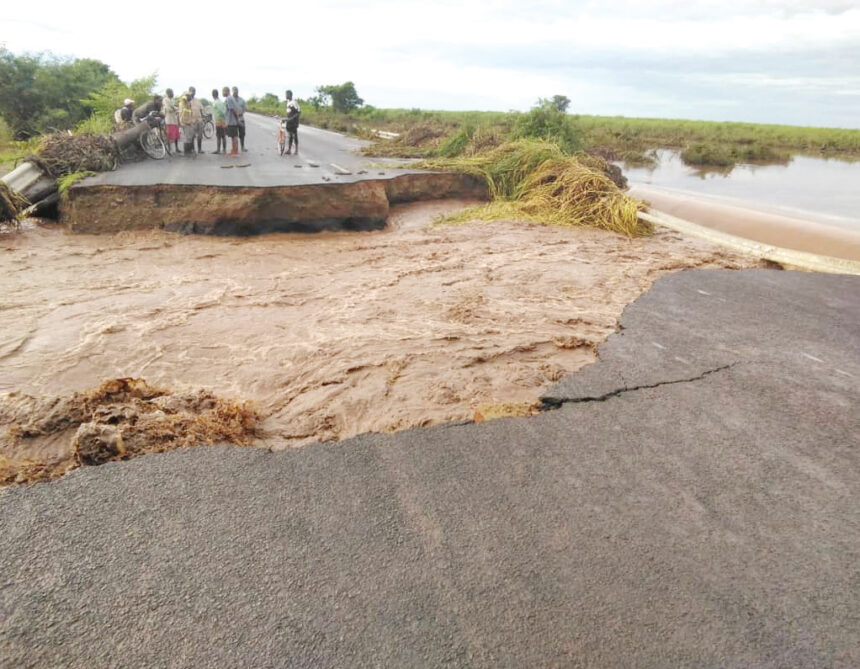
He said the country is also experiencing more cyclones, floods, droughts, heatwaves, and pest outbreaks, which are affecting national development.
He blamed the worsening situation on rapid population growth, poverty, unsustainable use of natural resources, urbanization, and weak environmental governance.
Director General for Malawi Environment Protection Authority (Mepa) Wilfred Kadewa called for all government ministries and departments to work together in addressing environmental challenges.
“The report recommends creating a high-level inter-ministerial committee on environment, climate change, and natural capital to improve coordination and accountability,” Kadewa said.
He said environmental sustainability should become a key performance area for all ministries, departments, and agencies.
Mepa, United Nations Environmental Programme and Grid-Arendal and the Government of Norway supported the production of the report.