By Braxton Chipeta:
When American comedian Geri Jewell was diagnosed with cerebral palsy at just 18 months old, few could have imagined that she would one day become the first actor with a visible disability to secure a recurring prime-time role on network television.
Today, she is celebrated as a trailblazer, award-winning actor, writer and comedian.
For many children living with cerebral palsy in Kasungu District, such success stories remain a distant dream.
And across the country, children with cerebral palsy are denied access to education, hidden from society and living isolated lives.
- Advertisement -
For 40-year-old Harriet Mandala of Traditional Authority Mwase, this is all too familiar to her.
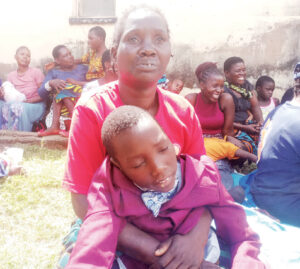
Mandala is raising her 11-year-old child who has cerebral palsy – a lifelong neurodevelopmental conditions characterised by limitations in activity due to impaired development of movement and posture. Although the child is old enough to be in primary school, he has never stepped into a classroom.
Harriet’s husband sells firewood for a living. It does not make enough money for the family’s needs, let alone attend to special needs of a child with disability.
Her story mirrors that of Jessy Moyo, another mother from Kasungu whose 21-year-old daughter lives with cerebral palsy, aphasia, seizures and gait disorder.
- Advertisement -
- Advertisement -
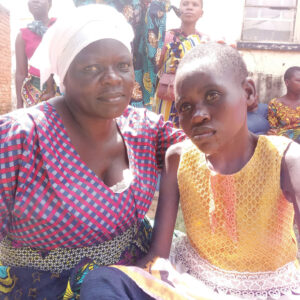
For a time, Moyo’s daughter attended school at Chankhanga SOS. But due to transportation challenges, her education came to an abrupt halt.
Many women with children with cerebral palsy also recount painful experiences of abandonment by their husbands after giving birth to children with cerebral palsy. Instead of sharing responsibility, some men blame their wives for the condition, accusing them of being the cause of the disability.
Some walk away from their families entirely, starting new lives elsewhere. Others force their wives to leave the marital home, leaving them to shoulder the burden of caregiving alone.
Amid these hardships, Uhuru Child Care has become a lifeline for families raising children with cerebral palsy and other neurological conditions in rural Kasungu.
The organisation provides community-based rehabilitation services, including physiotherapy, counselling, necessities, transportation and medical support.
Mandala says the support has transformed her child’s life.
“Uhuru has helped me with basics and physiotherapy. Twice every month I come with my child for treatment so that he can live like other children.
“I am pleading with authorities to take this issue seriously. I want my child to go to school, and I believe that can only happen if well-wishers or authorities help us with transport and other basic necessities,” she says.
Moyo also credits the organisation for helping improve her daughter’s condition.
“My child could neither sit properly nor crawl. Only I could attend to her. But now, after the interventions from Uhuru, she can sit properly, and anyone can assist her,” she says.
Founded in 2018, Uhuru Child Care was born out of one man’s determination to fight stigma and restore dignity to children living with disabilities.
Its founder and Project Director, Maulidi Kelvin Kijangwa, says his mission began in childhood.
“Growing up, I lived in a community where several children had cerebral palsy. They were hidden in homes, rejected, isolated, and treated as a curse by society.
“I visited them almost every day. I played with them, laughed with them, and many times cried for them,” Kijangwa recalls.
He says some of those children eventually died due to lack of care and support—an experience that shaped his life’s purpose.
“Their deaths deeply affected me. As a young boy, I made a promise to God that if I was ever given an opportunity, I would dedicate my life to helping children with disabilities,” he says.
Today, Uhuru Child Care supports more than 328 registered children across rural communities in Kasungu.
In 2025 alone, the organisation conducted over 650 physiotherapy sessions, distributed 39 mobility aids, reached 12 villages through community outreach programmes, conducted caregiver training sessions, and carried out home-based rehabilitation follow-ups.
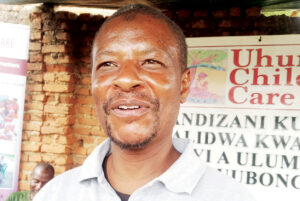
Kijangwa says the organisation is currently mobilising resources to expand its reach.
“The funds raised will support physiotherapy treatment, outreach transport, assistive devices, caregiver support, therapy materials, and community rehabilitation activities,” he says.
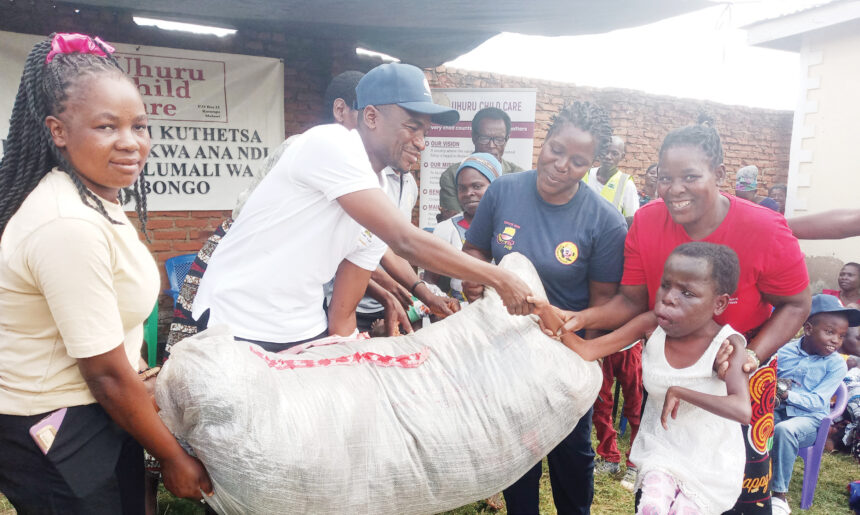
Recently, Kasungu Municipality Member of Parliament Noel Mkubwi donated clothes for 150 children, soap and foodstuffs.
Mkubwi condemned the growing stigma surrounding children with disabilities and criticized men who abandon their families after the birth of a child with such conditions.
“We should not discriminate against children with disabilities. They are the future of our nation, and each one of us has a responsibility to care for them so that they grow into future leaders,” he says.
He also pledged that women caring for children with cerebral palsy would be prioritized in the disbursement of K100 million loans under the reformed Constituency Development Fund.
Group Village Head Kasalika condemned the behaviour of men leaving their wives after giving birth to a child with disability.
“Biologically, it takes both a man and a woman for a child to be conceived. It makes no sense for a man to disappear simply because the child has a disability,” she says.
In Kasungu, the fight against cerebral palsy is not only about medical care or mobility aids— it is also a fight for dignity, acceptance, and a future where disability is no longer seen as a curse, but as part of human diversity.