


The National Council for Higher Education (Nche) recently released names of candidates who have been selected to pursue higher education in various public universities in the country.
Over 8,550 students made it.
Immediately after the results were made public, there was frenzy from various secondary schools which were celebrating their success.
But in Ntchenachena, in Rumphi District, Junju Community Day Secondary School (CDSS), which opened its doors in 1999, has never sent a student to a public university.
While some schools of thought posit that high student-teacher ratios are recipes for poor performance of the leaners, such is not the case at Junju.
- Advertisement -
Currently, the school has a total of 70 students. In other schools, that is one class.
Despite that, performance remains below par at the rural school which has six teachers.
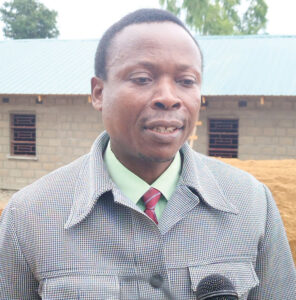
Its head teacher Jimmy Msiska discloses that two of the six teachers are underqualified.
He also attributed the dismal performance at the school to the fact that learners cover long distances—up to 14 kilometres—to the CDSS.
- Advertisement -
- Advertisement -
“This leads to an increase in cases of absenteeism, especially among girls. Some of them end up dropping out of school to marry.
“The school has electricity but learners fail to fully utilise it because there is no hostel here. This means they cannot stick around longer at night,” Msiska explains.
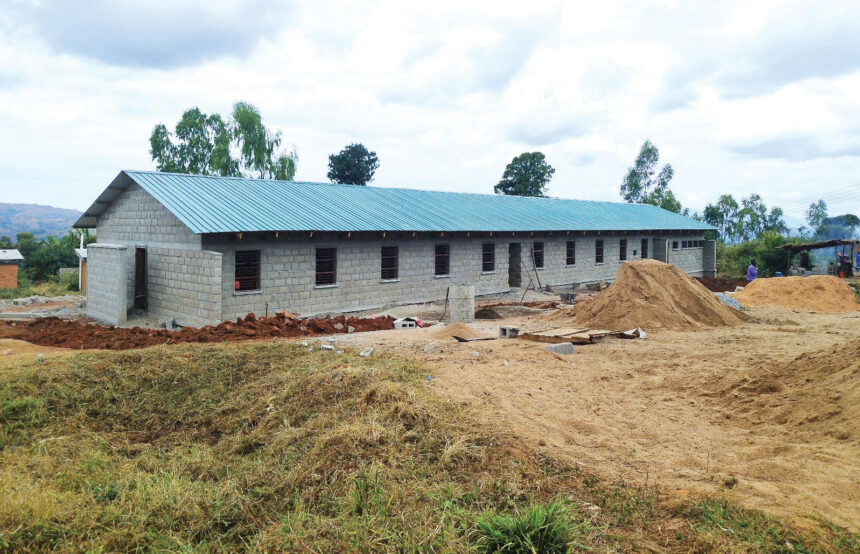
The poor performance could eventually become history as government, through the Governance to Enable Service Delivery (Gesd) project, is constructing an 80-bed hostel at Junju CDSS.
The World Bank-funded initiative aims to strengthen local authorities’ institutional performance, responsiveness to citizens and management of resources for service delivery.
Msiska hopes his school will be singing a new song once the K90 million self-contained structure is available for use by students.
“We believe it will help in keeping learners in school, improve enrolment and performance and break the longstanding history of our school having never sent a student to a public university,” he says expectantly.
Students at Junju CDSS are also looking forward to their cohort being the first from the school to send someone to a public university.
Eighteen-year-old Beli Msowoya, who aspires to become a teacher, rues the time she spends at home doing household chores after school or during holidays, which she feels could be used for studying at the school if it had a hostel.
“That affects our studies. We end up performing poorly in examinations. Once the hostel project materialises, we will focus more on our studies as we will be residing at the school,” she says.
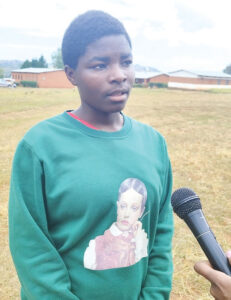
Another student Mary Nyirenda complains that walking to school every day is tiresome and saps her will to intently pay attention in class.
Even the history of her school having never sent a student to a public university depresses her.
“It sometimes feels useless to continue with our education here. Motivation is an important factor in education,” the learner, who wants to become a soldier, says.
The Malawi Education Statistics Report of 2022 notes that living away from home and residing on campus in a dorm setting provides invaluable opportunities for learners’ personal growth.
The report further states that boarding school students tend to develop life skills such as time management, work ethic and independence in an accelerated manner than day school students.
However, several CDSSs across the country continue to struggle to offer quality education due to challenges like those currently prevalent at Junju.
This is despite that they form two-thirds of secondary schools in Malawi.
According to the Ministry of Education, as of 2022, only 27 percent of the secondary schools in Malawi had boarding facilities.
At that time, there were about 1,101 CDSSs out of the 1,610 secondary schools in the country.
Further, out of the 8,552 students who have been selected to public universities this year, about 1,320 are from CDSSs, representing 15.9 percent.
Quality education advocate Benedicto Kondowe says it is unfortunate that despite that the majority of learners get selected to CDSSs, the schools continue to lag behind in terms of education.
According to the Malawi Education Statistics report of 2022, out of the 226,517 students who passed the Primary School Leaving Certificate of Education examinations in the 2021-22 academic year, 66,138 were selected to CDSSs.
That number is way much higher than that of those selected to conventional secondary schools.
Kondowe believes education in CDSSs would be competitive if government made substantial investments in the schools.
He says the investment would be in the form of construction of classroom blocks, laboratories and libraries and the hiring of qualified teachers.
“We know that CDSSs do not have the infrastructure, the environment and the staff that would allow them to compete with students who are coming from private or conventional secondary schools.
“The majority of them do not even have laboratories to do experiments in sciences, yet they sit for science subjects during national examinations,” Kondowe says.
Currently, as part of increasing access to secondary school education, the Ministry of Education, with support from the Government of the United States of America, is expanding secondary schools in urban areas and establishing new secondary schools in rural areas through the Secondary Education Expansion for Development project.
The total number of schools being expanded and established in secondary schools across the country is 250, which includes expansion of 30 CDSSs in urban areas.
The government is also banking hopes on the World Bank-supported project called Equity with Quality Learning at Secondary Schools.
The project aims at improving the quality of mathematics and science instruction in CDSSs and increasing access to secondary education in selected remote areas.