






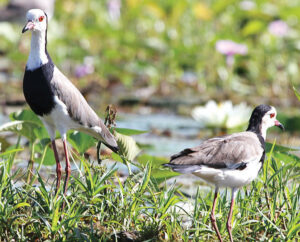
Forests, grasslands and wetlands are collapsing rapidly in Malawi and birds species are coming under increasing threat as their habitats fall. Conservationists warn that as the birds fly away to safe lands or to their extinction, they are taking with them services that are vital to the ecosystem, to humans and to other wildlife. CHARLES MPAKA writes
In the wetlands and the verdant, montane vegetation of the expansive Nyika National Park, bird species such as Denham’s Bustard and Wattled Crane used to find a comfortable and secure home.
But burning regimes have driven the Denham’s Bustard to Near-Threatened status.
And the populations of the iconic Wattled Crane have also declined considerably over the last 30 years, according to Nyika-Vwaza Research Trust (UK) in Conservation Research Note of February 2020.
- Advertisement -

“This is possibly as a result of annual burning of the dambos and wetlands,” reads the update about why the Wattled Crane is disappearing from Malawi’s largest national park.
- Advertisement -
Nature created Malawi a land of birds.
The National Biodiversity Strategy and Action Plan developed by the Department of Environmental Affairs records that Malawi has 630 bird species.
However, over the years, these birds are increasingly flapping their wings in escape for their lives –some never to be seen again either because they have migrated to new and safe habitats elsewhere or because they have become extinct altogether.
Malawi’s birds are under increasing threat.
- Advertisement -
From Forest Buzzard to African Fish Eagle, from Lilac-breasted Roller to Marabou Stork, from Lilian’s Lovebird to Southern Ground Hornbill to Olive Woodpecker, over 150 species of Malawi’s birds are listed as endangered in the National Parks and Wildlife (Protected, Endangered and Listed species) (Declaration) Order of 2017.
Top among the factors driving Malawi’s birds to the Red List of the International Union for Conservation of Nature (IUCN) is habitat destruction. With Malawi’s forest loss estimated at 30,000 hectares annually, this is one of the most rapid deforestation rates in the region.
Grasslands too are being mowed down. Wetlands are shrinking or drying up altogether.
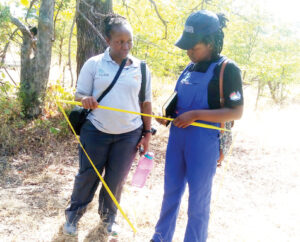
“Most of this loss is due to human activities, be it directly or indirectly. This will also be true for many species in Southern Africa,” says Tiwonge Mzumara-Gawa, lecturer in Ecology at the Malawi University of Science and Technology (Must).
There are other growing threats too. Birds are being caught for sale to the pet market or to the traditional medicine enterprises.
In July this year, three international organisations –the Global Initiative Against Transnational Organized Crime (GI-TOC), TRAFFIC and the World Parrot Trust – raised alarm on how e-commerce platforms in Africa are facilitating increasing threats to wildlife, including birds.
In a statement, the organisations warned that illegal sale of endangered wildlife is happening at a scale on online platforms on the continent.
A research they conducted found that sales of endangered species are easily found on many online outlets, in contravention of local and international laws on trade of wildlife species.
They attributed this to gaps in the regulation of African e-commerce platforms as compared to the more rigorous physical policing of marketplaces.
“If this situation is not reversed, the impact on wildlife populations and biodiversity across the region will be severe,” they warned.
The three organisations singled out the African Grey Parrot as one of the most popular items of trade on e-markets.
Rowan Martin of the World Parrot Trust told Malawi News in an email that wild populations of grey parrots have collapsed in many parts of their range due to trapping for the pet trade.
While much of this trade has historically been to supply international markets, growing demand within African countries is piling on additional pressures, he says.
“Intervention is needed now, in the early stages of this emerging market,” says Martin.
In Malawi, according to Mzumara-Gawa, the ‘near-endemic parrot’ is the Lilian’s Lovebird found in Malawi only in mature mopane forests in Liwonde National Park.
Mopane is a protected tree species in Malawi but most of what remains of it is found in protected areas. However, as evidence shows, being in a protected area doesn’t necessarily guarantee that the tree is out of reach of illegal loggers. In 2017, an estimated 2,000 hectares of mostly mopane trees were illegally cut down in Lengwe National Park.
In addition, inside the protected areas, the birds are also exposed to cases of occasional poisoning as poachers target other bigger animals.
According to Mzumara- Gawa, while the Lilian Lovebird may not be an item of pet trade itself currently, the species could be facing a new, indirect threat from the growing pet enterprise. There have been cases of some homes in Lilongwe keeping a ‘yellow collared lovebird’ in their garden. This bird is not from Malawi but is probably a pet and could be released to the wild.
“The problem with this [release into the wild] is that it can interbreed with our native lovebird. This will cause a loss to the genetic diversity that exists in our local population,” she says.
But why should we really care about conservation of birds at all? How vital are they to human existence?
Both Mzumara-Gawa and Martin argue that birds play an important role in the ecosystem as agents of pollination, pest predation and seed dispersal.
Insectivorous birds help reduce various insect populations that host diseases that have an impact on human health.
Birds such as vultures as well as crows serve as the ‘clean up system’ of the wild. They clear up carcasses which, if left not cleared, can be a source of diseases to humans and wildlife.
The two conservationists call for more civic education so that people understand and appreciate the vital services birds provide to the ecosystem and to humans.
Mzumara-Gawa who is also National chair of the Wildlife and Environmental Society of Malawi (Wesm) urges for particular care with the management of pet birds.
“The fact that pet birds should not be released in the wild needs a lot of attention and education. There needs to be a system for recording who keeps lovebirds as pets for example and they must be ID so when they get out we know exactly who the owner was etc. I know in other countries such as Kenya even owners of grey parrots need to register them so that it’s assured that they are not sourcing them from birds caught in the wild,” she says.
Martin says people need to understand the consequences of purchasing and keeping wildlife as pets. He says species such as African Grey Parrots are a major commitment as they can live for over 50 years, suggesting high demand on how they are cared for.
The best practice is for humans to keep wild birds in the wild and protect them there by conserving their habitat.
“African Grey Parrots and other wildlife perform important ecosystem services… They are an iconic species and their loss from our forests would make all of our lives poorer,” Martin says.