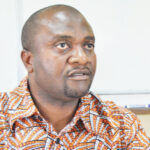
REBECCA CHIMJEKA sheds light into the life of John Zenus Ungapake (JZU) Tembo, who was the last surviving member of Malawi’s first Cabinet.
He was born on September 14 1932, as the youngest of five sons and the last but one child in a family of 10 of the late Reverend Zenus Ungapake Tembo and Anachulu of Mphenzi Village in Dedza District.
He received his primary school education at Dutch Reformed Mission schools, where his father served, and these schools were in Nkhoma, Mchinji, Salima and Mlanda, where he learned up to standard six.
This was the last standard in primary school in those days, and he duly completed his primary school in 1949 not just as an ordinary learner but as the best learner in his class.
Thereafter, four years at Blantyre Secondary School earned him a Cambridge School Certificate in 1953.
- Advertisement -
However, lack of funds prevented him from continuing with his education for nearly two years, during which he was employed in the Audit Department of the Nyasaland Government in Zomba.
In 1955, he was awarded a Nyasaland Government Scholarship to study at Roma University— also known as St. Piux XII College— in Basutoland (Lesotho), where he earned his Bachelor of Arts degree in History and Political Philosophy in 1958.
The experience at Roma must have prepared him for what was to become an illustrious career in politics, economics, leadership and management.
For instance, while at Roma, he was elected secretary of the debating society and member of the Students Representative Council (SRC), which was an affiliate of the white-dominated National Union of South African Students (Nusas).
- Advertisement -
- Advertisement -
Throughout his stay at Roma, he made contacts with Ntsu Mokhehle and other leaders of the Basutoland African Congress while following developments in the Nyasaland African Congress (later MCP), of which he was already a member.
He spent his holidays at the house of his elder brother, the late Doniya George Tembo, in Benoni, South Africa, where he was exposed to the harsh and bitter practice of apartheid. That experience fueled his activism within the Student Representative Council, especially during a campaign to dissociate the Roma SRC from Nusas.
He wrote a widely publicised article entitled ‘The Place of the African in Nusas”, which split the students’ body at Roma but played a major role in the subsequent disaffiliation of the Roma SRC from the whites-dominated Nusas.
After graduation, he returned home in December 1958, as Dr Hastings Kamuzu Banda was making fiery speeches against the Federation of Rhodesia and Nyasaland and demanding self-government.
As a beneficiary of the government scholarship, he was virtually bonded to serve the colonial government.
Teaching was the only position set aside for the handful of African graduates, provided they completed the Postgraduate Certificate in Education (PGCE). And, so, he was earmarked for a teaching career but was first required to obtain the professional teaching qualification.
Three months later, in March 1959, he was admitted to the University of Rhodesia and Nyasaland to pursue the required postgraduate certificate course.
On successful completion, he taught at Dedza Secondary School and, later, at Kongwe Secondary School, where he was appointed head teacher in January 1960.
Service to the Nation in the public, private sectors
This was at a time the country was politically on fire since the return to Malawi of Dr Banda in July 1958.
Although teaching provided him with a source of livelihood as a fresh graduate, his mind was already set on a political career. That is precisely why he contested successfully on the MCP ticket in Dedza during the first multiparty general elections of August 1961.
He became a Member of the Legislative Council (now Parliament) for Dedza while continuing with his teaching occupation since that was allowed then.
When Malawi attained self-government in 1963, Dr Banda, who was by then Prime Minister, appointed him Parliamentary Secretary in the Ministry of Finance.
He was appointed Minister of Finance in the first Cabinet at Independence in 1964 and served in that capacity until 1969.
During the 1965 General Elections, he was elected lawmaker for Dedza South, a position he held until 1971, during which he briefly served as Minister of Trade and Industry, from 1969 through 1970.
In 1971, he was appointed Governor of the Reserve Bank of Malawi after completing an extensive tour of financial institutions in the United States and Europe.
He retained this position for over 13 years until 1984, when he retired from the central bank.
Achievements
His achievements, under the overall guidance of Dr Banda, are included in this brief narration. A few highlights will demonstrate the significant role he played as a leader, negotiator and manager.
Within the Southern African context, and on behalf of the Malawi Government, he played a material role in the negotiations for peace between Frelimo and Renamo of Mozambique that culminated in the signing of the Rome Peace Accord, at an event he attended in 1992.
Equally important, but perhaps less known, is the role he played, on behalf of the Government of Malawi, as the main link and conduit for financial and material support to liberation movements in Southern Africa.
During his tenure as Minister of Trade and Industry, he negotiated the huge investment that brought Carlsberg Breweries to Malawi.
As Governor of the Reserve Bank of Malawi, he coordinated the construction and, later, transfer of the headquarters of the central bank from Blantyre to Lilongwe.
In addition, he initiated and facilitated the construction of the central bank’s staff residential houses in areas 10, 18, 43, and 47.
While serving as chairman of the Malawi- Canada Railway Project, he oversaw the construction of the railway from Salima to Mchinji.
As chairman of Viply, he led a dedicated group of Malawians that developed Chikangawa Forest to become the environmental pride of the nation. Most of the infrastructure that governs the tobacco industry was established during his tenure as chairman of the Tobacco Control Commission.
He coordinated the planning and construction of Chayamba Building in Blantyre CBD and contributed to the growth of the Press Group of Companies.
Staff welfare was always a priority in his dealings with employees, as attested to by many who worked under him. He always strived to engage a very professional and well-educated workforce by facilitating training opportunities and scholarships for staff in the various organisations he headed.
The successful completion of various construction projects he was charged to oversee remains a clear testimony to his leadership skills, dedication to excellence, and adherence to the tenets of discipline that Ngwazi Dr. H. Kamuzu Banda always demanded and expected of Malawians.
Tembo played a significant role within the Malawi Congress Party as he served the party as a member of the National Executive Committee from 1970 until his retirement from politics in 2014.
He was the Treasurer General of the party for four years (1987–1991) and Deputy President from 1999 to 2003. During a period of 10 years, from 2003 to 2013, he served as the elected president of the MCP and as Leader of the Opposition in Parliament during the same period until 2014.
Tembo also received other awards and recognition, including the Order of the British Empire (OBE) from Her Majesty the Queen at Buckingham Palace, London, the United Kingdom, in 1985, and the Malawi Silver Jubilee of Independence Award in 1990.