Malawi must cut poverty by an average of eight percent per annum if it is to achieve 100 percent eradication of poverty among Malawi’s impoverished population by 2030, a mid-point Sustainable Development Goals (SDG) report by civil society organisations has shown.
According to the report, Malawians continue to face vulnerability to economic shocks, such as droughts and floods, which result in insecurity related to both food and income, adding that these unforeseen events consistently push many individuals back into poverty.
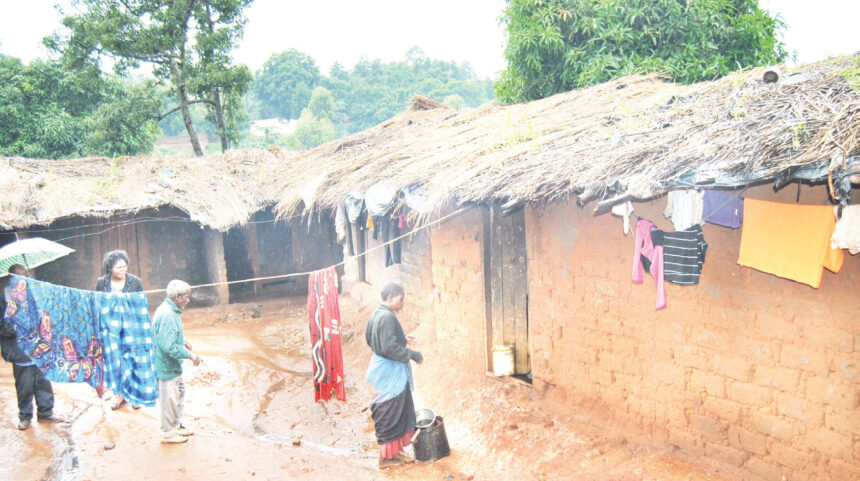
It says poverty remains primarily concentrated in rural regions, where a significant segment of the population relies on subsistence farming.
Heavy dependence on rain-fed farming, the report says, renders the agricultural sector susceptible to the impacts of climate variability, leading to reduced crop yields and economic instability.
The report notes that with Malawi’s population growth seen at 2.6 percent per annum, the country would need to triple its efforts to address the current poverty levels.
- Advertisement -
“However, considering the sluggish economic growth, which has averaged 3.8 percent from 1990 to 2023, falling short of the required 6 percent, it appears highly improbable for the country to attain SDG 1 by 2030.
“The 2022 growth rate of 0.9 percent does not look promising. Urgent efforts are needed on industrial transformation and political will, characterised by sound policy initiatives,” the report says.
Since 2015, Malawi has witnessed various shifts in poverty levels, influenced by a blend of economic, social and environmental factors. Regrettably, there has been limited progress in reducing the number of individuals living below the poverty threshold.
According to the midpoint report, the internationally recognised poverty line, now set at $2.15 per day (adjusted from the previous figure of $1.90 in 2015), underscores the necessity for Malawi to adopt a more targeted approach if it intends to rescue its citizens from the poverty hegemony.
- Advertisement -
- Advertisement -
“Nevertheless, it’s worth noting that the poverty headcount ratio in Malawi, defined according to its specific poverty line, has shown fluctuations over the years: 65.5 percent in 1997, 52.4 percent in 2004, 50.7 percent in 2010, 51.5 percent in 2016, and 50.7 percent in 2019.
“These trends hold significant importance for policymakers and stakeholders as they endeavour to formulate precise interventions that aim to alleviate poverty, stimulate economic growth and enhance the overall well-being of the Malawian populace,” reads the report .
Addressing the United Nations General Assembly last month, President Lazarus Chakwera said Malawi has stayed on track with its quest to end hunger in line with SDG 2, to safeguard the good health and well-being of citizens in line with SDG 3, to improve quality of education in line with SDG 4, to leverage on Malawi’s abundant water resources for better sanitation in line with SDG 6 and to promote life below water in line with SDG 14.
Chakwera, however, admitted that the SDGs are in a crisis and asked developed countries to cancel the debts that least developed countries owe them to allow the poor countries register progress in the SDGs.
“We need decision and action on debt for most Least Developed Countries. Malawi is in distress because its debt is unsustainable, and so our call to action on behalf of all LDCs on this matter remains the same: Cancel the debts! Cancel the debts! Cancel the debts!
“As a family of nations, we have already lost two years of progress during the Decade of Action due to the economic shutdowns effected to contain Covid and if you want the global economy to regain that lost ground, you must cancel the debts. We have lost another two years of progress during this Decade of Action due to economic disruptions caused by the war in Eastern Europe, and if you want to see LDCs catch up on SDGs, you must cancel the debts,” Chakwera said.