By Mike Mataka:
At 3am, while most of Lilongwe City slept, women in Nkhoma were already on the move.
With babies strapped to their backs and buckets balanced on their heads, they walked long distances in the dark. Not for clean water but for muddy pools shared with cows and goats.
Two decades later, the picture is remarkably different. Solar-powered kiosks now pump safe water into villages.
Mothers spend more time with their families. Diseases like cholera are no longer the daily threat they once were.
- Advertisement -
Stunting among children has halved, classrooms are full and vibrant and young people once dismissed as idle now run small businesses.
More than 30,000 people in Nkhoma have experienced this transformation. It shows what long-term partnership and community resilience can achieve.
This is Nkhoma’s story, a community on the edge of Lilongwe that has walked a 20- year journey with World Vision Malawi.
In 2005, more than half the children under five in Nkhoma, 51.1 percent, were stunted due to chronic malnutrition.
- Advertisement -
- Advertisement -
By 2024, that number had fallen to 22.2 percent, well below the national average of 33 percent. These figures reflect healthier children who can concentrate at school and grow stronger.
“We used to see children with swollen bellies, frequent diarrhoea and signs of malnutrition everywhere. Now those cases are rare because mothers have learned the importance of breastfeeding, balanced meals and hygiene,” Catherine Panganani of Nima village, a caregiver and member of one of the 22 Care Groups formed by World Vision, says.
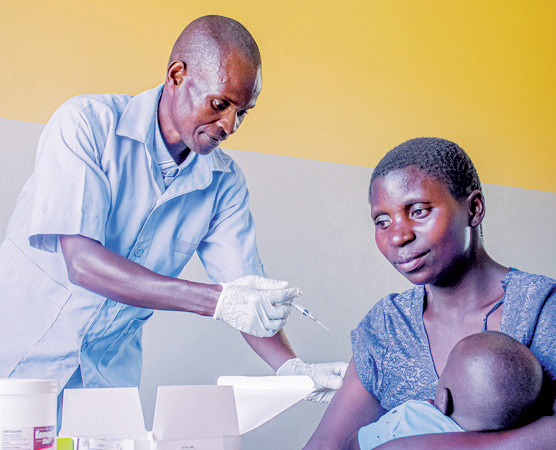
Exclusive breastfeeding rates rose from 44.4 percent in 2005 to 72.3 percent by 2024. Village clinics were built; others supplied with equipment and over 5,000 households were reached annually with messages on malaria and diarrhoea prevention.
Frank Dule, a health surveillance assistant at Nkhoma Mission Hospital, notes the progress.
“Children now survive illnesses that used to be deadly. That is the biggest impact World Vision has left: healthier children, healthier families,” Dule says.
Perhaps the most dramatic change has been in access to safe water. In 2007, only 53 percent of Nkhoma’s population had clean drinking water. Women and children would wake at 3am to collect dirty water from swamps.
Chairperson of Zuze Water Users Association, Trizza Chikuse, recalls those days, when water was what she calls life’s biggest burden.
“We would walk far and still the water was not safe. Diarrhoea and cholera were common,” Chikuse says.
World Vision installed 76 boreholes, rehabilitated 11 others and constructed four solar-powered reticulated water systems. Today, 98.8 percent of households in Nkhoma have access to safe water.
Chikuse’s community now manages 64 kiosks serving around 22,000 households.
“We were trained to run the kiosks, collect user fees and enforce bylaws. The water will not stop flowing just because World Vision has gone,” she adds.

The area also achieved Open Defecation Free status, with open defecation reduced from 56 percent to just 6.8 percent.
When World Vision arrived, classrooms were overcrowded and many children learned under trees. School enrolment stood at just 78.7 percent in 2007.
By 2023, that had risen to 91.2 percent, supported by the construction of 54 classrooms, 17 early childhood centres and two libraries. Over 44,000 reading books were distributed and 189 teachers trained in new literacy methods.
World Vision also helped 423 children with secondary school fees and supported 920 others to enrol in government secondary schools. For many families, education is the most lasting legacy.
Beyond health and education, World Vision worked to improve household incomes and resilience. Nearly 17,000 farmers, mostly women, were trained in diversified crop production. Three irrigation schemes covering 115 hectares now support 311 farmers, providing year-round harvests.
Mkochi Dairy Cooperative, established with World Vision’s support, produces 60 litres of yoghurt daily, earning around K 7.1 million each month.
Savings groups also flourished. Some 1,726 groups with 5,223 members, mainly women, now offer small loans and financial training, helping families move beyond subsistence farming.
Youth engagement has seen a sharp rise. In 2016, only 11.2 percent of young people took part in community decisions.
Today that number is 88.5 percent. Vocational training has helped many build futures in trades like tailoring, electrical work and motorcycle repair. Over 200 youths have been trained.
During the El Niño-induced drought of 2024, World Vision distributed 18 tonnes of maize flour to 1,800 vulnerable children and supported 122 young people with vocational training to help their families cope.
Ezekiel Ching’oma, who has been Member of Parliament for the area for 16 years, describes World Vision as a trusted development partner.
“If you look around, you will see schools, clinics, water systems, skilled youth, all because of World Vision. They have been a faithful partner,” Ching’oma says.
As World Vision exits, local leaders are focused on sustainability. Traditional Authority Chitekwere explains that bylaws have been introduced to safeguard the gains.
“We must protect what has been achieved. People have been trained and empowered to continue the work. Nothing will stop us,” he says.
For World Vision Malawi’s Director of Operations, Charles Chimombo, the departure is bittersweet.
“We leave Nkhoma satisfied. Our goal was always the wellbeing of children through better nutrition, water, education and livelihoods. In 20 years, we have seen real change. This is a celebration, not a goodbye,” Chimombo says.
But beyond the statistics are real stories of children with hope, women no longer walking for water and families who eat better, save better and live better.
As Chikuse says: “The swamps are now just a memory. Our children will grow up without knowing the suffering we went through.”