By Brenda Kayo:
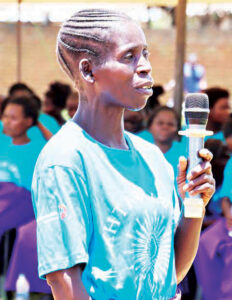
For many years, life for Agness Chimbamba from Kambanizithe Village under Senior Chief Masula in Lilongwe was defined by struggle.
In her small rural village, every day was a struggle to survive.
With very little food, no reliable income and children to care for, Chimbamba lived in what many would call ultra-poverty.
Some days, there was simply nothing to eat. Sending her children to school felt like an impossible dream because she could not afford school supplies, uniforms or even consistent meals.
- Advertisement -
Living in a small rural village in Lilongwe District, Chimbamba and her family faced the daily struggles that come with extreme poverty.
Food was never guaranteed, income was uncertain and opportunities to improve their situation seemed almost impossible to find.
As a mother, the hardest part for her was watching her children grow up in conditions where even the most basic needs could not always be met.
“There were days when we would sleep without eating. As a mother, that was very painful because I could not provide enough food for my children,” Chimbamba recalls.
- Advertisement -
- Advertisement -
At the time, Chimbamba had no reliable source of income. Like many women in her community, she relied on occasional casual labour, working in other people’s fields for small payments.
Some days, she would spend hours working only to return home with very little.
“My children sometimes stayed at home because I could not afford what they needed for school. It made me feel helpless,” she says.
For Chimbamba and many other families in the village, poverty was not just about a lack of money. It was a cycle that limited opportunities and made it difficult to plan for the future.
Hope began to emerge when Opportunity International Malawi introduced an initiative aimed at helping families living in ultra-poverty rebuild their lives.
The programme targeted the most vulnerable households and provided them with productive assets and practical training to help them establish sustainable livelihoods.
Through the initiative, 120 households in the community were selected to participate.
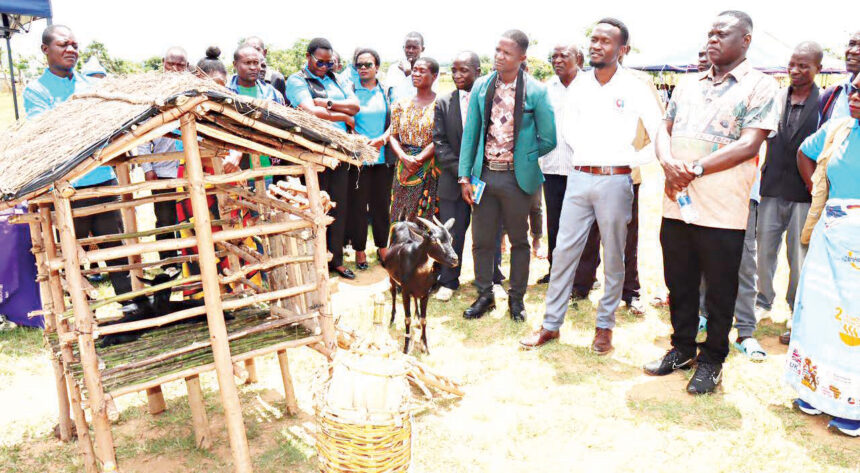
Each household received four goats as a starting asset and ‘Mtukula Pakhomo’ K90,000.
While it may have seemed like a small intervention, the goal of the programme was much larger, to give families a foundation they could build upon through proper training, discipline and determination.
Chimbamba was one of the women selected to participate in the programme.
“When I received the goat, I felt hopeful. But at the same time, I wondered how such a small beginning could really change my life,” she admits.
However, the programme offered much more than livestock.
Beneficiaries also received training in animal husbandry, financial management and small business development.
They were guided on how to care for the animals, how to reinvest profits and how to gradually build stable livelihoods.
Chimbamba followed the advice she received during the training sessions.
She made sure the goats were properly fed, protected from disease and carefully managed so that they could reproduce.
Before long, the goat gave birth. Then another. Over time, Chimbamba began to see her small investment grow.
Instead of selling the goats immediately, she allowed the herd to multiply.
She also started expanding her farming activities, growing crops that could feed her family and support her livestock.
Years later, the transformation is remarkable.
Today, Chimbamba owns 32 chickens, two pigs and six goats, which she raises on her homestead.
The animals provide both food and income for her family, giving her a level of financial stability she once thought was impossible.
“I am very proud of what I have achieved. What started with one goat has grown into something that now supports my whole family,” Chimbamba says.
With her livestock herd growing, Chimbamba began to explore new ways of generating income.
She started a small business selling goat meat and pork within her community and in nearby markets.
The demand for meat has allowed her to earn a regular income and support her household needs.
“My customers come to buy goat meat and pigs. This business helps me pay school fees and buy other necessities for my family,” she says.
Her children are now able to attend school consistently, something that once seemed like an impossible dream.
“Before, I struggled to send them to school. Now they have uniforms, books and they can learn without interruption,” she adds.
The improvement in the family’s living conditions is evident. Chimbamba’s household now enjoys better food security, improved shelter and greater financial confidence.
Senior Chief Masula says the initiative has brought meaningful change to families that were once trapped in extreme poverty.
“We have seen many households improve their lives through this programme. People who once struggled to feed their families are now raising livestock and running small businesses,” the chief says.
According to the chief, the programme has strengthened community resilience by empowering families to become self-reliant.
“When people have the means to work and provide for themselves, the whole community benefits,” he adds.
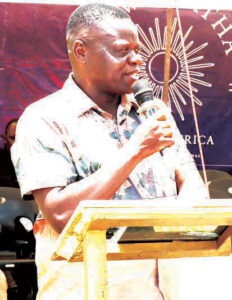
Director of Agriculture at Lilongwe District Council, Ezra Mbendela, says livestock farming plays a crucial role in improving rural livelihoods.
“Goats are particularly suitable for smallholder farmers because they reproduce quickly and require relatively low maintenance,” Mbendela explains.
He adds that programmes that provide both livestock and training can have long-lasting impacts on household incomes.
“When families learn how to manage livestock effectively, they can build sustainable businesses and improve food security,” he says.
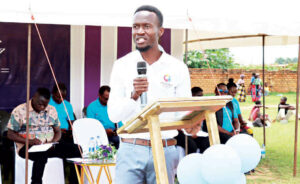
Opportunity International Country Director Richard Chongo says stories like Chimbamba’s demonstrate the power of combining opportunity with determination.
He explains that the organisation’s ultra-poor graduation programmes are designed to help families move from survival to stability.
“Our goal is to empower people living in extreme poverty with the resources and knowledge they need to transform their lives,” Chongo says.
He adds that that by providing productive assets like goats alongside mentorship and training, the programme helps participants gradually build confidence and financial independence.
“We believe that sustainable change happens when people are given the tools to succeed,” Chongo states.
Chimbamba’s progress has not gone unnoticed in her village.
Neighbours often visit her home to learn how she manages her livestock and runs her small business. Her story has inspired others to believe that change is possible.
“People come to see my goats and ask how I started. I tell them that it began with one opportunity and a lot of hard work,” she says.
Her experience has become a powerful example of how small interventions can create significant transformation when combined with determination and community support.
Despite her achievements, Chimbamba continues to work hard and dream bigger.
She hopes to expand her livestock herd even further and strengthen her meat-selling business. She also plans to invest more in her children’s education so they can pursue better opportunities in the future.
“My biggest wish is for my children to finish school and have good lives,” she says.
For Chimbamba, the journey from ultra-poverty to self-reliance has been long but it has also been filled with valuable lessons.
“What I have today started with just one goat. Now I have animals, a business and my children are going to school,” she says.