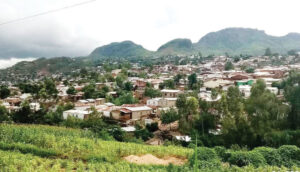
A new report reveals that African cities will experience rapid urbanisation over the next decade, creating both socio-economic opportunities and significant challenges for the continent. This development is expected to lead to wealthier consumer markets, more connected and sophisticated commercial hubs, and larger bases for industrial production.
The Economist Intelligence Unit’s African Cities 2035 report forecasts that Africa will record one of the fastest rates of population growth worldwide, with increased rural-to-urban migration contributing to the expansion of its largest cities.
However, the report warns that this rapid urbanisation will lead to overcrowding, informal settlements, high unemployment, poor public services, strained utility systems, and greater exposure to climate change.
“Africa has and will continue to have the fastest rate of urbanisation of the world’s major regions through 2035. Africa’s urban population will rise from about 650 million in 2023 to almost one billion in 2035,” the report states.
Currently, African cities are grappling with high demand for urban housing, triggering the proliferation of informal settlements from Cape to Cairo.
- Advertisement -
This comes at a time when many governments are falling behind on commitments such as providing housing for all by 2030. UN-HABITAT estimates that more than half of Africa’s urban population lives in slums, a figure expected to increase from 400 million to 1.3 billion by 2050.
“We expect rapid urbanisation across Africa to help create more dynamic and wealthier consumer markets, better connected and more sophisticated commercial and distribution hubs, and larger bases for industrial production and import-export operations,” the EIU report notes.
At a recent summit in Harare, Zimbabwe, Southern African Development Community (Sadc) leaders emphasised that innovation and industrialisation are key to unlocking the continent’s economic growth. However, the African Cities 2035 report warns that urgent attention is needed to address the negative aspects of rapid urbanization if the continent is to benefit from it.
“Overcrowding, informal settlements, high unemployment, poor public services, stretched utility services, and exposure to climate change are just some of the major challenges that city planners will have to tackle in their drive for sustainable urban economic growth in the next decade,” the report emphasizes.
- Advertisement -
- Advertisement -
Experts argue that immediate action is required to curb the negative effects of urban sprawl.
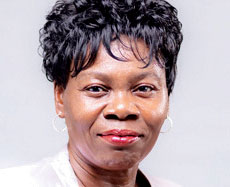
“African governments need to use population projections to anticipate the growing demand for housing, schools, waste disposal, water, and transport,” said Nyovani Madise, President of the Union for African Population Studies, and a member of the International Union for the Scientific Study of Population.
She added, “Governments should also invest in rural development programs so that young people can find economic opportunities in their rural areas, reducing migration to cities.”
The EIU report projects the emergence of more megacities, with populations exceeding 10 million residents, and an additional 17 cities with more than five million residents. A further 100 cities will have populations greater than one million.
“The rise of new urban heavyweights, the rapid expansion of city clusters, and the increasing significance of megalopolises will shape Africa’s demographic and economic future,” said Pat Thacker, the report’s lead author.
The report also highlights the urgency of addressing climate change, describing it as a “major concern for Africa’s largest cities.” Many of these cities are in low-lying coastal areas, making them vulnerable to rising sea levels and storm surges.
“These climate risks will weigh heavily on the future dynamism and prosperity of African cities, especially as national preparedness and climate resilience remain weak,” Thacker explained.
Madise warns that inadequate planning by African governments will have serious consequences for millions of residents across the continent.
“African governments must plan for climate mitigation measures as their populations grow. Population growth, coupled with economic growth through industrialization, will lead to an increase in greenhouse gas emissions in Africa,” Madise said.
She added, “Urban development is often accompanied by industrialisation, which requires high energy, water, and efficient transport systems. Cities must have adequate urban policies to ensure that energy expansion is compatible with national and global climate change targets.”
Despite these challenges, African countries are being urged to develop homegrown solutions, including accelerating industrialisation.
“It is not simply a question of convenience. It is a matter of absolute necessity,” said Claver Gatete, Executive Secretary of the United Nations Economic Commission for Africa (UNECA).
“We have no choice but to look inward for solutions, including mobilizing domestic resources and adopting innovative financing to sustain our development,” Gatete added.
As the EIU notes, “Africa’s larger cities will continue to expand both geographically and demographically,” impacting the continent’s economic performance.
However, amidst these difficulties, the report highlights small pockets of economic optimism where skilled and better-educated workers are expected to emerge, offering hope that Africa’s urbanization is not entirely bleak.