By Phillip Pemba:
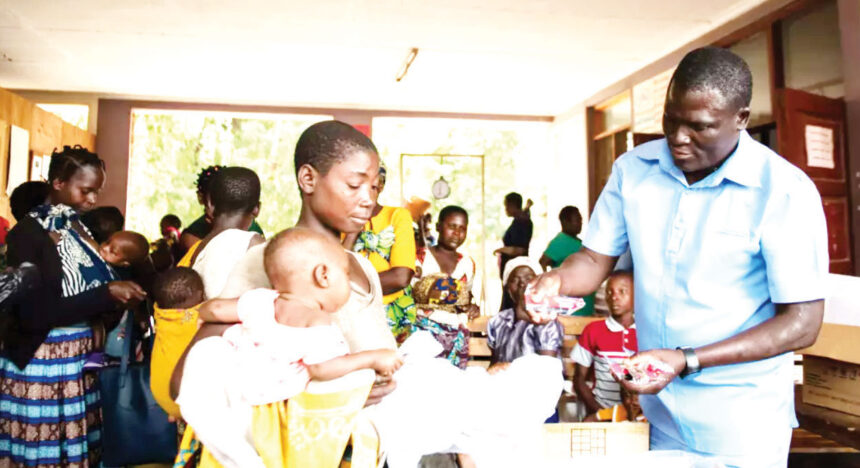
Shadreck Mpomba, 52, a health surveillance assistant (HAS) at Nsanje District Hospital, cites one thing that has kept him motivated in his work over the past 20 years: seeing children who were malnourished recovering and thriving.
“Malnutrition has very devastating effects on a child’s physical and cognitive development. My work gives me a chance to do something about this and save lives of the young ones from complications that can result from malnutrition,” he says.
When Tropical Cyclone Freddy triggered heavy rains and caused flooding in Nsanje and other districts in March 2023, severely impacting the food security of vulnerable households, Mpomba got worried.
His workload tripled as many families lacked food to provide good nutrition to their children.
- Advertisement -
“We registered high malnutrition cases at our health facility due to the food insecurity situation,” he says. “Before the cyclone, we could treat about 15 malnourished children per month, but that number spiked to about 45.
“In some cases, the high number of cases also depleted the stocks of the ready-to-use therapeutic food (RUTF) which we use to treat malnutrition in children.”
Following the impact of the cyclone, the Government of Malawi declared a state of disaster in Nsanje and 15 other councils in the Southern region, and mobilised partners to support lifesaving, recovery and resilience building efforts.
The support from partners like Unicef – which works in collaboration with the Ministry of Health’s Department of Nutrition, The Hunger Project, Farmers Union of Malawi and district councils – has enabled frontline health workers scale up their fight against malnutrition.
- Advertisement -
- Advertisement -
“Our priority is to prevent and treat malnutrition in all under-five children. We screen as many children as possible for malnutrition using tools like mid-upper arm circumference tapes and height boards.
“Based on the assessments, we provide appropriate treatment to the children who are malnourished. Some are admitted in the nutrition rehabilitation unit at the district hospital while others are treated as outpatients and their parents just collect RUTF packets every week until the child recovers,” he says.
Fatima Zuze, 27, has an undernourished girl who is regularly served by Mpomba and other HSAs at Nsanje District Hospital.
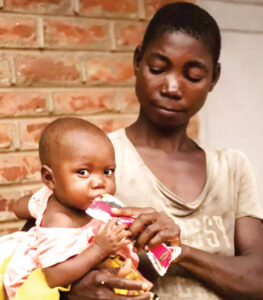
She does not miss the nutrition clinics held every Thursday at the hospital to collect RUTF packets for her 11-month-old daughter, Malita.
“I was very troubled and stressed when my child was not feeling well and had swelling legs. Now I feel good to see her happier and getting better than before,” Zuze says.
Mpomba expresses similar satisfaction with Malita’s progress in recovering from malnutrition.
“Malita looks healthier now than she was some few weeks ago,” he says, while advising her mother not to share the RUTF packets with anyone else in the village.
Mpomba’s efforts against malnutrition are not limited to the confines of Nsanje District Hospital.
He regularly visits families in villages to conduct malnutrition screenings and to inform them about appropriate child-feeding practices and how to prepare diversified meals for children using locally available foods.
“Our work is possible because of the nutrition supplies and screening tools that we get with support from partners like Unicef. These tools and supplies enable us to save lives of children and improve their health conditions so that they can grow up well and thrive to reach their full potential,” he says.
Unicef, with funding from the German Government, through KfW, is supporting high-impact nutrition interventions under Malawi’s Scaling Up Nutrition programme to reduce undernutrition in Nsanje and four other districts.
In the first half of 2024, about 24,000 mothers and caregivers in Nsanje were given information on appropriate infant and young child nutrition practices.
Unicef Representative Shadrack Omol says protecting children from malnutrition is important to enhance Malawi’s human capital.
“Evidence shows that proper nutrition during the first 1,000 days between a woman’s pregnancy and her child’s second birthday gives children a healthy start in life.
“Improving nutrition is, therefore, a precondition to reducing child mortality, improving maternal health, combating diseases, and eradicating poverty and hunger,” Omol says.—Unicef Malawi