


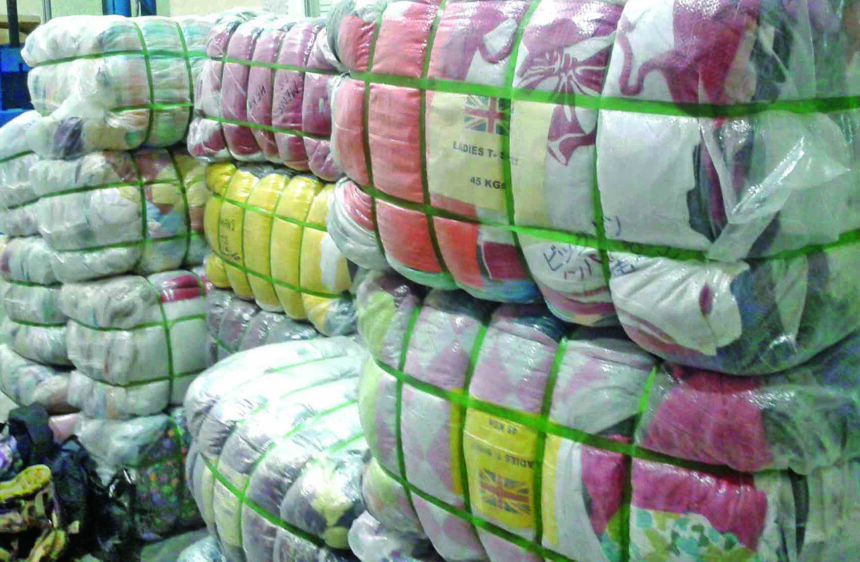
Malawi’s total exports fell by nearly 5 percent in 2025 while imports jumped sharply, further widening the country’s trade deficit.
The situation is exerting extra pressure on the already volatile economy, which is battling foreign exchange shortages and elevated inflation.
According to statistics from the International Trade Centre (ITC) Trade Map, Malawi’s total exports to the world declined from $958.5 million in 2024 to $913.8 million in 2025.
Over the same period, imports surged from $3.31 billion in 2024 to $4.05 billion in 2025, a jump of over 22 percent. This is an indicator of Malawi’s ever-growing dependence on foreign goods.
Belgium remained Malawi’s largest export destination, receiving goods worth $171.1 million, slightly down from $178.7 million a year before.
- Advertisement -
Tobacco dominated exports to Belgium, accounting for $169.7 million of the total, confirming that Malawi’s export base remains heavily dependent on the crop.
China came in second as an export destination, with Malawi shipping goods worth $63.3 million in 2025, up significantly from $20.4 million in 2024—the strongest growth among the top five export markets.
India received $51.4 million worth of Malawian goods in 2025, down from $60.6 million in 2024, while the United States absorbed $42.5 million, up from $33.5 million in 2024, while South Africa received $39.9 million, a sharp drop from $62.1 million the previous year.
By far, China remained Malawi’s largest supplier of goods, with imports rising from $535.2 million in 2024 to $798.5 million in 2025—an increase of nearly 50 percent.
- Advertisement -
- Advertisement -
The top imports from China included machinery and mechanical appliances, electrical equipment, textiles, vehicles and plastics.
Tanzania was second on the list, with imports rising dramatically from $340.6 million in 2024 to $532.5 million in 2025 followed by South Africa with $527 million, up from $493.7 million in 2024.
The United Arab Emirates supplied $261.5 million worth of goods, down from $281.4 million, while India supplied $231.2 million, a decline from $278.2 million in 2024.
Economist Marvin Banda said in an interview last week that Malawi should act on diversifying its exports base.
“Malawi does not need new crops; it needs better aggregation, storage and working capital for what farmers already grow. Agro-processing should become purposefully regionally integrated, aiming at serving nearby markets such as Tanzania, Zambia, Mozambique and eastern DRC [Democratic Republic of Congo],” Banda said.
Another economist Veli Nyirongo said the trade deficit posed serious risks to foreign exchange reserves, inflation and the cost of living.
He called for urgent structural reforms.