The chilly hills of Thyolo are dry, the once-fertile land now parched as cold air settles in. Banana plants wither before bearing fruit and cassava shrinks in exhausted soil.
Smallholder farmers here are grappling with an invisible threat that begins deep at the root.
For Judith Fumulani, the struggle starts long before the rains return.
“We plant what we can. But sometimes it does not grow. Or it grows sick. And when that happens, there is no food, no money, nothing,” she says, gently cradling a stunted banana shoot.
Across Malawi, stories like Fumulani’s echo through rural communities. Farmers face poor soils, erratic weather and, most critically, planting materials already infected before they even reach the ground.
- Advertisement -
Cassava farmer Eneless Lungu puts it plainly: “We depend on the land, but the land is tired. We need better planting materials, not the same infected ones year after year.”
This crisis, driven by disease and climate stress, threatens livelihoods. But in a laboratory about 15 kilometres away, hope is quietly growing.
Bvumbwe Agriculture Research Station in Thyolo is a centre of scientific revival. Researchers here are cleaning, multiplying and distributing disease-free planting stock to those who need it most.
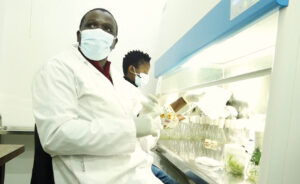
“We start with the healthiest samples. If they show signs of infection, we clean them using precise laboratory methods. From that clean base, we multiply what works,” Harold Katondo, an agricultural research scientist at the station, says.
- Advertisement -
- Advertisement -
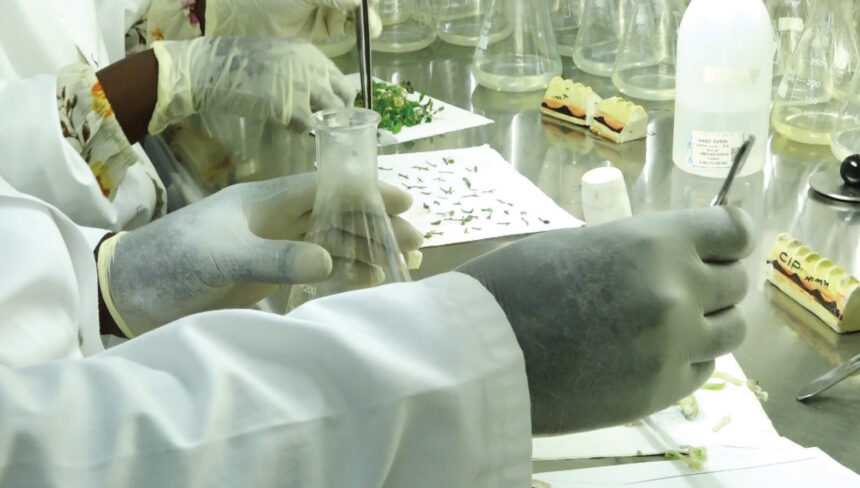
Inside the lab, the process is delicate. Using tissue culture, scientists isolate the tiniest healthy parts of a plant, often just the shoot tips, and place them in jars of nutrient-rich media.
Each jar holds the potential for hundreds, sometimes even thousands, of new plants.
Under sterile conditions and bright lights, these tissue samples grow into genetically identical plantlets, disease-free and ready for planting.
“It is precision agriculture. Clean plants, consistent yields and the ability to meet farmers’ needs quickly. Or at least try to,” Katondo says.
However, demand has far outpaced supply.
Farmers across the Southern Region are constantly seeking disease-free materials. Many leave the station empty handed.
The challenges are visible. Across the country, agricultural stations have idle equipment, underfunded laboratories and limited support.
The national research budget remains among the lowest in southern Africa.
Minister of Agriculture Sam Kawale acknowledges the shortfall but insists the government is committed to addressing it.
“In recent years, the ministry has introduced new technologies. We have crop varieties that are tested and proven to produce significantly.
“We will continue ensuring farmers have access to these varieties so we can end hunger and produce enough for export,” Kawale said during a previous visit to Bvumbwe.
He also noted greater alignment between his ministry and organisations involved in agricultural research.
“This ensures the entire country benefits, with technology shared with all who need it. There is a lot of money that comes in for research. That money must benefit the country,” Kawale said.
While the government sets its direction, food security advocates like Ronald Chilumpha are calling for faster and more inclusive efforts.
“Our policies must reflect the people’s needs. There is a lot of science behind getting better seed to farmers,” Chilumpha says.
He is particularly concerned about access for small-scale farmers.
“These are the technologies research stations should bring to them. But that alone is not enough.
“If we do not invest in research, in extension, in training farmers on how to use the input pack, then do not expect miracles. Do not expect food security,” Chilumpha adds.
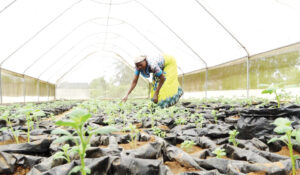
Back at Bvumbwe, once the plantlets reach a certain size, they are transferred to greenhouses for hardening. This is a gradual adaptation to outdoor conditions.
“They come here soft and fragile,” greenhouse assistant Milly Godfrey says. “We teach them to be strong, like children.”
Only then are they ready for distribution. For farmers like Mphatso Kamtengo in Blantyre, the results are clear.
“Now I harvest more. I sell more. I can even buy school shoes for my children,” he says proudly, standing among tall banana plants grown from Bvumbwe plantlets.

Still, according to Maness Nkhata, president of the Farmers Union of Malawi, the current system for distributing planting material, especially for crops like cassava, potatoes and bananas, is too centralised and fragmented.
As a result, Nkhata points out, most farmers struggle to access improved planting stock.
“In the few cases where they do, it is usually through donor-funded projects. That is not sustainable,” she says.
Nkhata proposes farmer-level breeding and multiplication centres to bring technology closer to rural areas.
Meanwhile, as researchers refine their methods and policymakers talk about reform, one truth remains.
The tools for transformation exist. But tools alone are not enough.
“The true value of our work is resilience. These plants grow faster, healthier and more resistant. With proper resources, we can scale up to reach more farmers and more crops nationwide,” Kitalo says.
Back in the parched fields of Thyolo, Fumulani echoes this hope with quiet determination.
“Give us the right tools and we will grow enough for the whole country. We do not want handouts. We want good plants and good soil,” she says, now lifting a healthy banana sucker.