





By By Katrina Kosec, Amanda Clayton, Amanda Lea Robinson & Boniface Dulani:
Around the world, climate change is being tackled, not just in parliaments and global summits, but also in villages and farming communities.
In these local spaces, lives and livelihoods depend directly on natural resources and decisions are often made in groups.
Globally, including women in action against climate change is seen as crucial. Especially in rural agricultural settings, women bear a substantial burden from the warming planet.
- Advertisement -

But there has been little research on whether simply having more women involved in climate action changes the decisions taken by communities to combat global warming – or whether it matters.
- Advertisement -
We are a team of political scientists and economists who investigated ways in which women influence community solutions to overharvesting of forests in rural Malawi.
Overharvesting relates to how rural economies operate and is a problem that often requires political solutions.
We worked with 90 rural communities in small groups that had different numbers of women. The communities were all based near Malawi’s Zomba-Malosa Forest Reserve, an area suffering widespread overharvesting of trees for timber, fuelwood, and charcoal.
About two percent of Malawi’s forests are destroyed every year, including forests in this reserve, a rate more than double that of neighbouring countries.
- Advertisement -
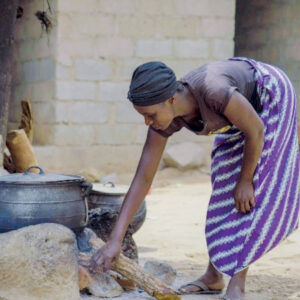
Very low levels of electrification in the country and high natural gas prices mean that fuelwood is used widely for cooking.
We asked people in the groups to vote privately on six options to protect the forest. Then the group discussed the options and voted again.
They also voted for who they thought was the most influential member of the group. This allowed us to measure the influence that women, and the numbers of women, had on the group discussions and decisions.
Our research found that when women were present, the discussions shifted towards solutions for which women have socially recognised expertise (women are experts on cooking methods and tree replanting).
But despite the discussion moving in a different direction, our research also found that women and men chose similar forest conservation policies.
In other words, the presence of women did not meaningfully affect group decisions.
Our work demonstrates how women’s presence shapes climate change discussions in groups of rural Malawians who are trying to find ways to better manage their natural resources.
But it also shows that women’s inclusion will not necessarily drastically affect climate decisions.
Our work suggests that including women in climate interventions does amplify women’s voices and promotes fairer decision-making, demonstrating how women’s presence shapes climate deliberations.
But our findings also call into question claims that women’s inclusion will necessarily affect climate decisions.
What we found
Nearly every household (94 percent) told us they depended on the forest for their cooking needs. Many earned a living from harvesting the wood and selling it to charcoal manufacturers.
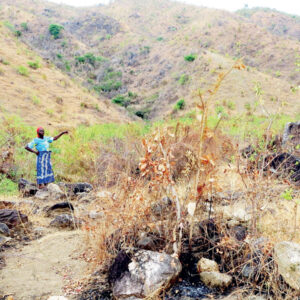
But almost all residents, men and women alike, agreed that forest degradation was a major problem.
They also spoke about short- and long-term costs of deforestation. These include soil erosion that leads to devastating mudslides and flash floods when trees and bushes are no longer present to slow down water flow when it rains heavily. In Malawi, deforestation also degrades water quality and air quality.
It means increased disease burdens, and less overall forest land for future use. Almost all (97 percent) of the people who took part in the discussions indicated that the overharvesting of nearby forests was a “big problem” in their community.
Many also connected the problem to the larger issue of climate change. When we asked participants what climate change meant to them, one person told us:
“Climate change will affect us so much with things like disasters, like floods, scarcity of rainfall, and soil degradation. This means we will not have food. If rain is scarce then we will not have water. Drought will be everywhere and it will be hard on us. Hunger will be everywhere.”
When more women are present, women gain influence
Our central finding was that the more women there were in a meeting, the more influence they had. As the number of women in a group grew, men were increasingly likely to vote for women as the most influential group members.
However, having more women in a meeting did not lead to women talking more on average. It also did not lead to the discussion becoming more collaborative or affirming, or to people trying to reach decisions by consensus.
Instead, the change was in how men perceived women. In groups with more women, conversations focused more on topics where women have socially recognised expertise, such as cooking methods that reduce firewood use, or community-based tree replanting.
In groups with more men, discussions leaned towards using enforcement to stop people from cutting down trees, such as forest guards – work that men are more involved in and have more knowledge of.
This suggests that when women are included in groups discussing solutions to climate change, then men’s perceptions of who holds authority change, even when women don’t dominate the conversation.
In other words, the issues men and women spoke about reflected their lived experiences, and those experiences shaped group decisions.
Women were consistently rated as more influential as their numbers increased, especially when they numbered almost half of the group.
In contrast, when women were in the minority, their contributions were less likely to be recognised, no matter what they said.
What needs to happen next
These shifts in influence and discussion content may seem subtle. But in collective decision-making – especially on complex challenges like climate change – it matters who is heard, whose knowledge counts, and which problems and solutions are discussed.
Being seen as influential also builds women’s confidence, legitimacy, and long-term leadership potential.
It highlights the value of gender quotas. These aim for balanced representation of men and women in groups. They help create group dynamics where women are not outnumbered and women’s voices are more likely to be heard and respected.
In the end, our findings challenge the idea that simply including women in climate decisions will automatically lead to different outcomes.
Men and women bring different life experiences to the table, and are able to give different advice on what climate solutions might work best.
This means that the presence of women does shape the conversation – the issues that were talked about and whose voices got heard.
So, while adding women does not magically solve climate problems, it does help create a fairer, more inclusive decision-making process – and that matters too.—The Conversation