





By using this site, you agree to the Privacy Policy.
Accept
The Times GroupThe Times Group
  • Home
  • National
    National
    Get the latest National News from your trusted source.
    Show More
    Top News
    Malawi plants 400m trees, 66% survive
    February 24, 2026
    Health workers, government salary dispute ends
    February 15, 2024
    Experts urge routine ear checks for children
    March 5, 2026
    Latest News
    Malawi Government-owned houses put on rent in Zimbabwe
    November 7, 2026
    More than 30 Malawians stuck in US ‘detention’
    November 7, 2026
    Forex hitch chokes drug supply
    November 6, 2026
    AI must serve humanity—Government
    November 6, 2026
  • Business
    Business
    Breaking news and analysis on business and the economy, including the latest news in technology, stock markets, media and finance.
    Show More
    Top News
    Tobacco earnings hit $182million
    June 4, 2024
    Mlambe Mission Hospital installs 95kva solar plant
    June 17, 2024
    Malawi’s trade balance hits record –$2.17 billion
    June 27, 2024
    Latest News
    Import bill grows by 11.3% to $3 billion
    November 6, 2026
    ‘Fuel permit suspension could disrupt production’
    November 5, 2026
    Government turns to household solar
    November 5, 2026
    Minister warrants secure investment environment
    November 5, 2026
  • Entertainment
    Entertainment
    Your source for entertainment news, celebrities, celeb news, and celebrity gossip. Check out the hottest fashion, photos, movies and TV shows!
    Show More
    Top News
    No-show for Soldier at Everton Blender’s gig
    November 22, 2023
    Piksy sings new song
    January 11, 2024
    Erik Paliani tells fellow artists to avoid ‘silly mistakes’ in music
    February 5, 2024
    Latest News
    First Couple mourns Jack Mapanje
    November 6, 2026
    Film industry in solid progression
    November 4, 2026
    St Pius Choir rekindles six decades of melody
    November 3, 2026
    Nigerian star in no-show as Theresa’s concert soars
    November 2, 2026
  • Sports
    Sports
    Keeping you up to date on the latest sports news from Malawi and around the World. With live scores, fixtures from world of Football, Netball,…
    Show More
    Top News
    Wanderers, Karonga through in Airtel Top 8
    July 13, 2026
    Youth Games sway minister
    September 5, 2023
    Trust goes after hotel sale funds
    July 24, 2026
    Latest News
    Mpira Stadium playing surface ‘overused’
    November 7, 2026
    Dedza Dynamos risk losing sponsorship
    November 6, 2026
    Bravehearts stumble in BAL qualifiers
    November 6, 2026
    Analysts say Kalisto Pasuwa lacks consistency
    November 6, 2026
  • fyi
Search
More Categories
  • World
  • Features
  • Leisure
  • Social and Human interest
  • Digital & Technology
  • Advertise
  • About Us
  • Privacy Policy
  • Contact Us
© Copyright 2026, The Times Group. All Rights Reserved.
Reading: Deadly imports: Mosquito coils proliferate
Share
Sign In
0

No products in the cart.

Notification Show More
Latest News
Malawi Government-owned houses put on rent in Zimbabwe
National
More than 30 Malawians stuck in US ‘detention’
National
Mpira Stadium playing surface ‘overused’
Sports
Forex hitch chokes drug supply
National
AI must serve humanity—Government
National
Aa
The Times GroupThe Times Group
0
Aa
Search
  • Home
  • National
  • Business
  • Sports
  • Entertainment
  • Features
  • World
  • Digital & Technology
  • Leisure
  • Social and Human interest
  • Times Radio
  • Read e-Paper
  • Exclusive Content
  • Dzuka Publishing Company Limited
Have an existing account? Sign In
Follow US
  • Advertise
  • About Us
  • Privacy Policy
  • Contact Us
© Copyright 2026, Times Group Media. All Rights Reserved.
The Times Group > Blog > Features > Deadly imports: Mosquito coils proliferate
Features

Deadly imports: Mosquito coils proliferate

Times News
Last updated: 2024/10/16 at 9:20 AM
Times News
Share
7 Min Read
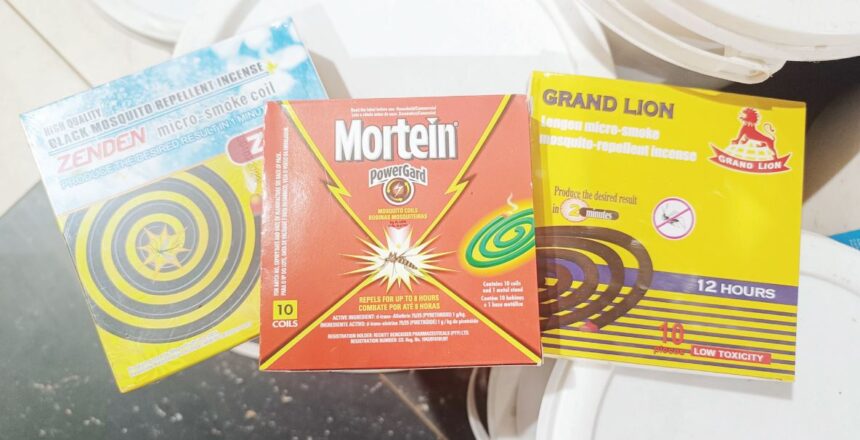
ROTECT FROM MOSQUITO BITES—Coils—Pictures by Patience Lunda
SHARE

By Patience Lunda

Malawi has been tirelessly searching for solutions to combat malaria. Malawi accounts for two percent of malaria cases worldwide and is among the top 15 countries with a high malaria burden, according to the United Nations Children’s Emergency Fund.

This has created the need for solutions to the problem, with mosquito coils being among the products being used for preventing malaria in the country.

These seemingly harmless repellents have become a regular product in many households but beneath their apparently harmless nature seem to be disturbing findings.

- Advertisement -

Ad image

Studies conducted across the world have revealed that mosquito coils can cause cancer, respiratory problems, neurological damage and cardiovascular diseases.

- Advertisement -

Research findings released in 2018, titled ‘Indoor Air Pollution from Mosquito Coils and Respiratory Health’ and published in the Journal of Exposure Science and Environmental Epidemiology, found that mosquito coils use increased respiratory symptoms such as coughing, wheezing and shortness of breath in 73 percent of participants.

Another research released in 2018, titled ‘Mosquito Coil Use and Lung Cancer’ and published in the Journal of Thoracic Oncology, found an association between mosquito coil use and lung cancer risk and identified duration of coil use as a significant predictor of lung cancer.

RESPONSIBLE FOR HOSPITAL ADMISSIONS—Malaria, which is caused by mosquitoes

On neurological effects studies, research, titled ‘Mosquito Coil Exposure and Neurobehavioral Problems’ and released in 2019, linked mosquito coil exposure to neurobehavioral issues, including attention hyperactivity disorder (ADHD) like symptoms, in children.

The World Health Organisation (WHO) estimates that indoor air pollution from mosquito coils causes over 100,000 deaths annually in sub-Saharan Africa alone.

- Advertisement -

Malawi does not produce mosquito coils on its own but imports them from other countries such as China, Zambia, South Africa and India.

When asked about the issue, the Malawi Bureau of Standards (MBS) referred us to the Pharmacy, Medicines Regulatory Authority (PMRA), who referred us to the Pesticides Control Board.

In an interview, Pesticides Control Board Assistant Registrar, Rhodrick Ndawala admitted that it is their board that approves the importation of mosquito coils but said they depend on the material safety data sheet and toxicology information from a product manufacturer to make a conclusion on whether a product is fit for importation and use in the country.

Ndawala said if the two pieces of information lack other data, such as the product’s dangers; it becomes hard to know since the country does not have equipment to test that.

Further, he said, they allow products that are approved by WHO.

“If the material safety data sheet does not provide some information it becomes difficult to speculate if a product is fit for use or not and, so, we let it enter the country because, as [things are] right now, we do not have equipment that would allow us to test the products,” he said.

Currently, Malawi has made progress in reducing malaria cases as between 2010 and 2021, the national malaria prevalence decreased from 44 percent to 10 percent, representing a 52.2 percent reduction.

MUULA—Mosquito coils are beneficial to some people

Similarly, malaria incidence and mortality rates have dropped, with a 65.2 percent decrease in mortality from 23 per 100, 000 to eight per 100, 000 populations.

Epidemiologist Adamson Muula said effects of mosquito coils would differ from person to person based on underlying health conditions and prolonged use.

Muula added that minimal exposure to mosquito coils would reduce the negative health impacts that the coils have on people, adding that, in most cases, most Malawians use them sparingly.

“Some people would experience adverse effects while others wouldn’t and at the same time, the mosquito coils are beneficial to some people who prefer them to other ways of getting rid of mosquitoes and, so, this is a matter of choice of what works for you and what doesn’t,” he said.

Ministry of Health spokesperson, Adrian Chikumbe, said there are numerous health studies and the ministry cannot have access to all research findings.

Adrian Chikumbe

He added that they, therefore, rely on WHO to advise against the use of mosquito coils. Chikumbe then said condemnation of mosquito coils would be done if the risk is high.

“We would weigh the options if we were to discourage the use of the mosquito coils,” he said.

Malawi Health Equity Network executive director, George Jobe, said studies show that Malawians have been using mosquito coils ignorantly, such that they were being exposed to harm.

Jobe suggested the need for the country to seek help from neighbouring countries to test such products. He added that, in the long run, there should be plans to have such equipment and promote indigenous methods of dealing with mosquitoes. “

We don’t have to sit down and just look on. “Instead, there is a need for an action to be taken so that people should be safe from harm. In the past, we used to have local ways of dealing with mosquitoes. There is a need for researchers to look into them [ways] and come up with products that wouldn’t be causing more harm than good to people,” he said.

George Jobe

On the packaging of mosquito coils found in Malawian shops include warnings that they may cause irritation of the skin, eyes, mucous membranes and skin sensitisation.

They further caution people of instances of poisoning. As such, people are urged to seek medical help if the symptoms occur to them.

In addition, people are warned to avoid continuous exposure in insufficiently ventilated rooms.

However, while these fragrant, spiral shaped repellents seem like a necessary evil when they provide temporary relief, the long-term consequences are dire.

This raises a crucial question: Are mosquito coils really protecting us or are they enabling us to be trading one risk for another.


You Might Also Like

Mponela 2 Primary School battles for dignity

Eyes on Commonwealth leaders’ meeting

Quenching thirst in trash: Residents turn to polluted rivers for water

Herbal medicine under scrutiny

Nkhata Bay beyond the blue: From Dwambazi to Usisya

TAGGED: Adrian Chikumbe, Malaria, Ministry of Health, World Health Organisation

Sign Up For Daily Newsletter

Be keep up! Get the latest breaking news delivered straight to your inbox.

By signing up, you agree to our Terms of Use and acknowledge the data practices in our Privacy Policy. You may unsubscribe at any time.
Times News October 16, 2024
Share this Article
Facebook Twitter Copy Link Print
Share
Previous Article CSOs pressed to act on election tension
Next Article Government speaks on fuel prices
Leave a comment Leave a comment

Click here to cancel reply.

Please Login to Comment.

Stay Connected

554.5k Followers Like
120.8k Followers Follow
5.5k Followers Follow
28.6k Subscribers Subscribe

Latest News

Malawi Government-owned houses put on rent in Zimbabwe
National November 7, 2026
More than 30 Malawians stuck in US ‘detention’
National November 7, 2026
Mpira Stadium playing surface ‘overused’
Sports November 7, 2026
Forex hitch chokes drug supply
National November 6, 2026
//

The Times Group is a multi-award winning media group and the only 360 media house in Malawi.

About Us

  • Company Profile
  • Rate Cards
  • Vacancies
  • Privacy Policy
  • Contact Us

Quick Links

  • e-Edition
  • Times Radio
  • Subscribe for Exclusive Content
  • Submit a Story
The Times GroupThe Times Group
Follow US

© Copyright 2026, The Times Group. All Rights Reserved.

  • Advertise
  • About Us
  • Privacy Policy
  • Contact Us

Removed from reading list

Undo
Welcome Back!

Sign in to your account

Lost your password?
