The government has said it will still prioritise the development of special economic zones (SEZs) to advance its industrial development goal.
Malawi is establishing SEZs to drive industrialisation, export diversification and economic growth, in line with national development aspirations listed under the Malawi 2063 vision.
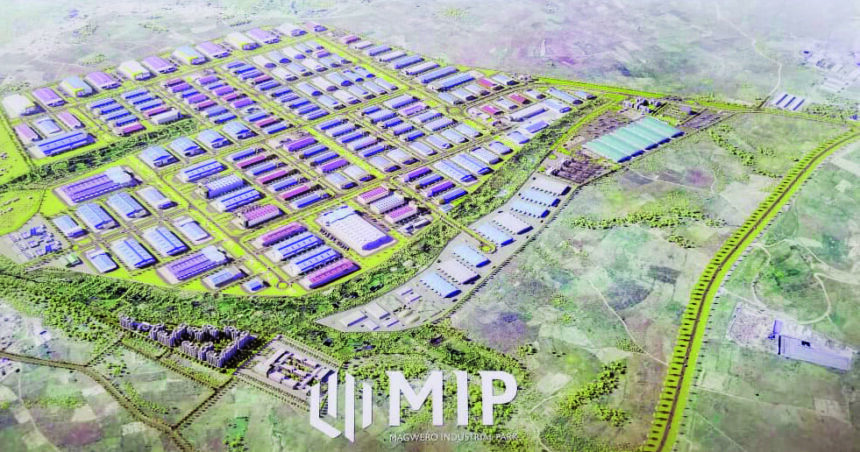
In his State of the Nation Address delivered in Parliament last week, President Peter Mutharika said his government would continue developing SEZs—including Magwero, Chigumula, Matindi and Dunduzu industrial parks—to attract high-value investment.
Responding to a questionnaire, Malawi Investment and Trade Centre (MITC) Public Relations Manager Ndondwa Msaka said the centre was making progress in the implementation of SEZs, with the Chigumula Industrial Park now approximately 60 percent complete.
Msaka said the first phase of development had been finalised, focusing on key infrastructure such as access roads, waterways and wastewater management systems.
- Advertisement -
“Once fully serviced and operational, the park is expected to accommodate about 56 industrial plots, mainly for agro-processing industries,” Msaka said.
She added that MITC was optimistic about meeting the target of opening the 22.7-hectare Chigumula Industrial Park in 2026.
In its written response to the address, the Economics Association of Malawi described the government’s plans to operationalise SEZs as critical for structural transformation.
However, the think-tank said delayed implementation was preventing Malawi from realising its economic potential.
- Advertisement -
- Advertisement -
“Given the need for urgency in economic recovery, there is a need to speed up implementation of projects,” Ecama said.
Commenting on the development, economist Marvin Banda described the project as slow but welcomed progress.
“Compared with other major infrastructure and reform priorities such as agriculture and mining reforms, debt and macroeconomic stability, SEZ construction progress has reflected resource limitations and competing government priorities amid shrinking fiscal space,” Banda said.
He expressed reservations over the feasibility of completing Chigumula Industrial Park within the stated timeframe, citing fiscal constraints.
“The feasibility of completing and opening the project in the stipulated period is questionable and borderline unrealistic due to funding challenges, logistics, utilities (unreliable electricity, water supply, ICT connectivity and internal road networks) foreign exchange availability and investor occupancy,” he said.
However, Banda noted that once completed, the SEZs could promote job creation and value addition, boosting local manufacturing and benefitting human capital development, fiscal stability, import substitution and exports of goods and services.
“Most importantly, it will lead to long-term structural transformation, promoting export growth and reversing the unfavourable 3:1 imports-to-exports ratio,” Banda said.
He further urged the government to guarantee reliable utilities within SEZs, secure long-term financing for maintenance and expansion and promote strong domestic supplier linkages to reduce import dependency to ensure its success.
In his write-up titled ‘SEZs Success Requires Policy, Governance and Implementation’, National Planning Commission Director General Fredrick Changaya indicated that, through a well-structured SEZ network and supportive trade policy, Malawi could attract manufacturing, agro-processing and export-oriented industries.
According to the commission, SEZs would position the country to better leverage regional and continental trade agreements, including the African Continental Free Trade Area, by scaling up production, improving export competitiveness and integrating into regional value chains.