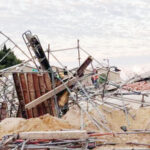
Disaster recovery and reconstruction are critical phases following a disaster. They are aimed at restoring affected communities to a state of normalcy and ensuring resilience. Disaster recovery and reconstruction can be complex and long-term processes that require collaboration, coordination and resources from multiple stakeholders, including government agencies, international organisations, non-governmental organisations (NGOs), private sector entities and affected communities.
Recovery and reconstruction are informed by thorough assessments that quantify the extent of the damage, be it to infrastructure, housing, public facilities or the environment. The thorough assessment is critical for developing effective recovery and reconstruction planning, which involves development of comprehensive recovery plans that outline strategies, priorities and timelines for rebuilding infrastructure, restoring essential services and revitalising communities.
Besides infrastructure rehabilitation, recovery and reconstruction involves housing reconstruction, economic recovery, social recovery as well as environmental restoration, among others. Rehabilitation focuses on repairing or replacing damaged infrastructure such as roads, bridges, utilities, schools, hospitals and communication networks to ensure the resumption of essential services and economic activities. This is besides rebuilding homes and neighbourhoods destroyed or damaged by the disaster, often involving the construction of temporary shelters and the provision of housing assistance to displaced residents.
Recovery should also include activities aimed at reviving economic activities, thereby supporting job creation initiatives, business assistance programmes, financial aid to affected businesses, the provision of loans and grants as well as investments in economic development projects. These ensure resilience, hence contribute to effective recovery.
In addition to infrastructure rehabilitation, the building of homes for survivors and resuscitating economic activity, the disaster victims need social support, also referred to as social recovery. This entails addressing the psycho-social needs of affected populations by providing counseling, mental health support and programmes to promote social cohesion and resilience.
- Advertisement -
It is also important to recognise the relationship between the environment and disasters. Therefore, disaster recovery and reconstruction must inculcate environmental restoration, which entails rehabilitating natural ecosystems, mitigating environmental hazards and implementing measures to reduce the risk of future disasters, such as reforestation, watershed management and coastal protection.
Therefore, recovery and reconstruction initiatives should not be implemented in isolation; rather, they must incorporate disaster risk reduction measures to enhance the resilience of rebuilt infrastructure and communities. These measures include adhering to land-use planning, enforcing building codes and natural hazard mitigation and environmental restoration, among others.
Community engagement is among the key strategies in disaster recovery and reconstruction. Therefore, engaging local communities, various stakeholders and vulnerable groups in the recovery and reconstruction process to ensure their participation and empowerment not only enhances ownership of initiatives but also builds resilience among the communities.
It must be recognised that implementation of disaster recovery and reconstruction often take a considerable amount of time due to various factors, notably the extent of the damage, resource constraints, complexity of planning and logistical challenges, among others. In terms of the extent of the damage, the severity and scale of damage caused by disasters can be extensive, requiring significant time and resources to assess and address. This includes damage to infrastructure, housing, public facilities, natural ecosystems and the economy.
- Advertisement -
- Advertisement -
In terms of resource constraints, which entail limited financial resources, equipment and materials, they [constraints] may slow down the pace of recovery and reconstruction efforts. For instance, securing funding from government budgets, international donors, insurance companies and other sources can be time-consuming, hence affecting the timely delivery of recovery and reconstruction initiatives.
Developing comprehensive recovery and reconstruction plans involves assessing needs, setting priorities, coordinating multiple stakeholders and navigating regulatory requirements. This process requires thorough analysis, consultation and decision-making, which can take time to complete, but cannot be omitted.
Likewise, logistical challenges such as tedious procurement requirements, transportation and distribution of materials and equipment can pose significant challenges, particularly in disaster-affected areas, with damaged infrastructure and disrupted supply chains, hence hampering the pace of recovery and reconstruction.
External factors such as changes in government leadership, shifts in public priorities, fluctuations in the economy and the occurrence of subsequent disasters or emergencies can impact the trajectory and duration of recovery and reconstruction efforts.
Given these complexities and challenges, it is not uncommon for disaster recovery and reconstruction processes to take years, or even decades, to fully complete. However, investing time, effort and resources in thoughtful planning and implementation can help build back stronger and more resilient communities capable of withstanding future disasters.