For farmers in areas on either side of Nswadzi River in Thyolo Central, the onset of every rainy season used to bring both joy and gloom.
The river, that cuts through several villages in a location teeming with maize fields, atypical of the broader picture of the hilly district best known for its expansive tea plantations, swells up something fierce even with just the first rains of a season.
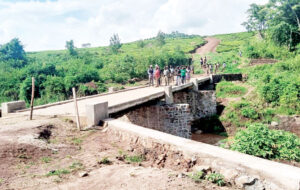
A section of the watercourse, which would significantly cut the amount of time those intending to cross to the other side spend, has not had a bridge for years.
So, they have to take longer routes, especially those travelling to the main town centre where most markets, including those for their farm produce, are.
“The next bridge from here is several kilometres away. The situation made some of us reluctant to work hard in our winter gardens because the transport problems made it difficult to make proper profits from our toil,” Favour Phiri, a resident of Mpeni Village on one side of the river, says.
- Advertisement -
Phiri recalls that one farmer almost lost his life last year as he attempted to cross the river by walking on its bed hoping the flow was not strong enough.
Apparently, to save his life, he had to let go of his bicycle and vegetables which he was taking to a nearby trading centre to sell.
Now, a new bridge that has been constructed across the river has revived hope and joy among a population that used to feel neglected.
“Most markets for our produce are on the other side. In the absence of a proper bridge, vendors from faraway areas could bring their cars to our gardens and offered very low prices for the produce.
- Advertisement -
- Advertisement -
“We had no choice but to sell it because it was not easy for us to take the produce to the market on our own,” farmer Joseph Malata says.

The construction of the new bridge, which Minister of Local Government Richard Chimwendo Banda recently toured together with an under-construction stadium at Thyolo Boma and the district’s council office complex, has been funded by the Transforming Agriculture through Diversification and Entrepreneurship (Trade) programme.
Thyolo is one of Trade’s numerous sites across the country.
The programme aims to, among other objectives, assist in reducing infrastructure bottlenecks of identified commodities through the development of road infrastructure and support the construction of buildings to support storing and management of commodities.
The infrastructure development is being financed by the Opec Fund for International Development to the tune of $20 million (K33 billion).
“It feels good to see that funds for the bridge project have been prudently utilised. Now, people from either side of the river will be crossing without any challenge.
“Apart from farmers, there are others who travel to various areas where they work and have had challenges crossing the river in the absence of a bridge,” Chimwendo Banda said.
He also waxed lyrical about allowing resources to trickle down into the hands of local structures where he said it is easy to identify the actual problems that need to be addressed.
The minister acknowledged that timely supply of funds for several public projects was a problem in the past.
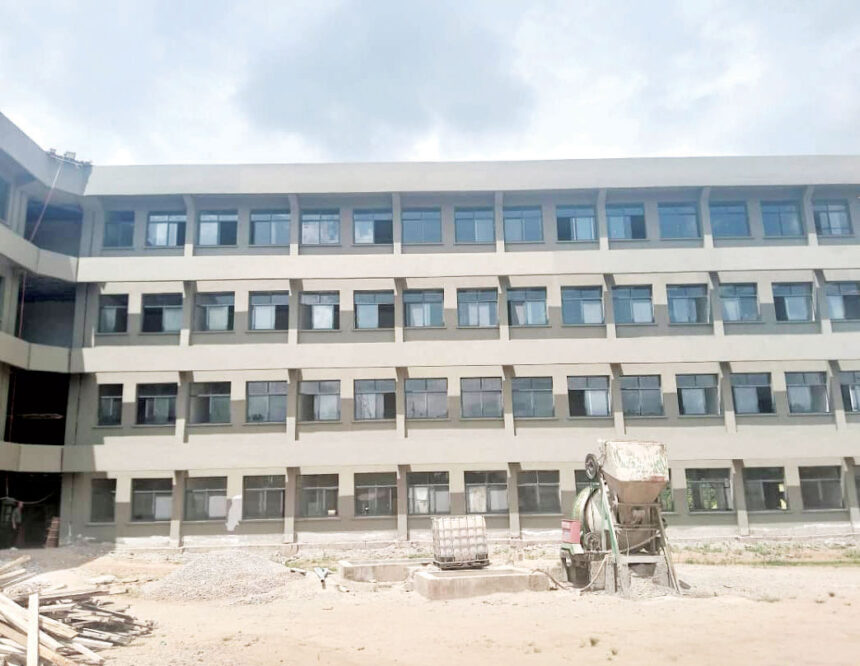
“But what we are doing now is to ensure all projects which stalled rise again. For instance, construction of the office complex for Thyolo District Council started in 2018, but works stopped because money was not there.
“Now, we have been providing the needed resources and in two or three months, the complex should be ready for occupation,” Chimwendo Banda said.
The council’s officers are using one of the most dilapidated public structures in the country, which was constructed during the colonial era, in 1900.
Thyolo District Commissioner Hudson Kuphanga hopes his officers will soon move from various buildings they are occupying into the new four-storey complex whose construction is being funded by the Central Government.
“As a council, we are determined to continue improving how we offer our services and we are sure the office complex will make our work more seamless.
“Even for the stadium to give us maximum returns, we have secured a piece of land nearby where we intend to put up a complex of shops to let out to traders,” Kuphanga says.
Farmers such as Phiri and Malata are eager to see the shopping complex dream turn into a reality.
Having been enlightened by various organisations undertaking crop value-addition initiatives, they would want to have big buyers offering better prices for their produce at the town centre.
After all, Kuphanga says the shopping mall will target big retail shops that can also buy produce from farmers and put it for sale on their well-cooled shelves.