
By Pemphero Malimba:
The appetite for stealing copper wire has intensified in the country, leaving many people in fear, especially those without brick-fenced houses.
For many years, thieves have been stealing electricity infrastructure containing valuable materials, including copper wire, from locations away from people’s homes.
They initially targeted electricity poles and transformers, among other installations. However, thieves have now resorted to stealing electricity equipment from people’s homes.
For 39-year-old Tiyamike Nsembe, a resident of Area 25C Township in Lilongwe, the night between February 14 and 15, 2026 was normal until she discovered there was no electricity in the house.
- Advertisement -
“It was around 3am on Sunday, February 14, 2026. As I was leaving my room, I noticed that it was dark both inside and outside the house, which meant there was a blackout.
“However, I saw that some houses in the distance had lights on, meaning they still had electricity. I went to inquire at my neighbour’s house, where I was told they had experienced the same problem,” Nsembe says.
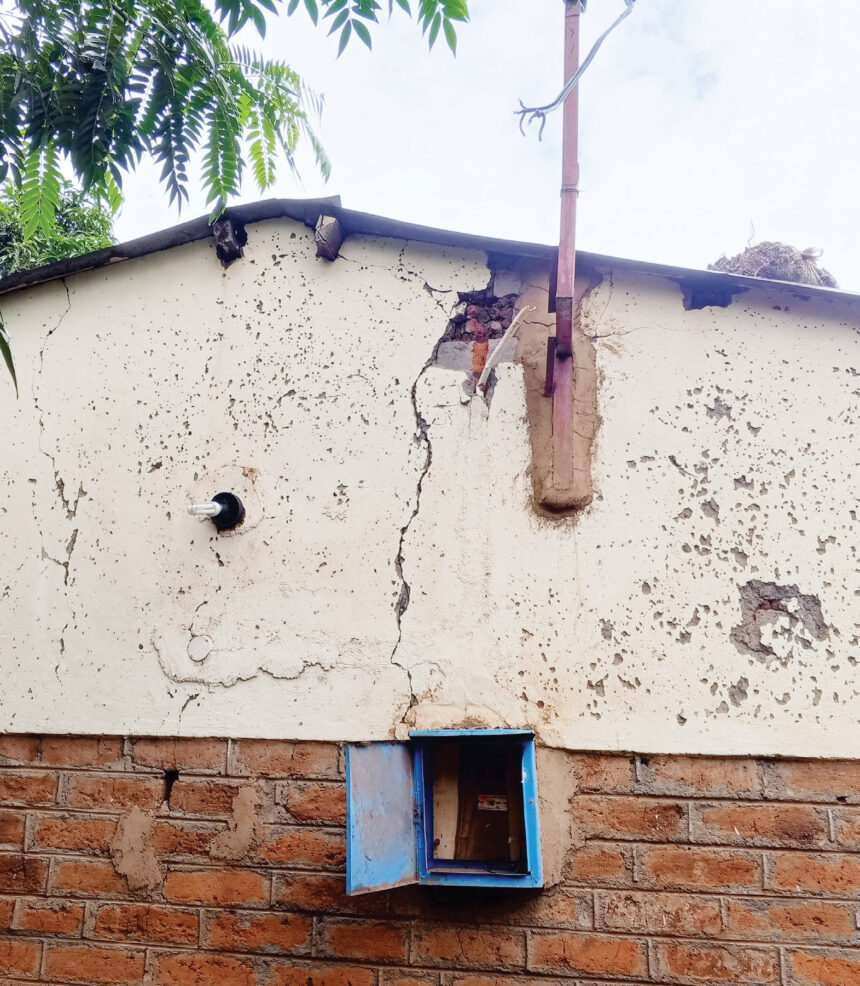
Before leaving the neighbour’s house, she and her neighbour discovered that copper wires had been cut from the line connecting the house to an electricity pole belonging to the Electricity Supply Corporation of Malawi (Escom).
“I went to check the electricity box mounted on our house and noticed that it was empty. Some wires connecting the house to the electricity pole had been cut. At around 7am, we discovered that a number of houses in the area had been affected by a similar act,” she recalls.
- Advertisement -
- Advertisement -
The development, which has resulted in days of darkness, has not only affected Tiyamike’s family of six in terms of cooking, lighting and food storage, but has also affected students who rely on electricity to study at home.
“They include university and college students who write assignments there. They have been heavily affected. Our primary school children are due to start examinations soon and it is obvious that their preparation will be negatively affected,” Nsembe says.
To her and her family, the situation is like a wound that will take time to heal.
“Nowadays, things are economically difficult. Raising money to buy new pieces of wire is a challenge. We need about K60,000 to buy new wire. Including labour, the cost rises to around K80,000. At this time, it is difficult to raise such funds,” she said.
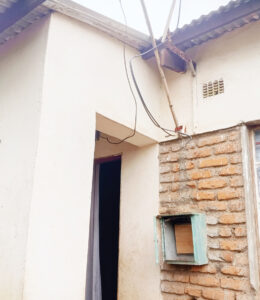
Dominic Duncan, a 53-year-old driver working for one of the organisations in the city, narrates how the situation has jeopardised his family’s safety.
“We are sleeping in darkness. We are not safe because our property is not secure in this situation. We are worried that the thieves might return to steal from us again,” Duncan says.
He feels even more distressed because he is on holiday and has nothing to entertain his family.
“Some of us are on holiday and we have no form of entertainment at home. We have television and radio sets that we usually use, but we cannot use them now because we do not have electricity,” Duncan says.
According to Duncan, repairing his house requires at least K30,000 to buy two metres of new wire to replace the stolen property.
“Most people cannot afford to buy new wire to replace what has been stolen. We are facing economic hardships due to increased prices of goods and services, so it may be impossible to replace the wires any time soon,” he says.
A representative of block leaders in the area, Lameck Namwera, expressed concern for residents.
According to Namwera, about 18 houses were affected by the incident, causing fear and desperation among at least 100 people in the area.
“Following the incident, we received complaints from about 18 people whose houses were affected on the same day. As leaders, we are worried because this has affected a significant number of households,” he says.
He said the matter was reported to the authorities but no assistance had yet been provided.
“When we reported the matter to Escom, we were advised to obtain a police report before they could assist us. We then reported the matter to Kanengo Police Station. It has now been three days and neither institution has come forward to help us,” Namwera says.
The situation in Area 25C in Lilongwe is just one example of many cases in which unknown individuals have vandalised electricity infrastructure across the country.
Such incidents have affected thousands of people nationwide, as well as schools, health facilities and markets.
In Lilongwe, another example is Chitedze Research Station, where thieves stole a transformer that supplied power to more than 50 houses occupied by junior officers at the station.
The incident resulted in more than three weeks of darkness.
In September 2025, Escom recovered vandalised and stolen copper materials worth K1.5 billion.
This followed a cross-border operation involving Escom and law enforcement agencies from Malawi and Zimbabwe after a truck was intercepted by Zimbabwe Revenue Authority at Nyamapanda Border Post in Zimbabwe.
Escom Public Relations Officer Pilirani Phiri confirmed that the electricity supplier was aware of the Area 25C incident.
“The matter has been reported to the police at Area 25 and they are currently investigating the incident,” Phiri said.
He acknowledged that vandalism of Escom equipment is a growing concern in the country.
“Vandals are targeting various types of electrical equipment, including conductors, transformers, poles and twin wires, which significantly undermines the reliability of the power supply,” he said.
According to Phiri, Escom loses K3 billion annually due to vandalism.
“These losses have a substantial impact on our operations, as we are forced to allocate resources to replace stolen and damaged equipment instead of investing in expanding electricity access to underserved areas and supporting economic development,” he said.
He attributed the malpractice to the existence of a market for stolen electrical equipment.
“We believe that deliberate acts of sabotage and the existence of a market for stolen equipment are major contributors to this problem. In some cases, perpetrators deliberately cut down electricity poles to disrupt reliable power supply.
“In other instances, stolen equipment is sold to scrap metal dealers who export these materials, further depriving our country of valuable economic resources,” he said.
He said the company has implemented various interventions to curb the malpractice, including supporting amendments to the Electricity Act to introduce tougher penalties for those convicted of vandalism.

“We have been conducting radio and television campaigns to educate the public about the dangers and consequences of vandalism, as well as the importance of protecting infrastructure.
“We have engaged communities through sensitisation meetings in the Northern and Central regions since April 2025 and are currently holding similar sessions in the Southern Region,” Phiri said.
Central West Police Region spokesperson Foster Benjamin said police are investigating to dismantle the potential market for stolen electricity equipment.
Benjamin said the police believe the culprits have an available market where they sell stolen electricity equipment.
“Once we identify it, we will be able to arrest those who purchase the stolen equipment and prevent future incidents. Buying stolen equipment is a crime and we call upon community members to provide us with any information about potential markets,” he said.
He further said the police have been arresting individuals allegedly involved in the malpractice.
According to Benjamin, hotspots in the region include Bunda, Mitundu, Dzalanyama and Njewa in Lilongwe, where culprits vandalise electricity poles and cables.
“We are doing our best to contain this crisis. We are working with our partners at Escom, particularly their security personnel, and we have been able to arrest some individuals involved in this malpractice,” he said.