The youth make up the majority of Malawi’s population and are significantly affected by high levels of unemployment.
However, out-of-school youth are productive and can fully participate in development work, with the potential to enhance their skills.
Suggestions have been made that many young people who are not engaged in economic activities lack the knowledge and capital to venture into various businesses.
To uplift their lives, the Business Acceleration for Youth project—a three-year innovative initiative funded by the United States Agency for International Development (USAid) and implemented by the Alliance of Bioversity International and the International Centre for Tropical Agriculture (Ciat)—was launched and has supported beneficiaries with a K4,250,000 grant each.
So far, there has been a noticeable impact from the project.
- Advertisement -

Chisomo Chimkondenji from Mangochi District started a preschool with three children in 2022 and was initially operating under a tree. She did not anticipate receiving financial support for her endeavour.
She says that at the time, she had only heard about the project and when she applied, she was successful.
“Fortunately, I was selected to receive a K4,250,000 grant, which I used to construct classrooms. A lot has changed since I received the grant because, in the past, parents were even reluctant to bring their children due to harsh conditions. But with the new classrooms, they are confident and we have increased school enrolment,” Chimkondenji says.
Gloria Goba, a chicken farmer based in Zomba, started her farming venture after receiving a business grant and training in how to run a business.
- Advertisement -
- Advertisement -
Goba initially focused on crop production but decided to add chickens to mitigate climate-related shocks.
“I was solely involved in maize and other assorted vegetables but after the training, I decided to include chickens as an additional income-generating activity that I could rely on in the event of drought,” she narrates.
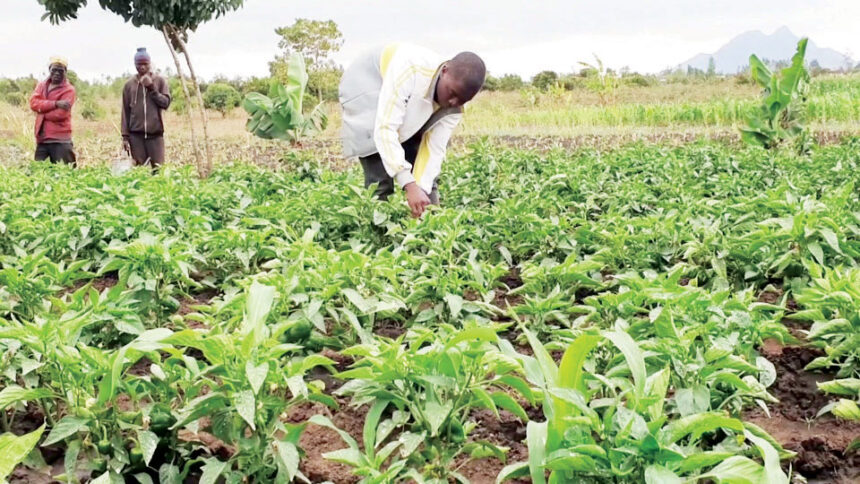
Thyolo-based crop farmer Francis Chigumula believes that if scaled up, the initiative could benefit many youths in the country who are struggling to secure employment.
Chigumula ventured into crop farming due to the land he owns and the existing market for his crops.
“I was among those trained in marketing our products and taught to treat farming seriously as a business. If more youths benefit from such grants, more people can improve economically,” Chigumula says.

According to Oganive Chingakule, Business Incubation and Acceleration Officer, the project, implemented by Alliance of Bioversity International and Ciat, aims to empower young people economically.
It is expected that this will result in job creation, greater access to financing and improved household resilience.
“This project originated from USAid, who, after reviewing their country development strategy, sought ways to support the youths.
“In collaboration with Ciat, they developed a project focused on economic empowerment, giving young people the opportunity to utilise their skills,” Chingakule explains.
She adds that the project aims to strengthen the resilience of youths and women-led business start-ups in Balaka, Chikwawa, Chiradzulu, Machinga, Mangochi, Mulanje, Nsanje, Thyolo and both Zomba City and Zomba Rural through the delivery of business incubation services.
The project began by supporting 250 young entrepreneurs with business development support through training and coaching in April 2023.
Francis Mwamadi, Business Training Manager for the Small and Medium Enterprise Development Institute says the first phase of the programme focused on changing the mindset of the youth so they could take charge of their destiny.
Mwamadi adds that they also wanted to help them develop business ideas for implementation.
“From the outset, we have been encouraged by the evidence from the youth, to the extent that some of them even started implementing their ideas before receiving the grant.
“This motivated us to believe that if they could start on their own before receiving the grant, it would only propel them further,” he says.
Mwamadi adds that the youth participated in sessions where they developed business plans, realising that having an idea alone was not sufficient.
“So far, we are satisfied with the progress. Most have managed to adhere to the grant agreement and follow through with what was agreed upon with the partners,” he says.
District Youth Officer for Mangochi, Kumbukani Manda, hails USAid and other partners for providing capital to the youth.
“Previously, most interventions targeted young people in areas such as reproductive health. However, the Business Acceleration for Youth project specifically focuses on economic empowerment.
“We have tracked their progress and observed the impact of the project. Those who benefited had only a business idea initially, but now they have established vibrant businesses and employed fellow youths,” Manda says.