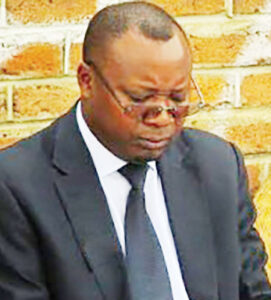
On this day, the morning of Tuesday, August 8 2023, there was no stirring into wakefulness.
And this is what surprised family members, the football fraternity and even those that just heard about him— be it Mighty Wanderers supporters who have never been to Blantyre but knew him as someone who served as general secretary for the team.
Indeed, not even those who knew him, not personally but as Super League Association of Malawi [now Super League of Malawi] president, could ignore the reverberations of the shocking news that Kaka Henry Chibowa had walked his last mile.
But far from the television cameras, radio microphones and juicy newspaper quotes, Chibowa’s story started in Tito Village, Traditional Authority Kanyenda, in Nkhotakota District.
And the journey ends at Henry Henderson Institute (HHI) Cemetery in Blantyre today.
- Advertisement -
This— his growing stature as a simple man from Tito Village to a national figure who is being buried in the city of hopes, Blantyre— testifies of how far he has come and how deep-rooted his influence has been.
Chibowa is not a man of the village; he is a man of the nation— a source of inspiration to many.
That is why tributes are pouring in for him, be it from football club, Super League of Malawi and Football Association of Malawi officials.
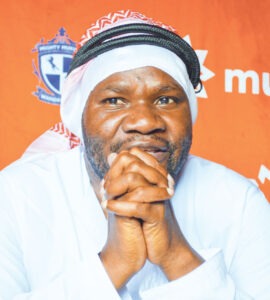
His death due to kidney failure took many by surprise, notably Mighty Mukuru Wanderers Board Secretary Chancy Gondwe, who has been at a loss for words.
- Advertisement -
- Advertisement -
“He contributed a lot to Wanderers and national football development. He made a significant contribution,” he said.
Even Silver Strikers Board Chairperson George Kaudza Masina could not understand what has befallen Malawi, saying Chibowa came, conquered and has left a mark.
“He, alongside Gaston Mwenelupembe, Sunduzwayo Madise [the current Malawi National Council of Sports Board Chairperson], Hastings Kapenuka, among others, contributed a lot to the professionalisation of the Super League,” he said.
In deed, Chibowa will be remembered for his contribution at Wanderers as well as Uniprint, where he served as general secretary after parting ways with Wanderers in 1997.
He was not a man who could be confined to one area, let alone team.
Indeed, as his younger brother Vincent testifies, he was a highly adaptable man.
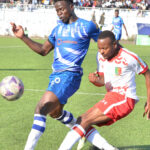
No wonder that, in his playing days, he could either defend like a man possessed, be it when playing as a right-back or left-back.
Whenever the coach told him to play as a number 2, Chibowa was not one to grump.
This was also true whenever he was asked to play as a number 3. Through tenacity, he became known as one of the tough-as-a-tick fullbacks in Malawi history.
Starting off at the defunct Dwasco, then joining University Football Club—which was a side representing University of Malawi students, be it those at The Polytechnic (now Malawi University of Business and Applied Sciences), Chancellor College (now the University of Malawi)— and, finally, at Wanderers, the fullback left an indelible mark on Malawi football.
He could, on his day, be unbeatable as he could, just like a rhythmic heart, throb on those who stood in his way— all the while bursting with unbridled passion for the game he loved the most; football.
That is why at Dwasco, he could roll across the pitch like tidal waves of the nearby Lake Malawi.
After all, Kaka was a man from the lakeshore district of Nkhotakota, which could explain why he could, when he wanted to, roll across the pitch—and sometimes directly into the bodies of strikers and forwards who stood ready to nick the ball from him.
Sometimes, when he did not want to bump into opposing players, he could simply feign a look of seriousness on his face, which seemed to make the other players cower in fear, and off, like a tidal wave, he would bounce up and down the pitch.
Wednesday, when people gathered at Kamuzu University of Health Sciences (Kuhes) mortuary in Blantyre, they were talking about the success he had in football, be it as a player or administrator.
Such appreciation for the work he did exploded, on the mouths of people who gathered at Kuhes Wednesday, with an echoing boom.
There, local football administrators and fans watched, with sombre faces, as his body was being taken from the place to Chinyonga Township for a vigil.
Among those gathered were Super League of Malawi President Fleetwood Haiya, Chibowa’s close ally Mwenelupembe, marketer and banker Wilkins Mijiga, Masina and Higger Mkandawire, among others.
Today, as people prepare his final resting place and let him rest, there will be nothing above the soils of HHI that will be powerful enough to erase memories of those good, old days from football lovers’ minds.
Indeed, after today, when Chibowa’s remains are buried, only a drowsy calm will fill places he ever worked in; be it as the Malawi Communications Regulatory Authority, Wanderers, Dwasco in Nkhotakota and even the university corridors.
It is a disturbing emptiness that will take long to fill.
This is because Chibowa was, in his own way, larger than life.
But, surely, the greatest tribute to him would be ensuring that the Super League is run professionally, football players get what they deserve, in terms of remuneration; and football pays, in terms of prize money.
Without doing this, it would be difficult to stop Malawians’ sense of sadness from casting long shadows of dissatisfaction on Malawi football. One hopes not forever.