By Pemphero Malimba:
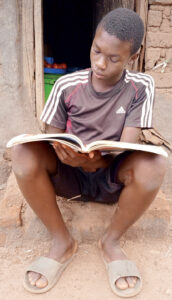
It is a Friday afternoon in a village in Traditional Authority Maliri in Lilongwe, where a Standard 8 learner at Nguluwe Primary School has just knocked off and is about to prepare lunch.
The boy, whom we have named Joshua, lives with his classmate in a rented grass-thatched brick house near the school.
He is wondering what he will prepare for lunch, as it is his turn to contribute food for the day.
“This is the time when I mostly struggle during my studies. Often, I face challenges in getting food when it is my turn because most of my relatives do not provide me with timely support. I also find it difficult to get clothes, soap and other essential items,” Joshua laments.
- Advertisement -
The 15-year-old, the youngest of six children, lost his mother a few days after his birth, on October 3, 2009.
His mother died alongside his twin and his care was later placed in the hands of one of his relatives who was living with her family in Area 25 in Lilongwe at that time.
However, this arrangement did not last long, as the relative and her husband both died in 2014 and 2021, respectively.
Eventually, the boy was placed under the care of another relative who lived in Ntcheu.
- Advertisement -
- Advertisement -
This arrangement also did not last, as he was sent back to the village on what other relatives describe as “disciplinary grounds”.
Since then, he has been living with his brother, who later left him to live in another village where their father resides.
Later, the Standard 8 learner began living alone and stayed in his home village for about eight months.
“Sometimes I lacked food, soap, clothes and money to help with basic necessities. When I asked for help from my father and other relatives, they gave me some items, although not enough,” he recalls.
Thanks to Good Promise Ministries (GPM), which went beyond its daily operations after noticing the boy’s condition, he was taken in and placed in a self-boarding facility to ease the challenges he faces during his studies.
“The support I get from Good Promise eases the challenges I face in my studies. The organisation provides me with food and other basic necessities,” the boy, whose dream is to become a doctor, says.
The organisation implements a programme aimed at empowering underprivileged students in their education, providing the boy with various necessities such as food and non-food items.
He is an example of many orphaned and vulnerable children in the country who lack parental care.
This is despite the existence of legislation for child care.
The Child Care, Protection and Justice Act states that parents or guardians have, among other responsibilities, the duty not to deprive a child of their welfare, to protect the child from neglect, discrimination, violence and exposure to physical, mental, social and moral hazards.
The law also stipulates that parents and guardians are responsible for providing proper guidance, care, assistance and maintenance for the child to ensure their survival and development, including adequate diet, clothing, shelter and medical attention.
Furthermore, it provides that during the temporary absence of the parents or guardians, the child should be cared for by a competent person.
A 2018 housing and population census by the National Statistical Office revealed that there were approximately one million orphaned children in Malawi.
A recent report on Orphanhood and Child Vulnerability indicated that orphanhood is caused by, among other factors, the impact of HIV and Aids and maternal deaths and contributes to orphans being forced onto the streets, where they become involved in prostitution or other harmful forms of work.
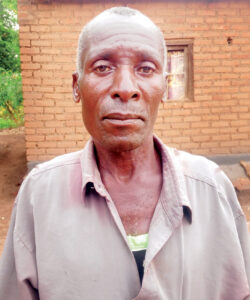
Joshua’s uncle, who is Village Head Kudzala, says that his relatives have been helping the boy, although the support has been insufficient.
“He has been staying here in the village, but we have been supporting him. One of my sister’s daughters in Ntcheu has been sending financial support, which we have been channelling to him. We also provide him with other basic needs when necessary,” Kudzala narrates.
He recalls receiving a request from the boy’s father to take him in.
“At one point, he asked to take him in so that the boy could stay with him, as this is where he and his siblings live, but I turned down the request.
“I looked at his condition and realised that the boy could face more challenges than he is facing here, as his father also needs support. I also considered the fact that he is schooling here, so it would not be ideal to let him go and miss the educational opportunities available here,” he says.
The boy is among 300 vulnerable schoolchildren from two primary schools and one secondary school whom GPM is working with in the area through academic empowerment, character development and leadership inclusion.
Currently, the organisation, which supports the boy’s stay at the self-boarding facility, provides all his daily meals.
The organisation also provides him with learning materials and clothes and has paid for his Primary School Leaving Certificate of Education examinations, which he is set to sit for in 2025.
According to GPM Executive Director Lester Chiuta Nkhoma, although the support provided to the boy is not sufficient, the organisation aims to continue supporting him until he completes his studies.
“We want to support him through secondary school and also open other opportunities for him to attend college,” Nkhoma says.
He recounts the organisation’s goal of easing access to quality education for vulnerable children in the country.
One of the teachers at Nguluwe Primary School, Elikana Banda, believes that the boy could advance his studies if adequately supported with basic needs.
“He needs support such as school fees, food and learning materials. Perhaps some well-wishers may help him so that he can realise his dream of becoming a doctor,” Banda says.
She observed that the learner faces many challenges, including a lack of parental care.
“He is a really good learner and performs well in class, but what we have noted is that he faces many challenges, such as a shortage of food and a lack of parental care. He really doesn’t have anyone to look up to,” Banda adds.

Ministry of Gender, Community Development and Social Welfare Director of Child Affairs, Justin Hamela, admits that many children are facing a lack of proper care.
He cited situations where children are loitering around the streets with some engaging in negative and harmful behaviours in societies and cities.
“This is why you can see that we have over 4,000 children living on the streets, but the total number of children who are still vulnerable due to negligence is increasing,” Hamela says.
He adds that this issue is happening due to a lack of respect for the country’s laws.
The child welfare official states that the Ministry of Gender has developed a parenting programme to care for children before they are born, providing information so that parents acquire the skills needed to care for their children.
“Additionally, we have provisions in our laws, such as the Child Care, Protection and Justice Act, which stipulates that it is the responsibility of every parent to care for their child.
“In fact, a lack of care and provision for a child is a criminal offence that could result in prison sentences for the parent. The only challenge is that we do not enforce this as much as we should,” Hamela admits.
He adds that the issue could be addressed through collaborative efforts.
“We have an awareness programme and we use various parenting manuals. We are sensitising parents to positive discipline, not to abuse them, but to promote positive parenting among most parents,” Hamela explains.
Meanwhile, Nkhoma agrees with Hamela.
“Many children are facing a lack of support towards their daily welfare and education and it is the responsibility of all of us as citizens of this nation to make sure we are doing something to help them with their needs,” he says.