By Deogratias Mmana:
As Japan and Malawi commemorate 60 years of bilateral cooperation, the Asian country has supported the latter with $1.367 billion (K2.323 trillion) in various sectors since 1964.
Japan has supported Malawi with $928 million in grants, representing 68 percent of the total support and $439 million under technical cooperation, representing 32 percent of the total support.
According to the embassy, the country has so far spent $262 million under infrastructure development.
Some of the projects implemented include the expansion of the terminal building at Kamuzu International Airport, improvement of main roads in Lilongwe and Blantyre cities and replacement of South Rukuru Bridge.
- Advertisement -
The country has also spent $208 million on agriculture, among others, by implementing the Bwanje Valley Irrigation Development Project.
It has further supported Malawi with $170 million on human resource development.
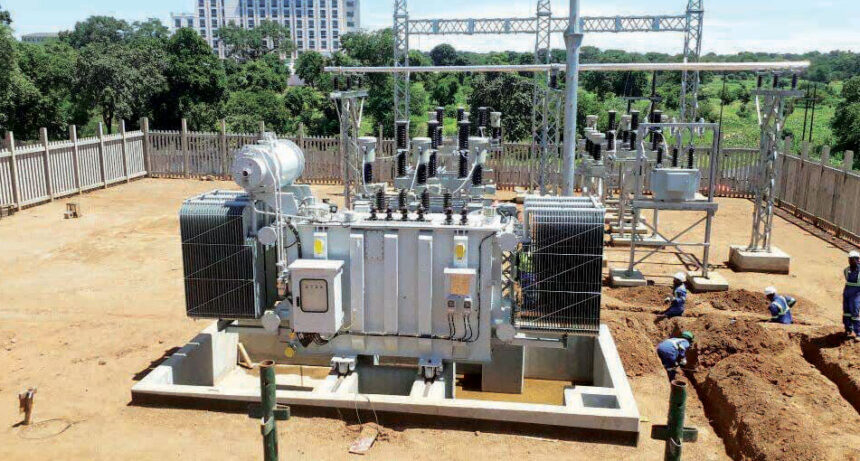
Under energy, the country has supported Malawi with $89 million and some of the projects implemented include the improvement of substations in Lilongwe City, expansion of Tedzani Hydropower Station and clean energy by solar electricity power generation.
For example, a Japanese $19 million (K20 billion) grant to upgrade Kanengo and Old Town substations is expected to connect 79,000 new customers to electricity.
- Advertisement -
- Advertisement -
The Kanengo substation will be upgraded from 85 megawatts to 158MW, thereby connecting 58,000 new customers while the Old Town substation will be upgraded from 37.5MW to 50MW allowing Escom to connect 21,000 new customers.
Other sectors Japan has supported include health with $86 million, public sector with $35 million which includes improvement of equipment for non-revenue water reduction in Lilongwe, $19 million for mining, $6 million for tourism and $23 million for others.
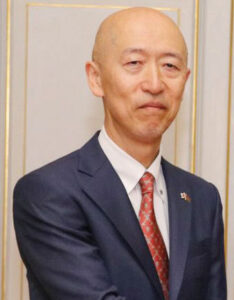
The Japanese Ambassador to Malawi Yoichi Oya said as of December 2023, his country had sent 1,923 Japan Overseas Cooperation Volunteers (JOCV) and 2,579 Malawians received specific training.
Others include 139 long-term government scholars and 32 for masters degrees under African Business Education Initiative for Youth.
“The deep relationship between Malawi and Japan can be seen everywhere. I look forward to working with the government and people of Malawi in the various sectors to maintain the good bilateral relationship with a view to achieving mutual development,” Oya said.
The Ministry of Foreign Affairs said that Malawi is one of the biggest recipients of JOCV since its launch in 1971, who have contributed to the socio-economic development of the country.
“Japan has been a strategic development partner for Malawi over the past 60 years of Malawi-Japan relations, and this has resulted in tangible outcomes, particularly in infrastructure,” the ministry’s spokesperson John Kabaghe said.
Kabaghe added that Malawi has also benefited from the framework of the Tokyo International Conference on African Development (Ticad) since its inception in 1993. Ticad is aimed at supporting Africa’s development in the post-cold war era.
“Going forward, the Government of Malawi will continue to collaborate with the Government of Japan under the framework of Ticad, among others, to facilitate the implementation of Malawi 2063, and the United Nations Sustainable Development Goals,” Kabaghe said.
Victoria Mhone is an alumnus of the African Business Education Initiative for Youth Initiative scholarship offered by the Japanese Government.
Mhone, who attained a Master of Science in Agriculture Science under the scholarship, works with the Ministry of Agriculture and is collaborating with a partner in Japan to open a fertiliser company in Malawi.
Another alumnus is Sydney Phiri, who has become a mathematics wizard after spending two years on a scholarship in Japan.